

CNC Cutting vs. Fiber Laser Cutting: Which is the Better Choice
Time : Mar 13, 2026 Ver: 106
Selecting between established CNC mechanical cutting and current fiber laser technology commonly presents a vital junction for your facility. One approach delivers the durable comfort of actual tools, while the other assures the swift pace of directed light. If you seek to grow your metal working enterprise or merely exhausted by the persistent care for aged devices, choosing correctly in this matter will determine your earnings boundaries for the upcoming ten years. Before entering the intricate details, it benefits to review the premium options at Wisecut. This firm has functioned as an approved advanced technology company since 2020. Furthermore, it demonstrates profound understanding of industrial production environments.
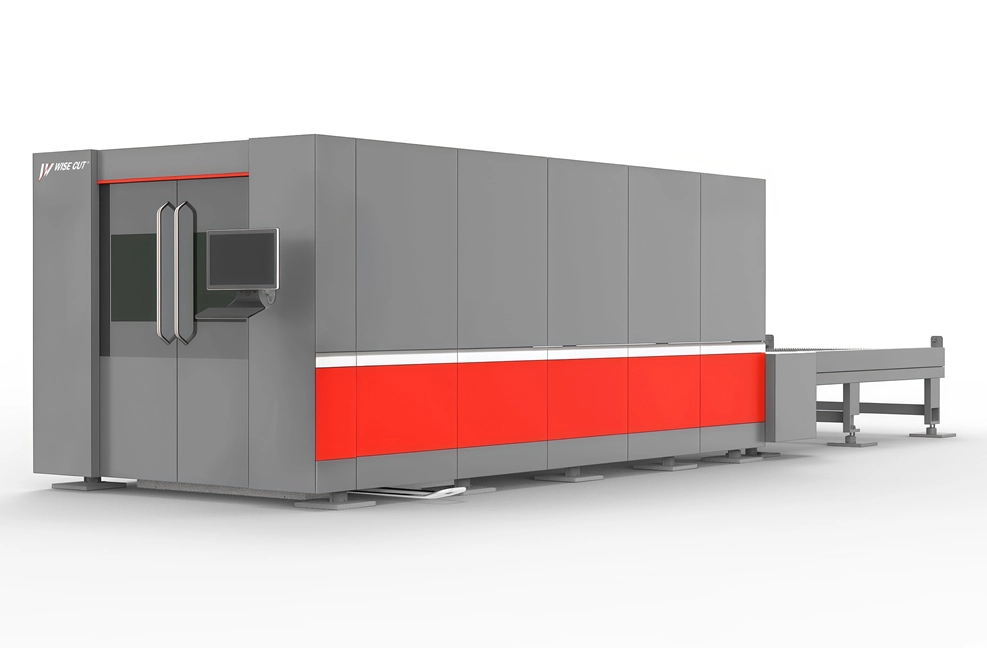
Mechanics of CNC and Fiber Laser Processes
To identify the superior option, you must initially consider the ways in which these devices engage with or avoid your workpiece. Standard CNC cutting generally employs a concrete implement, such as a boring tool or a plasma burner, which directly contacts the metal. This method constitutes a robust physical strategy. Conversely, fiber laser cutting proceeds without physical interaction. The unit applies an intense laser ray to liquefy the substance right away.
The laser ray possesses a small expansion angle. As a result, it manages broad regions with remarkable concentration. This method goes beyond merely scorching the metal. Instead, it focuses on an elevated electrical-to-optical efficiency that converts power into slicing force far more proficiently than previous mechanical techniques. You can investigate their comprehensive assortment of industrial products to witness how this innovation converts into practical equipment.
Precision and Edge Quality Comparison
When clients insist on tight specifications, the optimal selection appears evident in short order. Many fiber laser units attain a location exactness of ±0.03mm. Reflect on this measurement briefly. It measures slimmer than a strand of human hair. Conventional CNC frequently produces ridges or coarse borders. These issues demand additional periods for abrading and buffing.
A top-grade fiber laser yields a minimal fusion line or slice boundary. Moreover, the surface displays an appealing look. This result stems mainly from the focused thermal application. Consequently, it prevents bending in nearby metal sections. For tasks needing exact control, the High performance Full cover laser cutting machine employs a particular aviation aluminum transverse structure. This structure receives molding to remove inherent tensions. Thus, it preserves your exactness without deviation. Even at velocities of 110m/min, the device maintains stability. Such features support dependable outcomes in demanding scenarios.
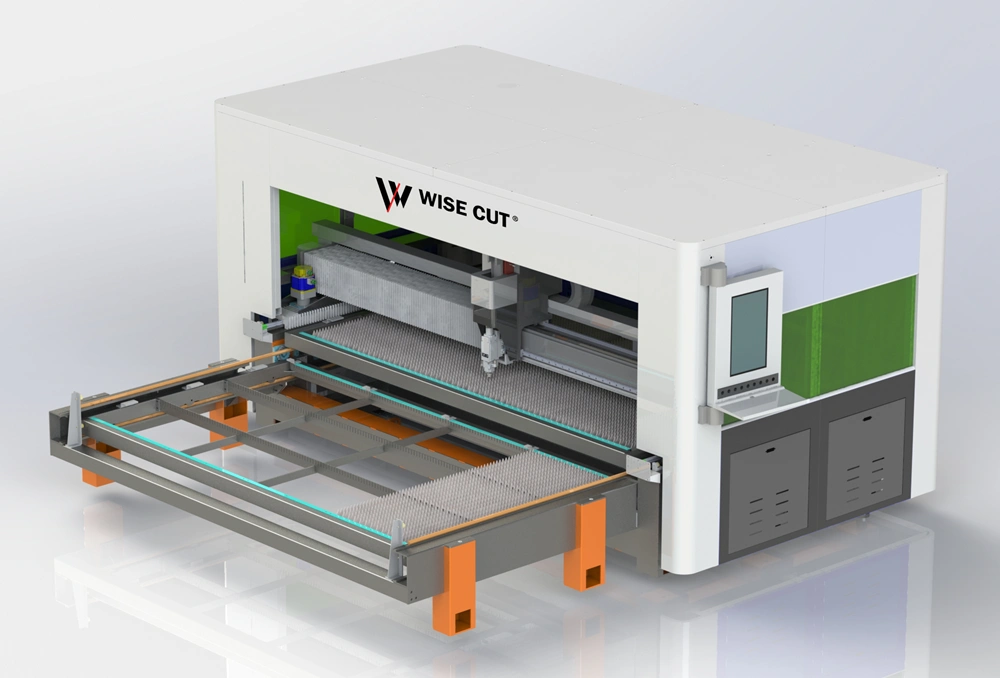
Efficiency and Speed in Daily Operations
Duration equates to revenue, and within an active workshop, the notion of quickness remains contextual. CNC units perform well on substantial, weighty panels. However, they falter in sustaining rhythm when handling slim to average layers. A 3000W fiber laser moves rapidly across carbon steel and stainless steel. The range spans from 0.5mm to 25mm. It accomplishes this with straightforward operation.
Contemporary arrangements frequently incorporate items like a two-level electrical swap carriage. This setup implies that as the unit slices one layer, operators prepare the following one concurrently. Such automated solution notably boosts your output rates. It also lessens the inactive intervals when the unit stands unused. Consequently, there exists no further need to await a specialist for exchanging weighty cutters or resetting instruments. This advancement streamlines processes. In turn, it elevates overall productivity in routine activities.
Material Versatility and Application Scope
Fiber lasers represent the preferred option in the metal substance handling sector for substantial causes. No matter if you engage in railway transport, vehicle assembly, or household fixture creation, these units process carbon steel, stainless steel, aluminum alloy, brass, and copper adeptly. Their performance remains consistent across various project types.
The strength of a laser arrangement resides in its versatility. It accommodates precise slicing, fusion, overlaying, and three-dimensional fabrication duties. Although a CNC unit may face challenges with mirroring metals like brass or copper because of implement degradation, the fiber laser ray consistency remains engineered for steadiness. This holds true even amid elevated energy outputs. Therefore, it provides reliable service in diverse industrial contexts without frequent interruptions.
Cost Analysis: Initial Investment vs. Savings
Addressing the major issue of the cost label becomes necessary. A CNC unit may seem less expensive in initial documentation today. Nevertheless, one must evaluate the concealed expenditures. Each occurrence of a physical implement failure results in financial outflow. Fiber lasers operate with negligible upkeep over extended phases.
The prolonged operational span of a superior laser generator indicates infrequent part substitutions. Additionally, review the electricity charges. Elevated electrical-to-optical transformation ensures minimal energy loss through warmth. Upon including the absence of subsequent abrading and the promptness of the after-sale service—which commonly features continuous remote examination—the investment return for a laser appears considerably superior to a standard CNC. These elements collectively enhance financial viability.
Safety and Environmental Sustainability
A disordered facility creates risks for operations. Standard slicing often requires lubricants, cooling fluids, and substantial particulate matter. A key advantage of an enclosed laser unit is the dust-repelling platform and the shielding cover. These components retain vapors and particles within the enclosure. As such, they promote healthier conditions for respiratory well-being.
Protective elements such as abrupt cessation controls, atmospheric circuit breakers for overload safeguarding, and current fault guards constitute routine features in premium laser setups. They further include designated Class 4 alerts and ignition keys. These ensure that solely qualified personnel initiate the unit. Overall, this approach yields a more sanitary, subdued, and secure method to conduct business activities. It aligns with principles of hazard reduction and ecological care.
Conclusion
Thus, CNC or fiber laser? In cases involving extremely dense substances where pace lacks priority, CNC continues to hold utility. Yet, for nearly all others in the current business-to-business international commerce arena, the fiber laser stands as the evident victor owing to its rapidity, exactness, and modest running expenses. If you desire an associate who regards you as an individual instead of a mere transaction identifier, it proves advisable to learn more about us. There, you can observe our assistance in updating manufacturing in excess of 20 nations. This collaboration fosters progress in technological adoption and operational enhancement.
FAQ
Q1: What materials can a fiber laser cut effectively?
A: These units enable slicing of carbon steel, stainless steel, aluminum alloy, brass, copper, and further options like titanium or manganese alloys with dependable results.
Q2: How accurate is the cutting on a high-performance machine?
A: The location exactness generally reaches about ±0.03mm. This level suits elaborate components in manufacturing environments requiring fine workmanship.
Q3: What kind of maintenance does a laser source require?
A: Superior fiber lasers incorporate configurations for upkeep-free function. They offer extended durability alongside robust thermal endurance.
Q4: Is it safe to operate these machines in a small workshop?
A: Affirmative, particularly with an enclosed variant that integrates safeguards such as barrier strips against impacts, immediate halt devices, and particulate control systems.
Q5: What happens if the machine has a technical issue?
A: Esteemed suppliers deliver nonstop remote assessment and frequently dispatch a technical expert to your site within 48 hours across global locations. This minimizes operational halts effectively.


