

2026 Guide to the Best Fiber Laser Cutters for Sheet Metal Fabrication
Time : Mar 12, 2026 Просмотр : 178
The field of sheet metal fabrication in 2026 has changed considerably from what it was only a short time ago. If you manage a workshop, you understand the routine well: customers demand components right away, specifications are becoming stricter, and electricity expenses are climbing sharply. Selecting a fiber laser cutter today requires considering more than merely a quick device. You require a reliable ally that helps you stay competitive. This is where WiseCut enters the picture. As a technology-focused company acknowledged since 2020 and holding more than 300 patents, they have dedicated years to developing advanced laser equipment that performs effectively in practical manufacturing environments. Whether you process carbon steel or challenging brass, this guide explains how to choose the most suitable equipment for 2026.
High Operational Costs and Material Waste in Production
One of the primary challenges in fabrication involves seeing your earnings diminish into discarded metal and elevated utility charges. If your laser source lacks efficiency or, even worse, consists of a trial or used component commonly seen in lower-priced units, its performance will decline significantly within only six months. As a result, you face slower cutting speeds and unused portions of sheets because the laser beam no longer delivers the strong output it once did.
Precision Engineering with Raycus and Max Laser Sources
In order to reduce your expenses, you must have a dependable core for your equipment. The leading setups in 2026 incorporate entirely new Raycus or Max laser sources. These components offer superior conversion of electricity into light energy, which essentially means they transform a greater portion of power into effective cutting action. Since the beam maintains excellent quality and a narrow spread angle, you can employ lenses with extended focal points to cover broader surfaces while minimizing dirt buildup on the lenses from flying debris.
Advanced Nesting and Efficient Power Adjustment
Material waste extends beyond energy use; it concerns the sheet metal directly. Contemporary machines provide a power variation from 10% up to 100%. Such versatility enables you to shift from robust melting tasks to detailed cutting operations without needing to change devices. Furthermore, when you combine this feature with intelligent nesting software, you maximize the utilization of every available area on your sheet. If you want to explore how these configurations operate in an actual production facility, you can visit the решения page, where you will find examples of efficient manufacturing practices.
Inconsistent Cutting Quality Across Different Material Thicknesses
It proves extremely aggravating when your equipment slices through 2mm stainless steel effortlessly but encounters difficulties or produces rough edges on 20mm carbon steel. Without a precise focal position, you end up spending considerable time smoothing the surfaces, which represents a complete loss of productive hours.
Intelligent Auto-Focus Technology with BOCI BLT 310
The solution to this issue lies in the BOCI BLT 310 laser head. This particular head includes an “Auto Focus” capability, allowing the device to manage focal adjustments automatically. Moreover, it tracks the pressure inside the gas system and the moisture levels in the chamber to avoid condensation or heat-related issues that could affect the optical parts. Consequently, it ensures the gap between the material and the nozzle remains perfectly steady, providing exactly what is required for smooth edges on every cut.
Aviation Aluminum Cross-Beam for High-Speed Stability
Achieving high speed is beneficial, yet if the machine’s supporting structure, known as the cross-beam, vibrates excessively, your precision suffers greatly. Premium cutters employ a 150kg aviation aluminum beam. This beam undergoes casting and subsequent vibration aging treatment to eliminate any built-up stress internally. Therefore, the equipment can achieve travel speeds of 110m/min while maintaining positional accuracy to within 0.03mm. This distinction separates a usable component from one that ends up discarded.
Limited Floor Space and Safety Risks in Urban Factories
When operating in a city environment or a confined workshop, a large open-bed laser presents considerable risks. You must account for the space it occupies and the potential dangers to employees from Class 4 laser exposure.
The Space Saver Full Cover Fiber Laser Cutter Solution
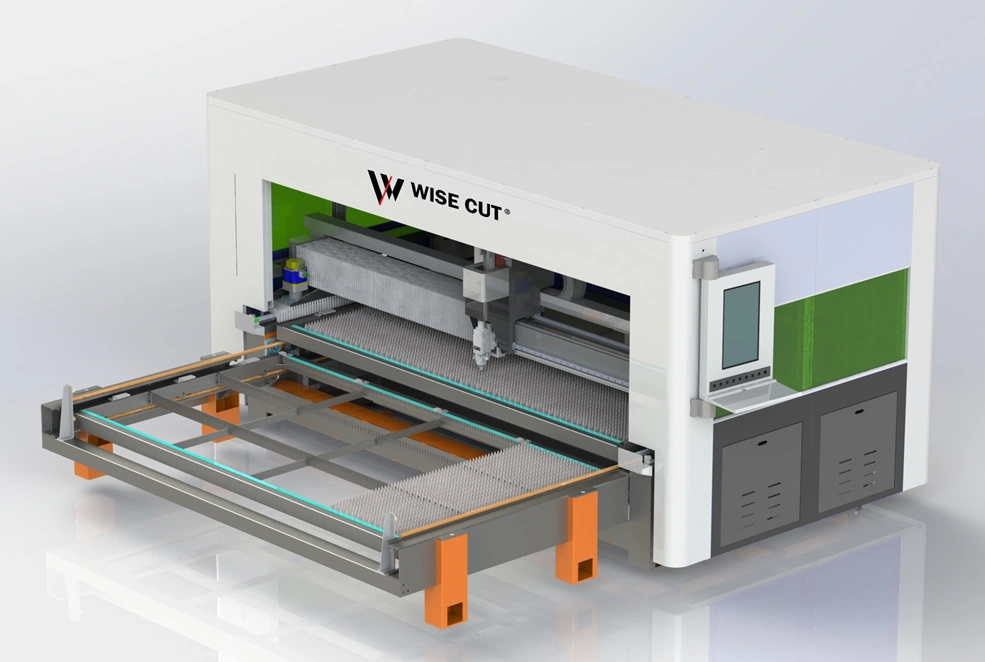
For facilities where space is at a premium, the Space Saver Полная крышка волоконного лазерного резача represents a significant advancement. It delivers the full capabilities of a typical industrial cutter, but within a more compact and completely enclosed frame. Additionally, the worktable features a welded plate design that has undergone annealing to withstand prolonged mechanical stress without any distortion over time.
Enhancing Operator Safety with Class 4 Laser Protection
Operator protection has evolved from an optional feature to an essential requirement. The enclosed design shields personnel from unintended laser reflections. Moreover, quality machines incorporate various alert systems, immediate shutdown buttons, and grounding mechanisms for safety. They also feature specific caution labels for Class 4 lasers along with key-operated controls to prevent unauthorized use. In the event that a door opens unexpectedly, the laser activation can be configured to halt power supply instantly.
Low Production Efficiency and High Labor Dependency
When your equipment remains inactive for 20 minutes as personnel manually position a fresh 25mm carbon steel sheet, your business incurs financial losses. Depending heavily on human effort renders your productivity inconsistent and heightens the chance of injuries among your staff, such as strains to the back.
High Performance Full Cover Laser Cutting Machine for 24/7 Output
For operations demanding substantial throughput, consider the Высокая производительность Полная крышка лазерной резки. This model suits intensive processing of heavy metals and serves as a dependable mainstay in the sector. Its worktable utilizes a honeycomb carbon framework, which preserves exceptional durability even during continuous maximum operation.
img.High performance Full cover laser cutting machine.webp
Seamless Integration with Automated Sheet Loading Systems
True efficiency for round-the-clock production comes from automation integration. These machines pair effectively with automatic sheet handling mechanisms. Such systems involve a sturdy truss-based robot equipped with suction devices capable of handling up to 1300 kg. It includes a dual-level electric carriage that facilitates the exchange of completed pieces for new materials. This approach proves much quicker than traditional lifting equipment and operates without requiring personal breaks. To learn additional specifics about these arrangements, refer to the products page for comprehensive information.
Frequent Equipment Downtime and Slow Technical Support
Few things disrupt schedules more than an unresolved “Sensor Error” message. If your provider operates across time zones and fails to respond promptly, your device becomes little more than a costly stationary object.
24/7 Remote Diagnostics and Global On-Site Engineering
Reliable assistance must be accessible whenever needed. Established producers now provide continuous remote troubleshooting services. For issues requiring hands-on intervention, dispatching an engineer to your location within 48 hours sets the benchmark in the industry. It pays to inquire about these capabilities prior to finalizing agreements. You can review their approach to such matters on the обслуживание center page, which details their support processes.
Comprehensive Free Training for Long-Term Reliability
Avoiding interruptions begins with well-prepared users. A solid agreement ought to encompass no-cost instruction to ensure your personnel grasp the device’s components and underlying concepts. Through this, they gain skills in software operation, quality checks, and routine upkeep. Such knowledge helps avoid accidental damage, like scorched nozzles or impaired optical elements, thereby promoting sustained performance.
Conclusion: Investing in Your Fabrication Future with WiseCut
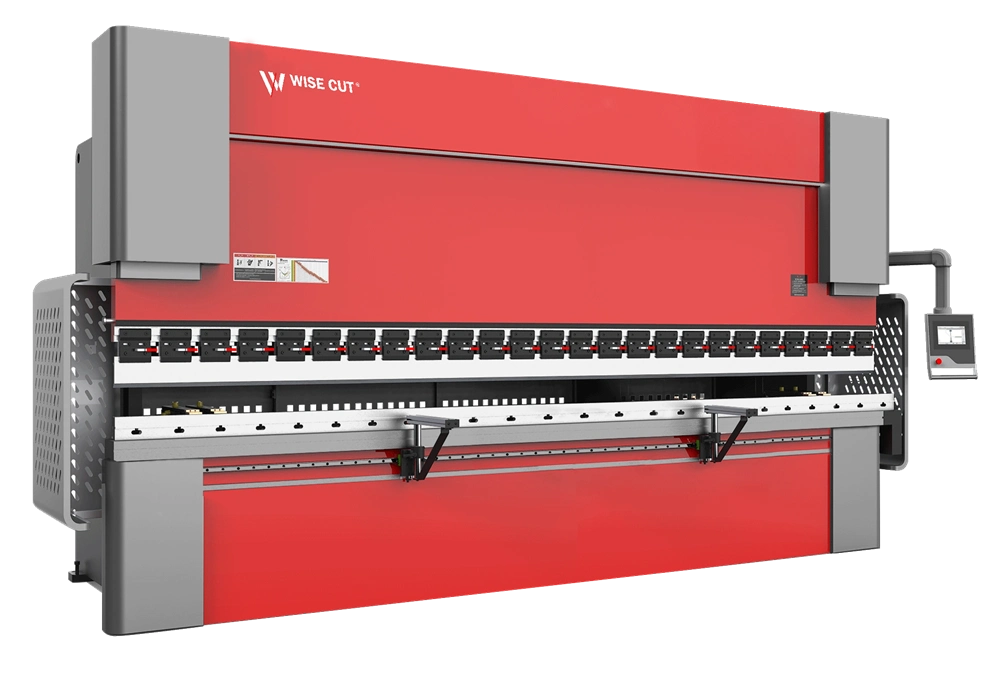
Deciding on a fiber laser cutter in 2026 involves weighing factors like velocity, security, and assistance quality. Avoid choosing equipment that degrades in output after six months or leaves you unsupported during technical faults. Seek out a collaborator with a solid history, such as the over 1,000 units deployed across more than 20 nations. Whether you desire a personalized finish to align with your company identity or a tailored design for specialized materials, the experts at WiseCut stand prepared to assist. To obtain a price estimate or pose a particular engineering query, please proceed to their contact page for direct engagement.
Часто задаваемые вопросы
Q1: What materials can these fiber laser cutters handle?
A: They excel with carbon steel, stainless steel, aluminum alloy, brass, copper, and materials like titanium or manganese alloys as well.
Q2: How fast can the machine actually move during a cut?
A: Advanced models attain travel speeds of 110m/min, accompanied by an acceleration rate of 1.2G, ensuring efficient operation.
Q3: Is the water cooling system safe for the operators?
A: Absolutely, numerous current chillers incorporate 24V DC motors for their pumps, enhancing safety for individuals and cutting operational noise by 90% compared to older designs.
Q4: What happens if my factory’s voltage is unstable?
A: Units equipped with Raycus laser sources include built-in safeguards; should the voltage deviate from the 200V-250V range, the system will issue an alert and deactivate the laser to safeguard internal components from harm.
Q5: Do I need to be a programmer to run the automated loader?
A: Generally no, because the interface relies on 10-inch touchscreens featuring user-friendly options, enabling seamless transitions between manual control and automated functions without advanced coding knowledge.


