

5 Key Benefits of Laser Cutting in the Automotive Industry
Time : Apr 02, 2026 Vue : 119
In the realm of vehicle assembly, each instant preserved along the production pathway equates to substantial economic advantages. Precision demands remain stringent, and substances employed grow increasingly resilient with each passing year. Laser cutting has transitioned from a specialized technique into an indispensable routine. This shift occurs because the method addresses these challenges more adeptly than outdated mechanical instruments. For a trustworthy ally in this domain, Wisecut has engaged in operations since 2018. Furthermore, the firm attained designation as a High-tech Enterprise from the Ministry of Science and Technology. Over 1,000 units function across more than 20 nations. Consequently, Wisecut holds comprehensive understanding of the demanding nature inherent in automotive procedures.
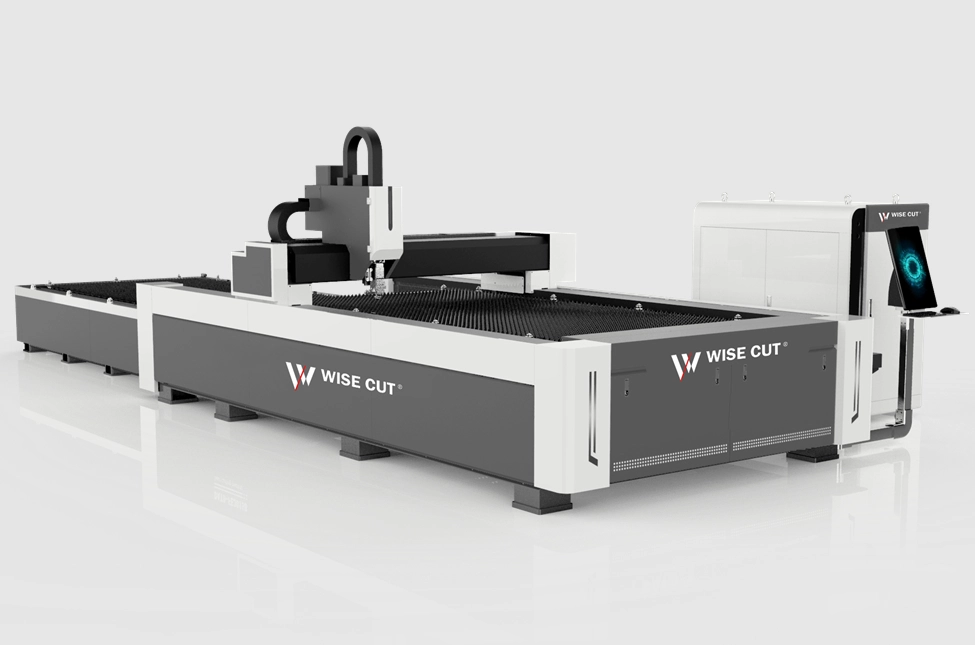
Core Concept of Laser Cutting Technology
This innovation primarily entails employing an intense beam of light to liquefy or gasify substances through pinpoint accuracy. It functions as a notably productive fabrication approach. Manufacturers apply it for intricate severing, shaping, and labeling purposes. The strength of this system resides in its compatibility with both metallic and non-metallic elements. Such adaptability suits vehicles composed of steel, diverse alloys, and synthetic polymers. The technology integrates seamlessly into various development phases. These phases extend from preliminary model creation, which often involves disorder, to expansive, high-volume output sessions. As a adaptable apparatus, it preserves uniformity irrespective of the volume of elements processed.
Key Advantages of Laser Cutting in the Automotive Industry
Five principal elements account for the increasing dominance of this approach in vehicle production sites.
Precise and Clean Cutting: The laser method yields exceptionally narrow and level borders that exhibit a refined appearance directly following operation. Such attributes prove vital for meticulous construction of vehicle assemblies. In these assemblies, elements must interconnect without deviation. Utilizing a Plateforme unique Machine de découpe laser de feuille métallique secures these polished margins. At the same time, it eliminates risks associated with irregular surfaces or excessive warmth exposure.
High Versatility: A wide array of substances undergoes treatment through this process. Examples include carbon steel, aluminum, and interior polymers. Moreover, it facilitates elaborate forms and adaptable configurations. Traditional die-pressing would deem these forms unfeasible or prohibitively costly. Therefore, the system opens pathways for enhanced design innovation.
Compact Equipment Size: Relative to the enormous scale of conventional severing devices, laser installations demand considerably reduced floor area. This characteristic eases incorporation within established assembly sequences. Hence, no comprehensive restructuring of the production environment becomes necessary. The outcome fosters smoother spatial utilization and operational harmony.
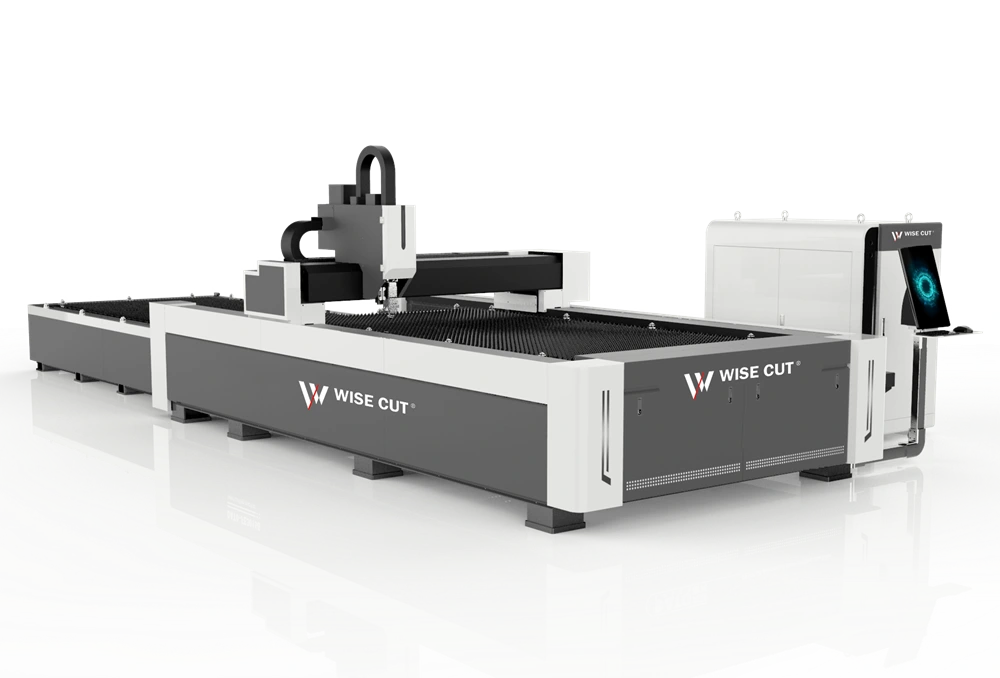
Fast Processing and Consistent Quality: The apparatus achieves rapid performance levels, attaining velocities of up to 110m/min. Additionally, it upholds stringent dimensional criteria, approximately ±0.03mm, across successive cycles. As a result, each produced item replicates the original with exactitude. For uninterrupted continuity, an Machine de coupe laser de fibre de table d'échange permits material replenishment and removal concurrently with active beam engagement. This mechanism effectively curtails delays and elevates overall output capacity.
Single Operation for Cutting and Engraving: Both severing and inscription occur within one unified procedure using identical machinery. This consolidated technique offers superior productivity for vehicle elements. Such elements often require embedded identifiers or emblems directly upon their surfaces. In essence, it streamlines operations by obviating the necessity for separate apparatuses.
Specific Applications of Laser Cutting in Automotive Manufacturing
Laser systems contribute extensively to the refinement and preparation of numerous vehicle constituents. For example, they eliminate rough edges from polymer assemblies or shape contours on structural exteriors with meticulous care. Furthermore, these instruments perform admirably in accurate dissection of non-metallic substances. These substances encompass textiles and fabricated hides utilized in passenger compartments and lateral coverings. Regarding substantial workloads, lasers manage metallic framework components effortlessly. Included among these are exterior sheeting, mounting fixtures, and foundational skeletons. Remarkably, a significant portion of contemporary vehicles encounters laser influence prior to retail presentation. This pervasive application highlights the method’s indispensable contribution to attaining polished aesthetics and operational integrity throughout diverse assemblies.
Selection and Applicability of Laser Cutting Types
Determining the suitable laser variant relies upon the precise goals of the fabrication endeavor. Distinct laser categories present unique merits contingent upon the substance category, whether metallic or non-metallic. Essential factors encompass substance classifications, such as carbon steel versus aluminum. Production scale expectations and the degree of exactness demanded for completed pieces also factor in. As an illustration, substantial carbon steel sections, extending to 25mm, necessitate a potent fiber laser for pristine division. Additional specifics regarding compatible arrangements reside on the produits page. There, configurations matching particular substance profiles become evident, aiding informed decision-making.
Impact of Laser Cutting Technology on Manufacturing Efficiency
Transitioning to laser cutting markedly elevates fabrication productivity and reliability. This elevation stems from diminished imperfections and curtailed requirements for corrective measures. In comparison to established practices, the approach diminishes substance depletion more proficiently. The rationale lies in the beam’s minimal width, which enables denser component placement during patterning. Additionally, an emphasis on “Friendly Service” incorporates continuous remote evaluation and prompt field assistance within 48 hours. These provisions confine operational interruptions to negligible durations. Fundamentally, the focus centers on sustaining fluid progression through the assembly conduit absent abrupt interruptions. Further insights into these solutions reveal methodologies for augmenting targeted operational sequences, thereby fortifying enduring performance enhancements.
FAQ (questions fréquentes)
Q1: What is the maximum thickness a laser can cut in the automotive industry?
A: For carbon steel, the limit reaches 25mm, whereas stainless steel typically accommodates up to 20mm.
Q2: How accurate is the positioning on these machines?
A: The X/Y positioning accuracy generally falls around ±0.03mm, proving ample for vehicle assemblies.
Q3: Can I cut both metal and leather on the same brand of machine?
A: Although particular configurations vary, the underlying technology adeptly manages both metallic and non-metallic substances via diverse model variants.
Q4: What happens if the machine has a problem in the middle of a shift?
A: Immediate 24/7 remote assessments occur, complemented by technician arrival on location within 48 hours worldwide to restore functionality.
Q5: Do operators need special training for this equipment?
A: Affirmative, complimentary instruction covers apparatus anatomy, software operation, and upkeep protocols to ensure proficient handling.


