

파이버 레이저 절단기 가격은 얼마인가요?
Time : Nov 13, 2026 조회수: 140
The cost of a Fiber Laser Cutting Machine depends on the complete production setup, not just the laser source or the number shown on a quotation. Power, working area, sheet or tube capability, cutting head, control system, loading method, enclosure, installation, utilities, training, and service terms can all change the final budget.
That is why a single “average price” can mislead buyers. Two machines described with the same product name may have different processing areas, automation, included components, installation responsibilities, and support scope. A better approach is to separate the equipment price from the delivered project cost and the ongoing cost of operating the machine.
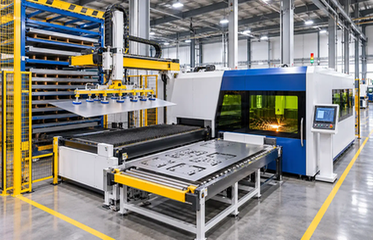
Quick answer: why one price cannot fit every machine
A headline machine price usually describes a defined configuration under specific commercial conditions. It may exclude freight, rigging, site preparation, extraction, electrical work, commissioning, training, spare parts, or destination-specific taxes and compliance checks.
Before comparing numbers, define the work the machine must perform. List the materials, thicknesses, sheet or tube formats, production frequency, edge-quality requirements, and expected loading method. Then ask each supplier to quote the same technical scope. This creates a more useful comparison than collecting several prices for different machines.
The main factors that affect Fiber Laser Cutting Machine cost
Laser power and cutting requirements
Laser power should match the material range and production requirements. A higher-power configuration may be relevant for a particular thickness or throughput target, while a lower-power option may be sufficient for another job mix. Higher power does not automatically create better value if the shop rarely uses the additional capability.
Give suppliers a realistic cutting profile instead of asking for power in isolation. Include the materials you process most often, common thicknesses, occasional maximum thicknesses, part size, cutting frequency, and required tolerances. Ask for the recommended configuration and the reason for it.
Working area and sheet or tube capability
The processing format affects the machine structure, floor space, handling method, and material flow. A sheet machine, tube machine, or combined configuration may require different options and operating procedures.
Confirm the working area, maximum material dimensions, loading path, finished-part space, and service clearance. The right working area is the one that supports your actual jobs without creating unnecessary handling or unused capacity.
The WiseCut fiber laser cutting machine category can help buyers identify the relevant configuration family before requesting a detailed quotation. The category itself should be treated as a product-navigation entry point; the final cost still depends on the exact proposal.
Cutting head, controller, chiller, and core components
The quotation should identify the cutting head, controller, chiller, drive system, software, electrical components, and other core items. These components affect the machine’s operating scope, maintenance requirements, and replacement planning.
The current knowledge base confirms one limited customer configuration statement: BOCI BLT310 is applicable to cutting machines below 4 kW. That statement applies only within its recorded scope and should not be extended to every machine or configuration. Buyers should request the exact component list for the machine being quoted.
Open, enclosed, exchange-table, and automated configurations
The machine format can change both the purchase scope and the installation plan. An open table, full enclosure, exchange table, or automated loading system may affect footprint, material access, service clearance, extraction interfaces, and operator workflow.
For example, an 교환식 테이블 파이버 레이저 절단기 represents a configuration category that buyers may compare when production continuity and loading workflow are important. The relevant question is not whether an option sounds advanced. It is whether the option solves a measured bottleneck in your operation.
What should be included in a supplier quotation?
Machine body and standard components
Ask for a line-item technical scope. It should identify the machine frame, working table, laser source, cutting head, controller, drive and transmission components, chiller, electrical cabinet, software, and standard accessories. If a component is not listed, ask whether it is included, optional, or supplied by the buyer.
A quotation should also state the model or configuration identity, applicable operating limits, delivery condition, and document package. Avoid comparing one supplier’s complete system with another supplier’s base machine.
Loading, unloading, and material handling
Clarify whether loading and unloading are manual, assisted, exchange-table based, or automated. Ask what equipment is included for sheet or tube movement and what the buyer must provide, such as a crane, forklift, staging rack, or local handling labor.
If automated loading is part of the plan, review the fiber laser cutting machine with auto sheet loading as a configuration reference. Confirm the actual offered system, material limits, sequence, safety features, and integration responsibilities rather than assuming every auto-loading page represents the same package.
Software, utilities, extraction, and installation
Software licenses, electrical supply, cooling, compressed air, extraction, foundation requirements, and installation labor may be treated differently by each supplier. Write down who supplies each item and who is responsible for testing it.
The site plan should include machine dimensions, access routes, utility connection points, material staging, service space, and finished-part handling. A low equipment quote can become a high project cost if the facility needs unplanned modifications.
Commissioning, training, documentation, and acceptance testing
Ask what commissioning includes and how the machine will be accepted. The agreement can define document delivery, installation checks, operator training, sample cutting, software setup, and functional tests. Each test should have a clear method and pass condition.
Also confirm the support period and warranty wording. The current client knowledge base records a uniform two-year warranty statement, but its scope remains limited: parts, regions, start date, exclusions, and contractual conditions require the formal warranty terms. Treat the recorded period as a customer knowledge-base reference, not an unconditional global promise.
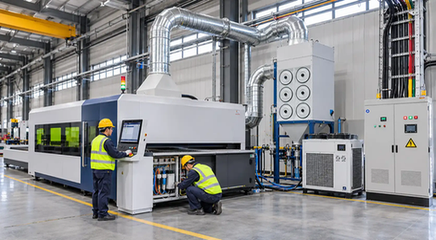
Automation and how it changes the budget
Auto loading and unloading
Automation can add equipment, controls, guarding, integration work, commissioning steps, and training requirements. It may also change the required floor space and material flow. Include these elements in the quote instead of comparing the automation option only by its equipment line.
The right question is whether automation reduces a verified constraint. If operators spend little time on loading but lose capacity through inspection or sorting, an auto-loader may not be the first investment to prioritize.
Exchange tables and production continuity
An exchange table can change how material enters and exits the cutting area. Evaluate the complete cycle, including loading time, unloading time, operator movement, staging, and fault recovery. Ask how the system behaves when a job changes, material is damaged, or a part requires inspection.
When automation can improve operating economics
Automation can improve the economics of a project when it reduces waiting, repeated handling, unplanned interruptions, or labor-intensive handoffs. These benefits should be measured against the added equipment, maintenance, training, and integration cost.
Do not use a generic payback promise. Build the calculation from your own baseline, job mix, working hours, staffing model, and expected utilization.
Hidden or overlooked costs to include in the budget
A complete budget should consider:
Freight, insurance, unloading, rigging, and delivery access
Site preparation, floor capacity, electrical work, cooling, and extraction
Material staging, racks, lifting equipment, and finished-part handling
Consumables, optics, nozzles, protective windows, and routine maintenance
Spare parts, software support, training, and service travel where applicable
Production downtime during installation, commissioning, and operator learning
Destination-specific taxes, duties, documentation, and compliance checks
Financing, currency movement, and payment-related commercial terms
These items vary by machine, destination, and contract. Ask the supplier to separate included work, optional work, buyer-supplied work, and work assigned to a local contractor.
How to compare two Fiber Laser Cutting Machine quotes
Use a normalized comparison table rather than comparing totals alone.
|
Cost area |
Quote A |
Quote B |
What to verify |
|---|---|---|---|
|
Machine configuration |
Included items |
Included items |
Same power, format, and process scope |
|
Handling and automation |
Manual or automated |
Manual or automated |
Same loading and unloading assumptions |
|
Installation |
Included or excluded |
Included or excluded |
Labor, rigging, utilities, and commissioning |
|
Software and controls |
Listed scope |
Listed scope |
Licenses, updates, integration, and training |
|
수락 |
Test method |
Test method |
Sample material, criteria, and responsibility |
|
지원하다 |
Warranty and service |
Warranty and service |
Coverage, exclusions, response, and spare parts |
|
Operating cost |
Consumables and maintenance |
Consumables and maintenance |
Expected service tasks and replacement items |
Then ask each supplier to confirm the same materials, thicknesses, formats, and acceptance criteria. If one quotation is vague, its lower number may simply reflect missing scope.
A practical RFQ checklist for machine pricing
Include these questions in your request for quotation:
1. What exact machine configuration is being quoted?
2. Which materials, thicknesses, formats, and cutting conditions does it cover?
3. Which laser source, cutting head, controller, chiller, and software are included?
4. Is the machine open, enclosed, exchange-table based, or equipped with automated loading?
5. What are the footprint, access, utility, extraction, and installation requirements?
6. Which freight, rigging, commissioning, and training costs are included?
7. What does the acceptance test measure, and who supplies the sample material?
8. Which warranty terms, exclusions, service channels, and spare parts are provided?
9. Which items are optional or supplied by the buyer?
10. What information is needed to calculate the delivered project cost for the destination?
FAQ: Fiber Laser Cutting Machine cost
What is included in the advertised machine price?
It depends on the quotation. Some prices describe the core machine only, while others include selected options, software, installation, training, or handling equipment. Request a line-item scope and separate included, optional, and buyer-supplied work before comparing offers.
Does higher laser power always mean better value?
No. Higher power may be useful for a specific material range or production target, but it can add purchase, utility, and operating requirements. Match power to your real cutting profile and ask the supplier to explain the configuration recommendation.
Is an enclosed or automated machine worth the extra cost?
It can be worthwhile when it solves a documented workflow, access, containment, or handling problem. Compare the added equipment and installation scope with the measurable delay it removes. The option should fit the job mix and facility layout.
How can I estimate total cost of ownership?
Start with the delivered machine cost, then add installation, utilities, maintenance, consumables, spare parts, training, software support, and expected downtime. Compare those costs with lead time, utilization, handling effort, rework, and production requirements over the period you plan to operate the machine.
Final decision: compare a complete production solution
The cost of a Fiber Laser Cutting Machine is the cost of a complete production solution. Power and machine format matter, but so do handling, installation, utilities, commissioning, training, service, maintenance, and acceptance terms.
Before choosing the lowest quotation, normalize the technical scope and ask what has been excluded. A clear RFQ and a complete project budget will give you a more reliable purchasing decision than a headline number alone.


