
111-2
> 뉴스 > 산업 뉴스 > How to Choose a Fiber Laser Cutting Machine for Your Business: A Practical Buying Guide

How to Choose a Fiber Laser Cutting Machine for Your Business: A Practical Buying Guide

Time : Jun 25, 2026 조회수 : 273

내용표

    Knowing how to choose a fiber laser cutting machine starts with a clear understanding of daily production, not with the lowest quotation. In many sheet metal workshops, buyers first compare laser power, cutting thickness, and machine price. Those details matter, but they do not explain whether a machine will fit real cutting work after installation.

    A fiber laser cutting machine for business should match material type, common thickness, sheet size, order volume, labor arrangement, workshop space, and future growth plans. A small shop cutting custom stainless steel panels has different needs from a factory cutting carbon steel brackets all day. Choosing the wrong configuration can lead to unused capacity, slow loading, poor workflow, or higher operating cost than expected.

    베이징 와이즈컷 유한회사 supplies fiber laser cutting machines, laser welding machines, laser cleaning machines, CNC press brakes, and automated metal fabrication solutions for global industrial users. For procurement teams, the better decision is not simply which machine looks more powerful, but which fiber laser cutting solution fits the business model.

    How to Choose a Fiber Laser Cutting Machine for Your Business A Practical Buying Guide

    Define Material Type and Cutting Thickness First

    Material and thickness should be reviewed before choosing laser power. Carbon steel, stainless steel, aluminum, brass, copper, galvanized sheet, and alloy steel do not cut in the same way. Each material may require different power, cutting gas, speed settings, and edge quality control.

    A common purchasing mistake is choosing a machine based only on maximum cutting thickness. In daily production, stable production cutting thickness is more important. For example, if a workshop cuts 3 mm to 8 mm stainless steel every day and only cuts thicker plate occasionally, the machine should be selected around the regular workload, not the rare job.

    Before asking for a fiber laser cutting machine quotation, buyers should prepare the common thickness range, maximum thickness, material list, and monthly cutting volume. This helps the supplier recommend a practical laser power instead of a configuration that is too small or unnecessarily expensive.

    Choose the Right Working Area and Machine Size

    The working area should match regular sheet size and factory handling conditions. A sheet metal laser cutting machine with a larger bed may seem attractive, but it also requires more floor space, loading room, safety clearance, and material movement space.

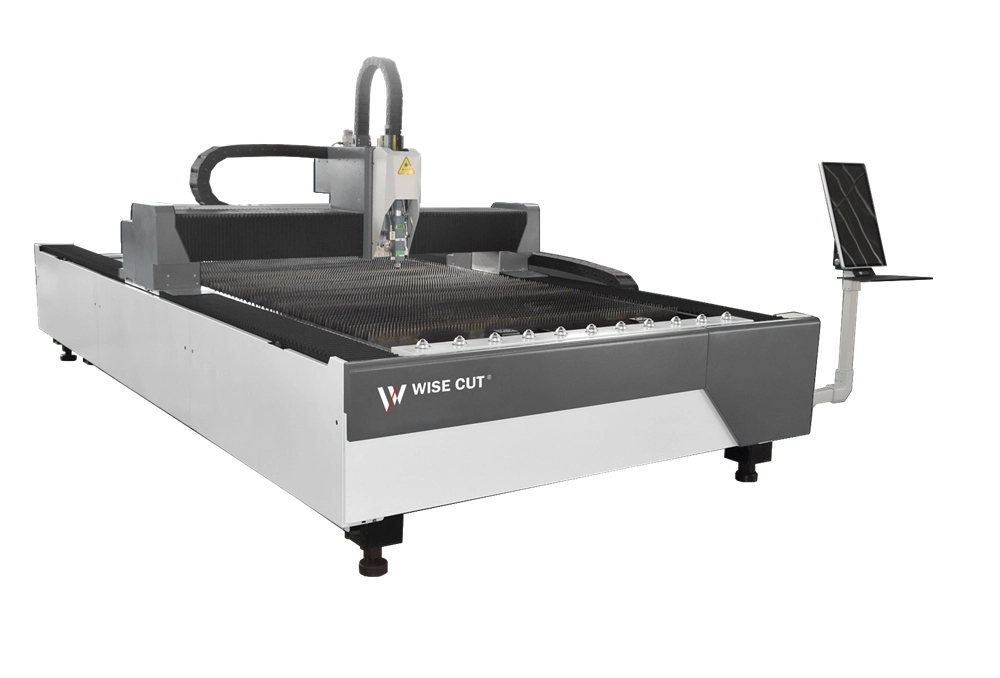
    For many small and medium workshops, a compact single platform fiber laser cutting machine can handle regular sheet metal work while keeping investment and layout pressure under control. WiseCut’s single platform metal sheet laser cutting machine page lists the WT-1530 open type model with a 1550 × 3050 mm processing area, 100 m/min running speed, and maximum cutting thickness of 30 mm. This type of machine is positioned for high-precision metal cutting in steel fabrication, chassis cabinets, construction, advertising signs, auto parts, machinery parts, and hardware products.

    Wisecut WT-1530 Open Type Laser Cutting Machine

    Before confirming machine size, buyers should check the largest regular sheet, forklift access, material storage area, unloading route, and space for future dust removal or loading equipment.

    Match Machine Structure to Production Volume

    Machine structure should follow production rhythm. A single table fiber laser cutting machine is usually suitable for flexible jobs, custom parts, small batches, and moderate daily sheet volume. Loading, cutting, unloading, and scrap removal happen on one platform. The structure is direct and easier to manage.

    An exchange table fiber laser cutting machine is better for batch production. One table stays in the cutting area while the second table is used for loading or unloading outside the cutting zone. WiseCut’s WT-4020 open type exchange table fiber laser cutting machine is listed with a 4050 × 2050 mm processing area, 3–12 kW laser power, 100 m/min running speed, maximum cutting thickness of 30 mm, double worktables, bilateral drive, and a 15-second table exchange time.

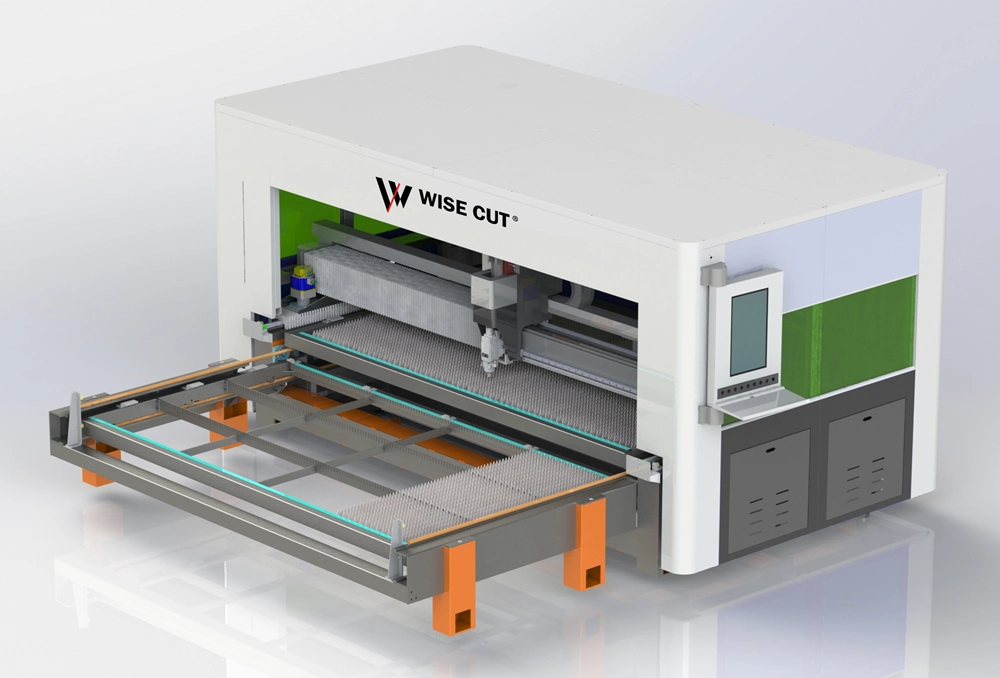
    A full enclosed fiber laser cutting machine may be considered when safety, fume control, and cleaner operation are priorities. An automatic loading fiber laser cutting machine becomes valuable when manual sheet handling slows down production. WiseCut’s auto sheet loading system combines loading and unloading equipment, CNC control, vacuum control, and electric trolley handling to form an automated sheet metal production unit.

    Compare Laser Power by Business Goal

    Higher power can improve cutting ability and speed on suitable materials, but it also raises machine cost, electricity demand, gas consumption, and maintenance requirements. The question should not be “What is the highest power available?” but “What power fiber laser cutter is needed for regular production?”

    A business cutting mostly thin stainless steel, electrical cabinets, advertising panels, and light hardware parts may not need the same power as a factory cutting thick carbon steel plates for construction machinery. Buyers should ask for sample cutting, speed references, edge quality checks, and recommended parameters based on real materials.

    The right fiber laser cutting machine power should support common orders, stable cutting quality, delivery speed, and long-term cost control.

    Calculate Real Cost and ROI

    Fiber laser cutting machine price includes more than the machine body. Buyers should also consider the laser system, cutting head, control system, chiller, dust removal, gas supply, electricity, spare parts, installation, training, and service response.

    A practical ROI review should compare machine investment with saved outsourcing cost, reduced labor hours, shorter delivery time, lower rework, and increased daily output. If manual loading wastes too much time, an exchange table or automatic loading system may pay back through recovered cutting hours. If order volume is still unstable, a single table machine may be the safer investment.

    The best industrial laser cutter investment is the one that keeps production moving without adding unnecessary complexity.

    Check Supplier Capability and Service

    A fiber laser cutting machine supplier should be evaluated by more than catalog specifications. For B2B buyers, after-sales support affects uptime, operator confidence, and long-term production stability.

    BEIJING WISECUT LTD has a Tianjin factory integrating production, R&D, and after-sale service, with a modern factory area reported on the company website. WiseCut also provides metal shaping and automated production line solutions for global customers, supported by customization capability, technical service, training, and spare parts support.

    Before payment, buyers should request cutting samples, machine videos, layout drawings, installation requirements, warranty terms, training details, and after-sales response information. A lower initial quote may not be cheaper if technical support is weak after delivery.

    결론

    Choosing the right fiber laser cutting machine requires a practical review of material, thickness, sheet size, laser power, machine structure, automation level, cost, ROI, and supplier service. A small business may need a compact single platform machine. A growing fabrication shop may benefit from an exchange table model. A high-volume factory may need automatic loading and a more complete production line layout.

    베이징 와이즈컷 유한회사 provides single platform, exchange table, full enclosed, sheet and tube, and automatic loading fiber laser cutting machine solutions for different metal fabrication needs. Buyers can send material type, thickness range, sheet size, daily cutting hours, workshop layout, and budget to receive a suitable configuration recommendation.

    자주 묻는 질문

    What fiber laser cutting machine is best for a small business?

    A small business usually needs a machine that matches its common material, sheet size, budget, and daily order volume. A single table fiber laser cutting machine is often suitable for custom parts, small-batch work, and moderate sheet metal cutting needs.

    What power fiber laser cutter do I need for sheet metal?

    The right power depends on material type, common thickness, cutting speed, edge quality, and production volume. Buyers should choose power based on regular production thickness, not only the maximum thickness listed in a catalog.

    How much does a fiber laser cutting machine cost?

    Fiber laser cutting machine cost depends on laser power, working area, machine structure, automation level, safety enclosure, core components, and service package. Buyers should compare total operating cost and ROI instead of only checking the initial machine price.

    Is an exchange table fiber laser cutting machine worth it?

    An exchange table fiber laser cutting machine is worth considering when loading and unloading time reduces daily output. It is suitable for batch production, repeat sheet cutting, long shifts, and factories that need shorter idle time between jobs.

    Can a fiber laser cutting machine be customized for my business?

    A fiber laser cutting machine can often be customized by working area, laser power, table structure, enclosure type, loading system, and production line layout. A qualified supplier should review material, thickness, capacity target, and workshop space before recommending a configuration.


    WhatsApp의
    이메일
    연락처