

Контрольный список технического обслуживания станка для лазерной резки волоконным лазером
Время: 21 августа 2026 г. Просмотр : 600

Оборудование для лазерной резки волоконным лазером превращает капиталовложение в ежедневную производственную мощность. Регулярное техническое обслуживание обеспечивает высокое качество резки и позволяет определить, когда компонент нуждается в ремонте. Используйте этот контрольный список для смен, недель и месяцев, а также руководство пользователя. Ознакомьтесь с информацией. фстанок для лазерной резки iberс перед сопоставлением процедуры с моделью.
Почему важно техническое обслуживание станков для лазерной резки волоконным лазером?
Техническое обслуживание связывает резку листа, состояние станка и записи о техническом обслуживании. Загрязнение оптического тракта может снизить энергию на заготовке, износ сопла может изменить поток газа, а срабатывание сигнализации о перегреве может остановить источник или головку.
Техническое обслуживание защищает оптику, механизм движения и систему охлаждения.
Режущая головка, защитное окно, сопло, система фокусировки, подвижные части, кабели и чиллер работают как единый процесс. Записывайте симптом, проверку, предпринятые действия и результат в один и тот же журнал технического обслуживания.
Сопоставьте контрольный список с вашей машиной и режимом работы.
Длина рабочей зоны, запыленность, влажность, толщина материала, вспомогательный газ и объем резания влияют на рабочую нагрузку. Прилагаемые данные для WT-3015 описывают станок мощностью 3000 Вт с рабочей зоной 1550 x 3050 мм, максимальной скоростью холостого хода 100 м/мин, точностью позиционирования по осям X/Y +/-0,03 мм, водяным охлаждением, питанием от сети 380 В и предельной нагрузкой на стол 1 тонна. Эти данные описывают одну из конфигураций. В вашем контрольном списке следует использовать предельные значения для приобретенной вами модели.
Что следует проверять до и после каждой смены?
Процедура смены должна занимать несколько минут и оставлять простой отчет. Операторы могут выявить загрязнения, незакрепленные детали и отклонения от нормы до начала производства партии. Для листовых линий сравните... станок для лазерной резки листового металла волоконным лазером с запланированным рабочим циклом.
Осмотрите защитную линзу и режущую головку.
Осмотрите защитную линзу на наличие черных пятен, пыли, следов дыма или повреждений. В прилагаемой инструкции по техническому обслуживанию указано, что осмотр следует проводить в безветренном, чистом и беспыльном помещении, а при появлении загрязнений линзу следует заменить. Проверьте индикаторы режущей головки, чтобы определить состояние фокусирующей линзы, температуру и влажность в камере, температуру защитного окна, давление газа и расстояние емкости от заготовки.
Проверьте сопло, фокусировку, выравнивание и давление газа.
Проверьте наличие засора или повреждения сопла. Подтвердите положение красного индикатора и сфокусируйтесь на тестовой пластине при изменении характера резки, кромки или искрообразования. Перед обработкой критической партии проверьте соосность лазера и сопла, а также давление вспомогательного газа. При сохранении сигнала тревоги соблюдайте установленный пороговый уровень давления.
Очистите рабочую поверхность, удалите шлак, кабели и элементы управления безопасностью.
Удалите шлак и металлолом, опорожните зоны сбора и обеспечьте чистоту площадки вокруг пути движения. Проверьте прокладку кабелей, аварийную остановку, ключевые элементы управления, заземление и предупреждающие надписи. Зафиксируйте ослабленные кабели, необычные звуки, поврежденные оболочки или неисправности в системе безопасности.
Что должно быть включено в еженедельный и ежемесячный график технического обслуживания?
Для плановых сервисных работ необходимо указать ответственного, дату и результат. Используйте приведенный ниже график в качестве основы, а затем сопоставьте смазочные материалы и фильтры с руководством поставщика.
|
Интервал |
Основные проверки |
Зарегистрируйте или передайте информацию вышестоящему руководству. |
|
Каждая смена |
Линза, сопло, фокусировка, газ, платформа, кабели и средства безопасности. |
Фотография, текст, инициалы оператора и открытый вопрос. |
|
Еженедельно |
Рельсы, стеллажи, подшипники, фильтр для чиллеров, трубы, волоконно-оптическая и воздушная системы. |
Запись о смазке, состоянии фильтра и проверке на герметичность. |
|
Ежемесячно |
Электрощит, датчики, цепи, охлаждающая вода и параметры. |
Подпись техника, история аварийных сигналов и запрос на запчасти. |
|
Ежеквартально или ежегодно |
Выравнивание, калибровка, проверка состояния труб, глубокая очистка шкафов и сервисный осмотр. |
Отчет об обслуживании, план замены и акт приемки. |
Смазка направляющих, зубчатых реек, подшипников и движущихся частей.
Перед нанесением указанной смазки очистите направляющие, зубчатые рейки и открытые движущиеся части от пыли. Проверьте шум подшипников, люфт, натяжение цепи и плавность хода. Запишите информацию о смазке, дате, операторе и оси. Используйте один из классов смазки, если это указано в руководстве.
Проверьте чиллер, фильтры, трубы и качество воды.
В прилагаемой информации о HL-3000 описана двойная система охлаждения лазерного источника и лазерной головки, диапазон температур воды 15-35°C, погрешность измерения температуры +/-1°C, диапазон температур окружающей среды 10-40°C и резервуар объемом 150 л. В качестве охлаждающей среды указана чистая вода или раствор этиленгликоля с концентрацией не более 25%. Проверьте текущую конфигурацию, уровень воды, фильтр, расход, температуру и все выходные и возвратные соединения.
Сигналы тревоги чиллеров включают в себя информацию о температуре, уровне жидкости и расходе. Очищайте загрязненные фильтрующие сетки утвержденным методом, следите за чистотой вытяжных отверстий и передавайте информацию о повторяющихся срабатываниях тревоги вышестоящему руководству перед началом производства.
Обзор электрощитов, оптоволоконных кабелей и датчиков.
Содержите электрощиток в сухом месте и удаляйте пыль в соответствии с процедурой обслуживания. Проверьте защиту волокна, изгибы, износ и соединения. Проверьте показания режущей головки, газа, температуры, влажности и емкости. Создайте резервную копию утвержденных параметров перед внесением изменений в систему управления.
Планирование ежеквартальных и ежегодных проверок
Работы с более длительными интервалами могут включать замену труб и фильтров, осмотр цепи и шестерни, очистку корпуса, выравнивание и калибровку. Сохраните отчет о техническом обслуживании вместе с документами о приемке оборудования.
Как следует использовать сигналы тревоги и записи о техническом обслуживании?
Сигнал тревоги — это точка принятия решения с кодом, указывающим на необходимость расследования. Сопоставьте его с результатами недавней стрижки, показаниями окружающей среды и последними действиями по техническому обслуживанию.
Запись симптомов неисправности объектива, сопла, фокусировки и охлаждения.
Запишите материал, толщину, газ, скорость, мощность, результат обработки края и время срабатывания сигнализации. Сфотографируйте загрязнение линзы или сопла перед заменой. При обнаружении утечки воды осмотрите соединения чиллеров и соединения лазерного источника. Последовательная запись сокращает время удаленной диагностики.
Для получения информации о кодах аварийных сигналов и предельных значениях используйте руководство поставщика.
Метки и пороговые значения аварийных сигналов различаются в зависимости от источника, головки блока, чиллера и системы управления. При каждом обращении в сервисный центр сохраняйте модель, серийный номер, версию программного обеспечения и файл параметров, чтобы поставщик мог сопоставить код с маршрутом проверки и запасной частью.
Примените блокировку и средства защиты лазера.
Открывать охраняемые зоны, осматривать оптические компоненты или работать с электрическими и охлаждающими цепями должен только квалифицированный персонал. Необходимо соблюдать процедуры включения/выключения, заземления, аварийной остановки и отключения питания оборудования. Не допускайте посторонних лиц в рабочую зону лазера класса 4.
Какие вопросы следует задавать B2B-покупателям поставщику волоконных лазеров?
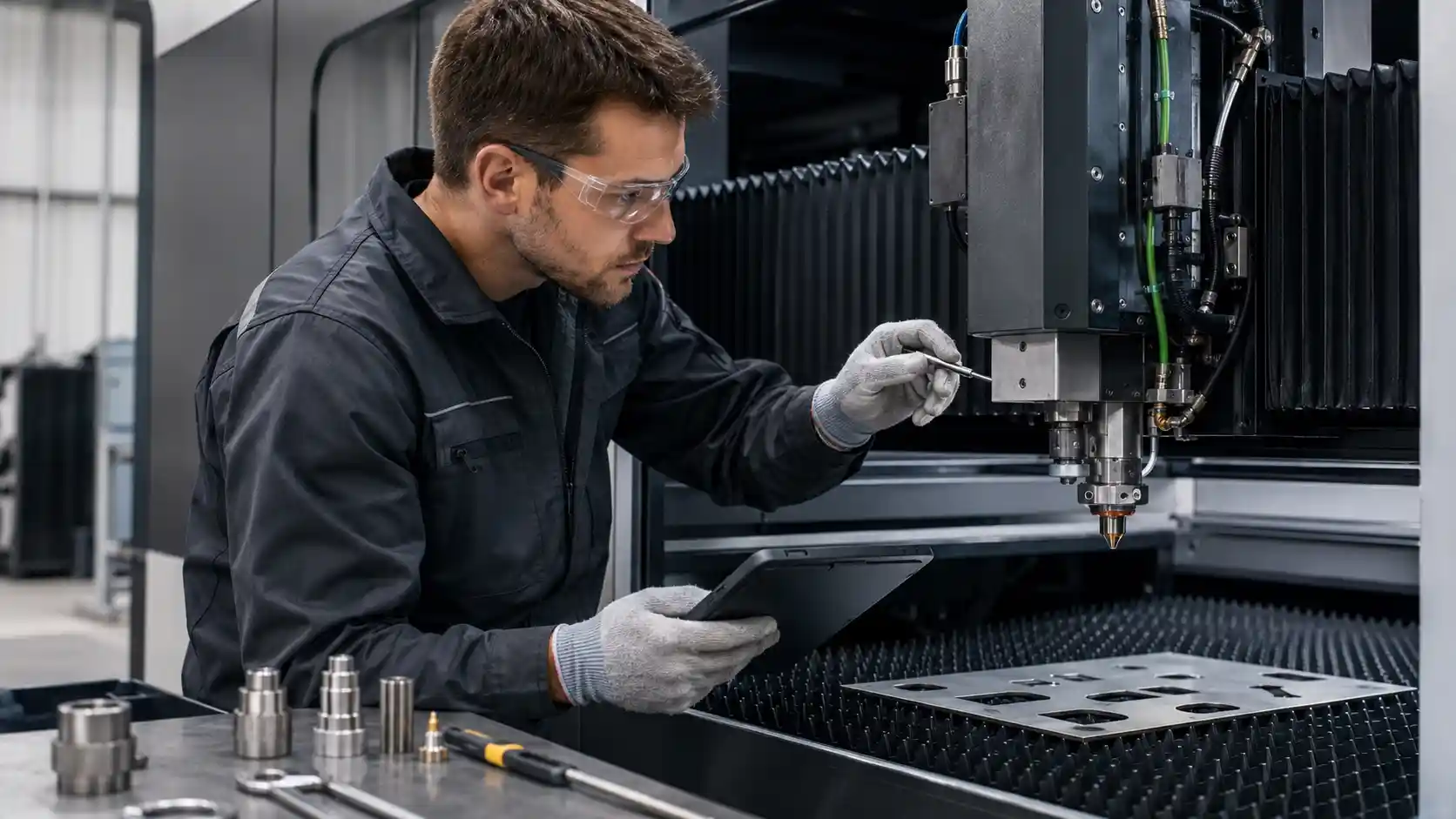
Техническое обслуживание начинается на этапе закупки. Операторам необходимо пройти обучение, получить документацию по аварийным сигналам и ознакомиться с порядком замены важных деталей линз и чиллеров.
Подтверждение обучения, удаленная диагностика и выездное реагирование.
Запросите обучение оператора, включающее программирование, осмотр, техническое обслуживание и уход. Уточните часы работы службы поддержки, метод удаленной диагностики, целевое время реагирования и условия выездного инженерного обслуживания.
Проверка приемки, запасные части и документация
В базе знаний описывается окончательная проверка после установки, отладки и самодиагностики, включая количество, модель, функциональность и технические данные. Внесите эти поля в протокол приемки. Запросите документы по запасным частям, аварийным сигналам и резервным параметрам.
Проверьте правильность установки оборудования, систему охлаждения и условия его работы.
Сообщите информацию о материале, толщине, размере стола, мощности, сменах, вспомогательном газе, условиях в помещении и годовом количестве отработанных часов. Попросите поставщика подтвердить требования к охлаждению, электроснабжению, фундаменту, вентиляции и обслуживанию.
Правильный поставщик оборудования для лазерной резки волоконным лазером обеспечит вашу команду станком, документированным алгоритмом действий и планом реагирования в случае возникновения неисправности. Используйте контрольный список во время запроса коммерческого предложения, приемочных испытаний и анализа производства. Для смешанных профилей ознакомьтесь с информацией о поставщике. сервисная поддержка перед окончательным определением объема работ.
О WiseCut
Компания WiseCutBEIJING WISECUT LTD описывает «Четыре принципа дружелюбия», охватывающие установку, эксплуатацию, обслуживание и техническое сопровождение. В базе знаний компании указаны завод в Тяньцзине для производства, исследований и разработок и послепродажного обслуживания, а также предприятие в Цзинане, открытое в 2023 году. WiseCut заявляет, что ее станки имеют сертификат CE и предоставляют поддержку на английском языке, бесплатное обучение операторов, удаленную помощь, поставку запасных частей и выезд инженера на место в течение 48 часов по всему миру. Компания сообщает о более чем 1000 станках, работающих в более чем 20 странах, и более чем 200 моделях станков. Информация о материале, толщине, размере стола, мощности и рабочем цикле передается через систему. Контактная страница WiseCut.
Часто задаваемые вопросы
В1: Как часто следует проводить техническое обслуживание станка для лазерной резки волоконным лазером?
А: Операторы должны проводить проверку линз, форсунок, газа, платформы, кабеля и безопасности каждую смену. Проверка направляющих, подшипников, фильтров чиллеров и состояния волокна должна проводиться еженедельно. Электромонтажные, охлаждающие, калибровочные работы выполняются в соответствии с руководством по эксплуатации и планом технического обслуживания.
Вопрос 2: Что операторы должны проверять каждый день?
A: Осмотрите защитную линзу и сопло, подтвердите фокусировку, выравнивание и давление газа, удалите шлак, проверьте кабели и протестируйте средства безопасности. Запишите показания и сделайте фотографии при изменении условий.
В3: Как сигналы тревоги чиллеров влияют на лазерную резку волоконным лазером?
A: Сигналы тревоги о высокой или низкой температуре воды, уровне жидкости и расходе могут нарушить охлаждение лазерного источника или режущей головки. Остановитесь и следуйте документированному маршруту проверки температуры, фильтра, уровня воды, потока воздуха, труб и соединений.
Вопрос 4: Какую поддержку может ожидать B2B-покупатель от поставщика волоконных лазеров?
A: Запросить обучение операторов, документы по техническому обслуживанию и сигнализации, удаленную диагностику, доступ к запасным частям, протоколы приемки установки, целевые показатели реагирования и условия выездного инженерного обслуживания.
Вопрос 5: Можно ли использовать один контрольный список технического обслуживания для всех станков для лазерной резки волоконным лазером?
A: Можно использовать общую схему графика, но ограничения и интервалы замены зависят от модели оборудования, источника питания, нагнетателя, чиллера, рабочего цикла и условий окружающей среды. Подтвердите окончательный контрольный список с помощью руководства поставщика.


