

Laser Cutting Machines for Automotive Parts Manufacturing
Time : Nov 20, 2026 Просмотры : 25
Laser Cutting Machines can support automotive part production when geometry, material, volume, and downstream requirements fit. They do not replace stamping, punching, or machining in every case. Separate flat-sheet, tube/profile, and post-form trimming work, then compare cut quality and total process time on representative parts.
The right setup depends on more than the cut itself. Material grade and coating, thickness, tolerance, edge condition, loading, part sorting, and the next manufacturing step all matter. For example, cutting a blank before forming is a different application from trimming a hardened component after forming. A system designed for sheet metal also does not automatically process tubes or three-dimensional parts.
For a first look at available product categories, see the WiseCut fiber laser cutting machine range. Treat its listings as equipment references; they do not establish automotive customer use or prove suitability for a particular part.
Which automotive parts can be laser cut?
The most useful way to classify automotive work is by the part’s shape and when cutting happens in its production route. Examples below are application categories, not a claim that every component should be laser cut.
Flat-sheet parts
Flat patterns can include brackets, covers, shields, panels, and pieces used in an enclosure or tray assembly. A flatbed laser processes the sheet before it is bent, formed, or joined. This format can be worth evaluating when designs change, the part mix is varied, or the cutting program needs to produce different contours from sheet stock.
В metal sheet fiber laser cutting machine category is relevant when the work is primarily flat stock. Before selecting a system, compare the actual sheet sizes and grades in the job mix with the usable table area, loading method, nesting plan, and downstream forming requirements.
Tubes and profiles
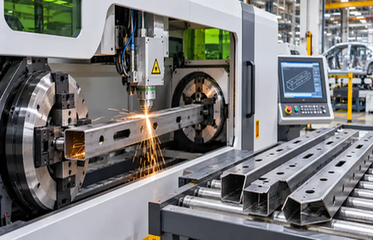
Tube or profile parts may need holes, slots, notches, miters, or shaped ends before welding or assembly. A tube laser uses a different workholding and material-feed approach from a flatbed system. Check the cross-section, length, wall thickness, cut features, and how the part will be located during subsequent joining.
For this geometry, review the tube fiber laser cutting machine category. If a supplier offers a combined sheet-and-tube format, compare it with separate machines using the shop’s real mix and schedule; a combined capability does not mean both forms of work can run at once or at the same rate.
Formed parts that need trimming
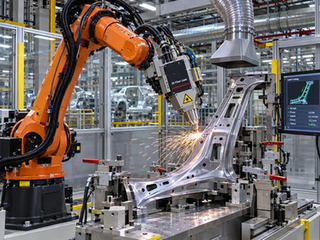
Some parts are cut after forming, including hot-stamped, high-strength steel components. Their final contour may be difficult to reproduce with a standard flatbed setup because the workpiece is no longer flat. A three-dimensional or robotic laser cell may be evaluated when access, fixturing, and part variation justify that approach.
Research on CO2 laser cutting of hot-stamping boron steel for automotive body structures evaluates cut perpendicularity, surface irregularity, kerf width, heat-affected zone, and dross. It also finds that settings affected the results for the specific material and process tested. That study concerns a particular CO2 laser experiment, so use it to identify validation questions, not as a ready-made recipe for another material or machine.
Choose a machine format by part geometry
Use the geometry and production route to narrow the system type before comparing individual models.
|
Part and process |
Machine format to evaluate |
Questions to resolve |
|---|---|---|
|
Flat sheet cut before forming |
2D flatbed sheet laser |
Sheet envelope, usable table area, nesting, loading, and part sorting |
|
Tube or profile cut before assembly |
Tube/profile laser |
Cross-section range, length, wall thickness, clamping, and remnant handling |
|
Formed or hot-stamped component trimmed to final contour |
3D or robotic laser cell |
Part location, access, fixturing, registration, edge quality, and cycle time |
|
Recurring mix of sheet and tube parts |
Separate or combined system comparison |
Actual demand by part family, changeovers, scheduling, and whether work can overlap |
Flatbed systems for sheet components
Flatbed machines are designed around sheet stock and a two-dimensional tool path. They may suit parts whose geometry is defined in a flat pattern and then moved to forming, welding, or assembly. Confirm the full work envelope, not just the nominal table size: clamps, borders, skeleton removal, and part unloading can affect usable space.
Tube and profile systems for hollow sections
Tube cutting needs repeatable rotation and support along the workpiece. Check how the system handles the profiles in your drawings, including open sections and non-round shapes if they occur. Also review load length, chuck access, part cutoff, and the transfer from cutting to welding or assembly.
3D systems for formed components
Trimming a formed component introduces additional variables: part presentation, locating datums, fixture repeatability, tool access, and variation between formed parts. Ask how the proposed system finds the component and verifies its position. A successful demonstration on a flat coupon does not prove that a robotic path will fit a formed production part.
Compare laser cutting with stamping and other processes
Do not treat laser cutting as an automatic upgrade over stamping, punching, sawing, or machining. Compare the production route against the part family and the changes expected during the product life.
Consider tooling and design changes
For a stable design and a large planned run, evaluate the cost, lead time, maintenance, and change process for dedicated tooling alongside the laser option. For prototypes, pilot builds, or a changing part mix, a programmable cutting route may be useful because geometry can be revised in the program. The buyer still needs to check cut quality, cycle time, and downstream fit; flexibility alone does not establish the lower-cost process.
Compare the complete process, not just cutting time
Build a route-level comparison that includes material staging, cutting, deburring, inspection, forming, joining, and part transfer. A shorter cutting cycle may not shorten delivery if operators spend more time sorting parts or if downstream stations become the constraint. Include scrap, rework, changeovers, consumables, and maintenance in the same model.
Decide where each method belongs
Some operations may be best served by a mix of processes. A laser can cut a prototype or a flexible feature while a different process handles another operation. Map the part’s full manufacturing sequence and validate the choice for the actual drawing revision and production plan. Avoid general claims that one method is always faster or more economical.
Check the requirements that determine cut quality
The machine must produce parts that meet drawing and assembly requirements across the materials the shop actually uses. A successful cut on one mild-steel sample cannot qualify a different grade, coating, thickness, or production condition.
Identify material grade, coating, and thickness
List each material specification and thickness range by part number. Include coatings and any heat-treatment or forming stage that happens before cutting. In automotive applications, steel grade, coating, forming route, and joining requirements are linked design considerations. WorldAutoSteel’s Advanced High-Strength Steel application guidelines provide technical material, metallurgy, forming, and manufacturing information for AHSS use in vehicles.
Give the equipment supplier the same material that will run in production when possible. If the shop uses multiple grades, ask for a test plan that covers the difficult cases, not only the easiest or most common sample.
Define edge, geometry, and fit-up requirements
Translate the drawing into inspection criteria: dimensional tolerance, hole and slot position, edge condition, perpendicularity, burr or dross limits, and fit-up at the next operation. For components that carry load or affect joining, ask engineering and quality teams to define the relevant edge and material checks before the machine trial.
The hot-stamped-steel study above illustrates why a test should assess more than whether the beam completed the contour: it evaluated kerf, heat effects, surface profile, and edge geometry. Do not copy its numerical settings to another system; the tested grade, thickness, laser source, and setup define the scope of those findings.
Verify repeatability across production conditions
Run more than one part and include representative contours, small features, and pierces. Review first-article results, then repeat the cut after material reloads or other normal production changes. If the process depends on special operator adjustments, record them and determine whether the production team can maintain them reliably.
Plan automation and production-line integration
Material handling and data flow can determine whether the laser fits an automotive production route. Specify what happens before and after cutting, not only how the machine receives a program.
Evaluate loading, unloading, and sorting
For flat-sheet work, automated loading may be worth evaluating when sheet movement consumes operator time or creates a recurring wait. The automatic sheet-loading configuration is one example of a product category to assess. Check sheet separation, finished-part removal, skeleton handling, material identification, and what happens when the system encounters a double sheet or other exception.
For recurring sheet work, an exchange-table fiber laser configuration may also be relevant to the layout. Compare its handling sequence with the shop’s loading, cutting, and unloading tasks; the product page is not evidence of a particular automotive cycle time or output.
Connect programs, orders, and part traceability
Confirm how the system receives approved programs and job instructions. Define how revisions are controlled, how a part is identified after cutting, and what records must follow it to inspection or assembly. If an MES or production-control system is involved, map the interface and exception process before installation.
Include safety and environmental controls
Industrial laser cells need a documented safety review. OSHA’s Technical Manual guidance for laser hazards identifies fumes and vapors from laser cutting as industrial hygiene concerns and calls for adequate ventilation to control exposure. It also discusses beam hazards and hazard assessment. Review guarding, interlocks, extraction, fire risks, maintenance access, and local requirements with qualified safety personnel before commissioning the cell.
Validate the application before buying
Ask the supplier to demonstrate the real job, using an approved drawing and material specification. Define acceptance criteria before the trial so that a successful demonstration means more than producing a visually acceptable sample.
Test representative production parts
Select parts that reflect the range of material, thickness, contour, feature size, and quality risk. For formed-part trimming, provide the actual three-dimensional workpiece and the locating approach. For tube work, send the profile and all required holes, notches, and end cuts. Include drawings at the current revision and state any downstream joining or fit-up requirement.
Measure cycle time at the cell level
Record program setup, loading, cutting, unloading, sorting, inspection, and any manual finishing. Separate machine-on time from operator time and note how the system handles material changes or exceptions. Repeat the test under conditions close to the planned shift and product mix. Treat estimates separately from observed trial results.
Confirm service and launch readiness
Before purchase, review installation requirements, floor layout, power and gas supplies, fume extraction, training, spare parts, maintenance intervals, software support, and response arrangements. Assign owners for process engineering, quality approval, safety, and production launch. A machine that passes a sample test still needs a controlled installation and production approval plan.
FAQ: laser cutting machines in automotive manufacturing
Are laser cutting machines suitable for high-volume automotive production?
They can be suitable for some high-volume operations, but the decision depends on the part, cycle-time target, material flow, quality requirements, and total process cost. Compare the laser route with stamping or other methods using representative production data. Do not infer high-volume readiness from a sample cut or a catalog speed figure alone.
What is the difference between 2D and 3D automotive laser cutting?
2D systems cut flat sheet along a programmed contour. Tube systems rotate and position hollow sections for features such as holes or shaped ends. 3D or robotic systems can trim formed components, but they require appropriate fixtures, locating, access, and path validation for the actual part.
Can one machine cut both sheet metal and tubes?
Some product categories combine sheet and tube functions, but buyers should check how each mode is configured and whether both workloads can meet the required schedule. Compare a combined setup with separate machines using demand by part family, changeovers, operator availability, and the ability to run work in parallel.
Which materials are commonly evaluated for automotive laser cutting?
The material list depends on the component and process route. Automotive evaluations may include coated or uncoated steels and aluminum alloys, with high-strength steels requiring particular attention to the specified grade and edge requirements. Confirm material suitability through a supplier test using production-representative stock and approved quality criteria.
What should buyers request in an application test?
Provide current drawings and production material, then agree on tolerance, edge quality, cycle-time scope, and part identification before the test. Ask for repeated runs, inspection results, handling steps, and exception behavior. For formed or tube parts, test the actual geometry and fixtures rather than relying on a flat coupon.
Conclusion: validate the part and the production fit
Laser Cutting Machines fit an automotive process when machine format, material, cut quality, volume, and line integration match the part. Separate sheet, tube, and formed-part work; compare the full route with alternatives; and require a representative application test before selecting equipment.


