

Four Essential Daily Maintenance Checks for Laser Cutting Machines
Time : Jan 29, 2026 Visualizzazione : 384
Maintaining a laser cutting machine in top shape relies more on simple habits than on tricky tasks. In busy factories, where quick output and precise work count, just a short pause can mess up timelines and raise expenses. That’s why steady upkeep isn’t merely a job—it’s a key habit in effective shops.
If you’ve put money into modern cutters from Wisecut, these daily tasks get much easier. The firm builds its gear based on what they term the “Friendly 4 Principle”—easy setup, use, repair, and care. This approach appears in small things, like wire routing to detector spots, which makes routine work quicker and less hassle.
Why Regular Maintenance Matters?
A laser cutting machine counts on the steadiness of its lenses, chill setup, and moving parts’ accuracy. When grit, metal bits, or minor lens marks build up, the beam’s power fades and slice quality falls. That one smudge on the guard lens might soak up more than 10% of the light strength, causing scorched borders or partial slices. You might not spot it at first, but gradually the effects pile on—slower paces, uneven paths, lost stock.
Lots of workers believe failures hit out of nowhere. But most begin softly from missed scans. An overlooked cooler might bump water heat by a couple degrees past safe points, slashing the laser tube’s life by half. By wiping things down and tuning them each day, you stop tiny problems from growing into full stops.
What Are the Core Maintenance Areas?
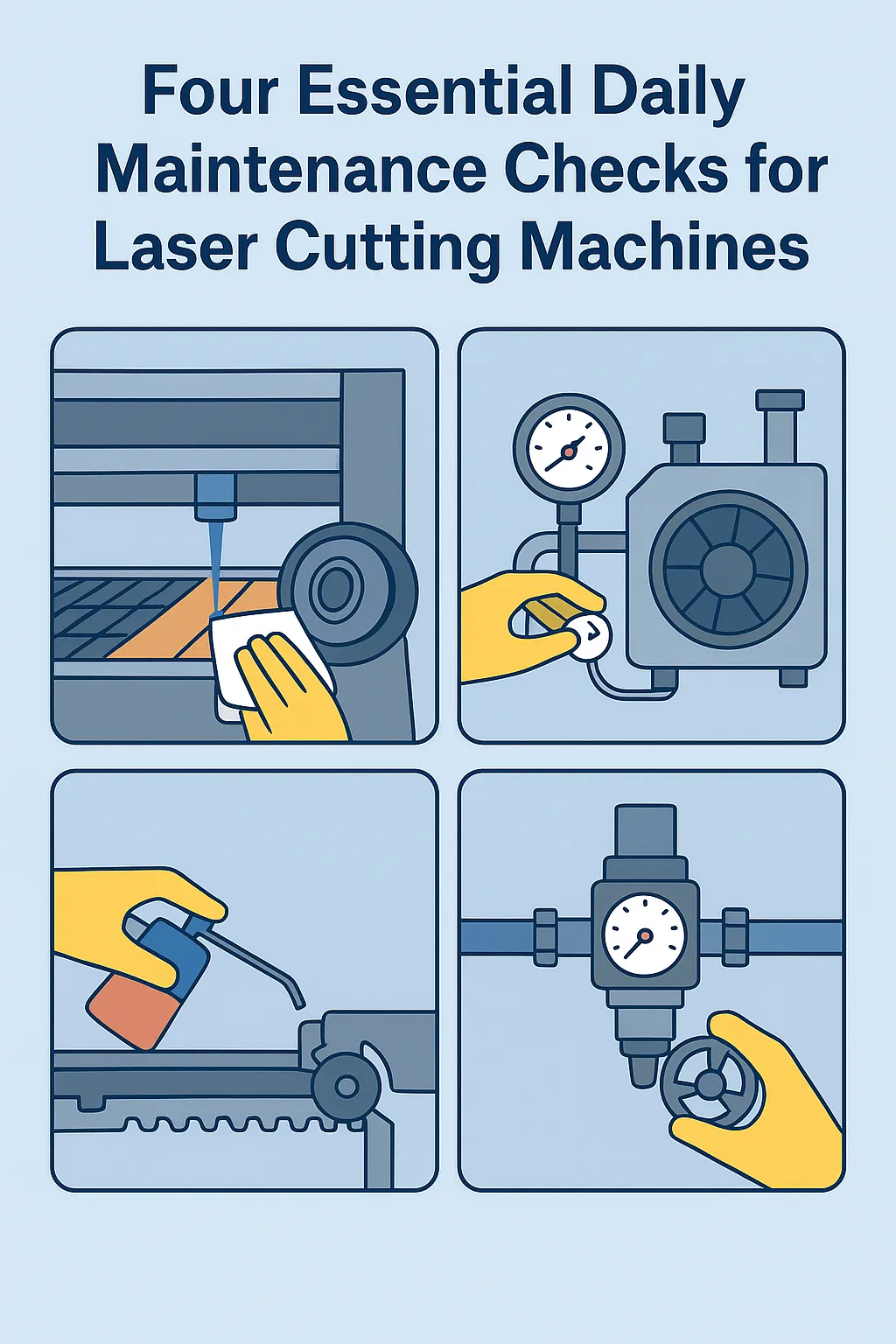
Look deeper, and care boils down to four spots: lenses, chill systems, moving setups, and air lines. Each one helps hold output steady. The guard lenses and reflectors work like the machine’s sight; a grimy one can’t focus well. The chill unit serves as the core, holding the beam maker and head tip at safe heats. Moving tracks and drive motors keep all in place. The air and gas paths aid the light in slicing through iron, alloy, or copper cleanly.
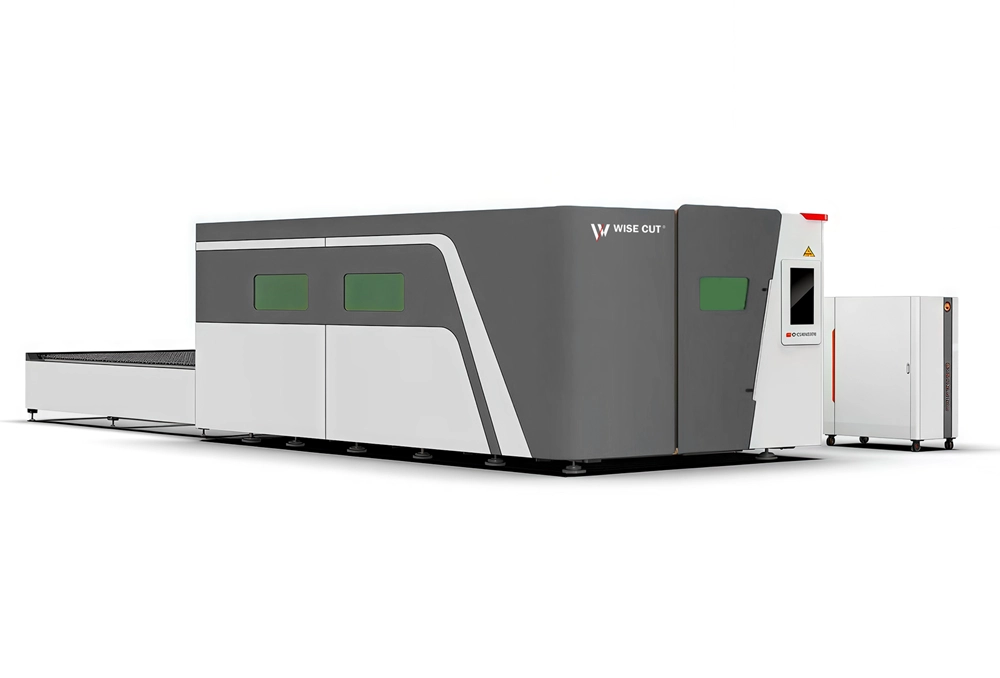
di WiseCut Macchina di taglio laser in metallo chiusa completa features a boxed frame that blocks dust from lenses naturally. It also links a Hanli-brand double chill loop—one for the beam origin, one for the slice tip—so heat control stays tight within one degree. Such build choices cut your wipe time and tune efforts by hours monthly.
Optical Cleaning and Inspection
Begin every work period by eyeing the guard and aim lenses. Grab lint-free wipe sheets and booze swabs, skip canned blast. Hunt for black dots, haze, or nicks. If grime shows up often, it might signal air screens or gaskets need swaps. Steer clear of direct finger contact; even body grease can spread the ray.
Cooling and Gas Systems
Eye the cooler screen for even water heat and stream. Warnings such as E1 or E2 on the panel often flag heat or stream glitches. Come winter, ensure freeze guard mixes in to dodge ice blocks. For gas setups, verify the press gauge hits 0.15 MPa in join mode or 0.7 MPa in slice mode. Tiny shifts can tweak slice pace more than folks guess.
Mechanical and Lubrication Systems
Grime likes to stick near slide bars and tooth gears. A fast rub, then a bit of shop oil, keeps slides even. For the drive engines and gear boxes, ear out for any scrape sounds—it usually means specks slipped by the shield. The Macchina di taglio laser a piastra di metallo di grande formato packs tough base slabs and plane-grade light metal arms, which fight shakes and bends even under 1 T slab weight. Yet, soft oiling aids in holding their sharp aim.

How Often Should You Perform Maintenance Checks?
You lack need for a pro fix each day. But you do call for routine. Each day, scan lenses, fluid heights, and air push. Each week, do fuller wipes on reflectors, swap screens if pull drops, and scan the command logs for faults. Each month, rinse the chill fluid and eye wire links. Every 500 hours, retune path lines and wipe the auto oil sender. After 1000 hours, book a total scan by trained pros.
WiseCut’s Service Team gives round-the-clock web aid and can set up field fixes in 48 hours across the globe. With far-off checks on hand, you dodge output lags.
How to Take Care of Cutting Head and Filters?
The slice head calls for extra watch. In drawn-out jobs, hot bits bounce back up and strike the tip. If you catch odd flares or rough borders, pull it off and check the brass tip for chars. The aim lens hides behind it—wipe soft, no push. Every couple days, take out the clay band and swap if it looks stained or split.
Screens tend to get overlooked till haze fills the box. Wipe the grit catcher each day if work runs thick. For types like AEROm units, change the core after roughly 1500 hours and the coil gates near 6000 hours. Skipping them leads to pull fade and warms the lens area too much.
What Seasonal Adjustments Should You Make?
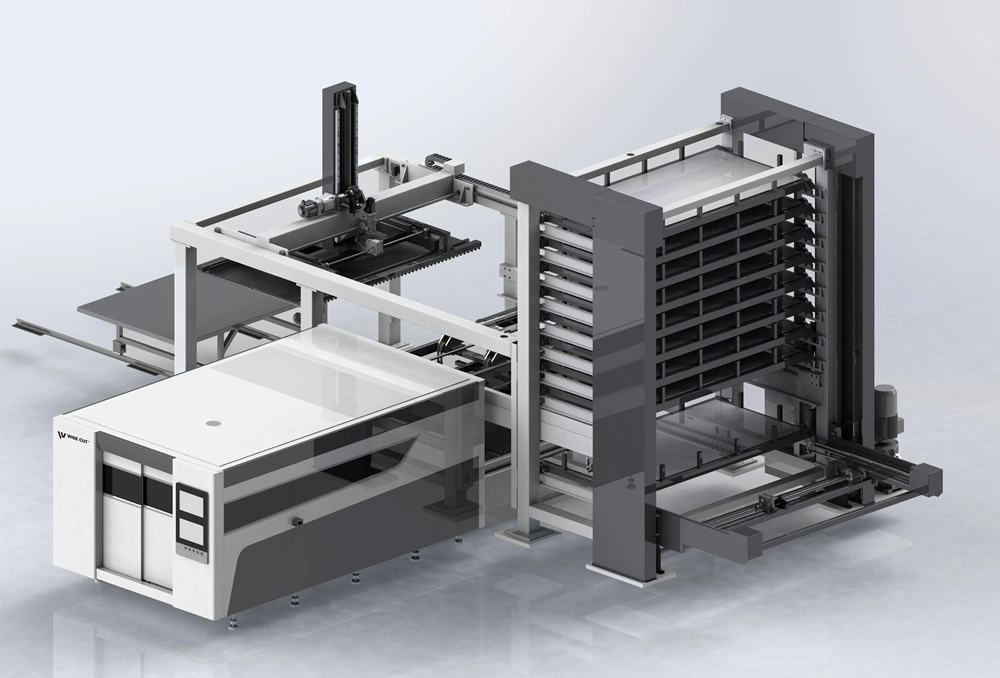
Heat swings strike beam setups tougher than many realize. In cold months, chill fluid can spark “super-low heat” buzzers, icing tubes. Warm spells boost dampness, which threats dew on lenses. Hold the gear space from 10 °C to 40 °C with solid breeze flow. WiseCut’s Tagliatrice laser in fibra con caricamento automatico del foglio packs gauges to track damp and lens heat live, blocking such yearly strains on its own.
Why Is Preventive Maintenance Better Than Reactive Repairs?
Fixing post-break often runs pricier than seasons of ahead care. Once a beam tube or light thread fries, the harm sticks for good. Ahead upkeep acts like a shield. And by grabbing gauge buzzes soon and swapping tired bits on time, you guard both output rate and worker guard.
What Mistakes Should You Avoid During Maintenance?
Certain slip-ups pop up in many shops. Skip shop blast tools to puff grit from lenses—it shoves junk further in. Don’t blend clean nitro and work breeze for slices; bits taint lenses. Dodge wipes when the gear still glows; heat jump can split the lens. And don’t brush off minor buzzes on the panel—they seldom fade alone.
Domande frequenti
Q1: What type of cooling water is best for the laser source?
A: Use pure or deionized water with less than 25% ethylene glycol concentration. Replace it when seasons change.
Q2: Why does the laser stop emitting light intermittently?
A: The most common cause is unstable voltage or loose signal cables. Measure between 205 V and 235 V for stable operation.
Q3: Can you clean the chiller filter yourself?
A: Yes. Remove the side panels, blow off dust gently with an air pump, and reinstall. Keep foam packing away from the vents.


