

Water-Cooled Laser Welder vs Air-Cooled: Which Is the Better Choice
Time : Apr 10, 2026 View : 1,433
Selecting the proper laser welding system involves more than just power or cost. The cooling technique subtly determines the steadiness of machine performance, its endurance over time, and the level of issues encountered in the future. Countless purchasers discover this detail only after several months of operation, once excess heat or servicing begins to impact output.
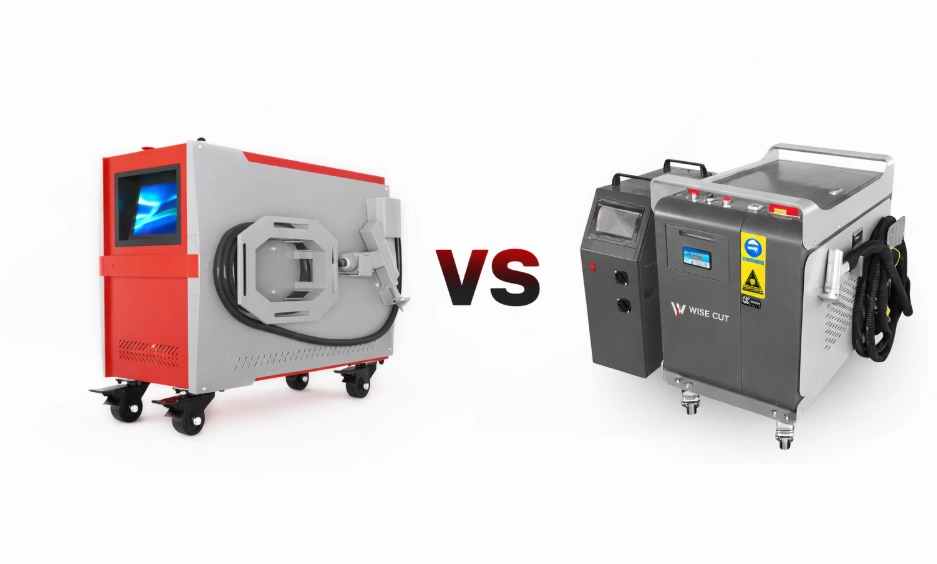
When assessing air-cooled against water-cooled laser welders, this overview guides through the actual contrasts in a sensible manner.
Why Is Cooling System Important in Laser Welding?
Prior to examining the two varieties, considering the role of cooling in the welding process proves beneficial. The laser source, optical parts, and welding head produce heat without interruption. Lacking suitable cooling, efficiency declines rapidly.
An effectively engineered system extends beyond mere temperature management. It influences weld integrity, equipment durability, and the ability to operate throughout the day without halts.
How Heat Affects Welding Stability
As temperatures increase, laser emission loses reliability. Consequently, weld lines show irregularity, depth lacks uniformity, and occasional scorch signs emerge. Within actual manufacturing environments, these problems result in extra work or discarded components.
Uniform temperatures maintain beam regularity. This aspect carries special weight when handling stainless steel or slim sheets, where accuracy remains essential.
Impact on Machine Lifespan
Excess heat ranks among the chief causes of early component breakdown. Fiber lasers, lenses, and inner electronics all endure damage when cooling proves inadequate.
Devices fitted with appropriate temperature regulation mechanisms, such as those in Wisecut configurations, typically feature safeguard elements in the fiber setup. These elements trigger automatic laser shutdown upon detecting thermal excess or unusual states, thus preventing major harm.
Continuous Operation Capability
When operations include extended welding periods, cooling gains utmost importance. Without it, the device could lower its output or cease entirely.
Certain arrangements incorporate separate temperature oversight, which handles the laser source and welding head independently. This configuration enables consistent functioning even amid prolonged manufacturing phases.
What Is an Air-Cooled Laser Welder?
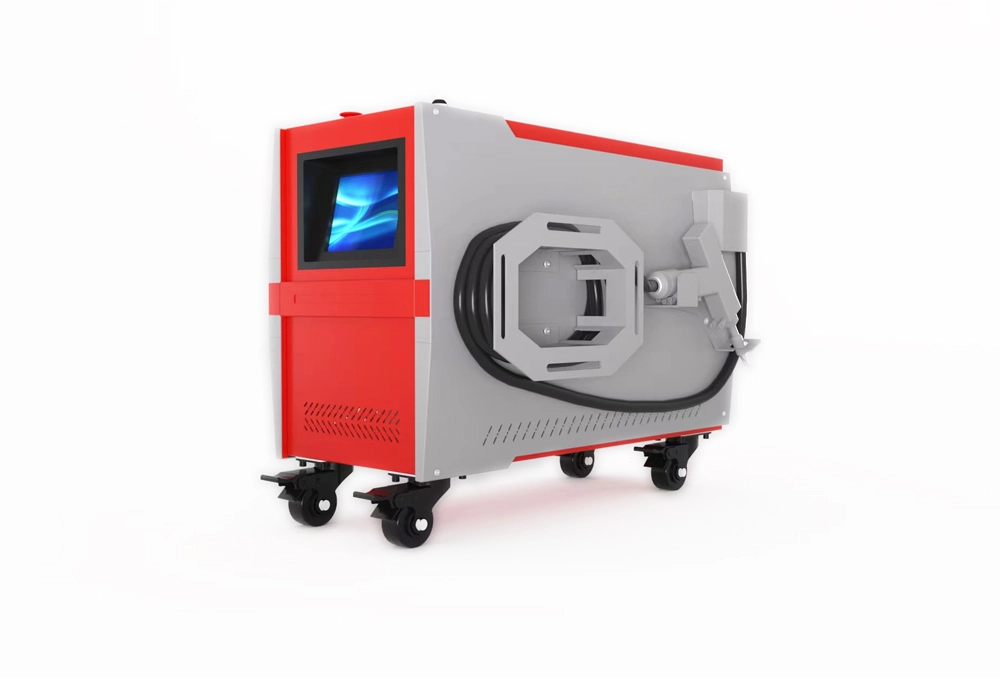
Air-cooled setups rely on air flow to eliminate heat. Built-in fans and heat sinks function in unison, eliminating the necessity for fluid circulation or outside cooling devices.
For numerous operators, this straightforwardness represents the primary benefit.
Key Advantages of Air Cooling
Air-cooled units remain small and straightforward to relocate. They transport easily among work areas or to various locations. This adaptability aids repair tasks or limited batch fabrication.
Servicing stays light. Checking fluid amounts, swapping coolant, or addressing leaks becomes unnecessary. This factor alone conserves effort, particularly for compact crews.
Expenses prove more affordable as well. The upfront outlay and ongoing expenses decrease, owing to the lack of a chiller need.
Wisecut supplies a movable air-cooled laser welding machine built for ease of transport. It suits situations where fast assembly and adaptable application outweigh peak output.
Limitations You Should Know
Air cooling possesses certain constraints. Its heat removal capacity falls short of water cooling, thereby capping power capacities. Generally, these units remain under 2000W.
In warm workshops or spaces with limited ventilation, cooling effectiveness wanes. Noticeable drops in output appear during prolonged sessions.
Typical Use Cases
Air-cooled welders find common application in small workshops, upkeep assignments, and basic fabrication. They manage thin substances and brief welding sequences effectively.
What Is a Water-Cooled Laser Welder?
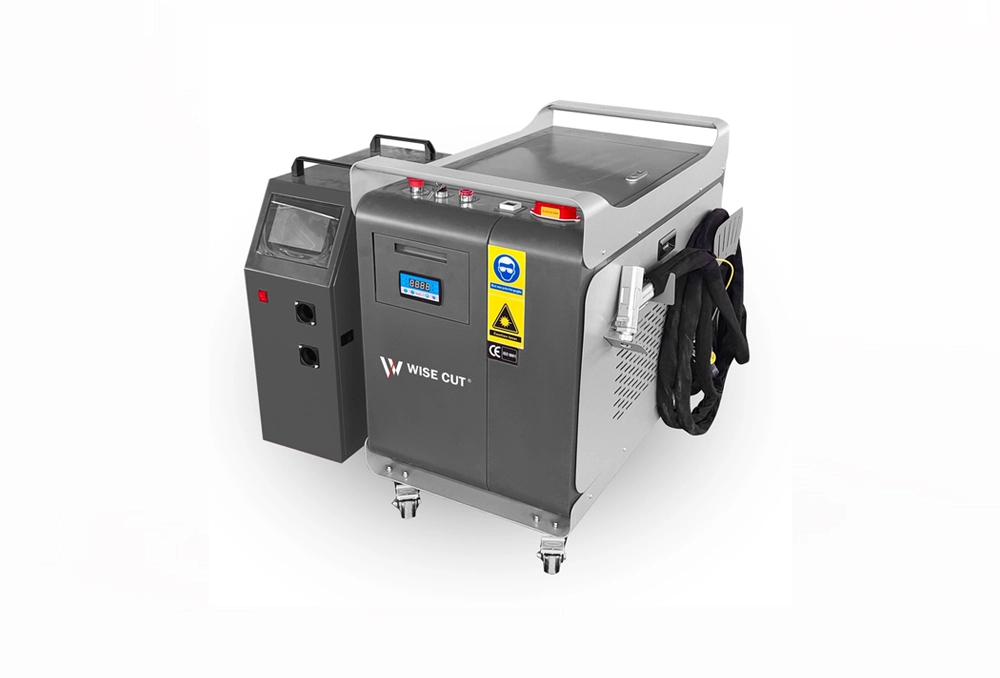
Water-cooled setups employ fluid flow to take in and dispel heat. A chiller lowers the fluid temperature and returns it via the system.
This arrangement appears somewhat intricate, yet it provides superior cooling capability.
Why Water Cooling Delivers Better Performance
Fluid transports heat far more effectively than air. Consequently, the unit sustains greater power without thermal buildup.
Temperature oversight achieves greater exactness too. Within many setups, changes stay limited to roughly one degree Celsius. Such steadiness enhances weld uniformity.
Wisecut water-cooled laser welding machines target industrial purposes, commonly including dual cooling paths. One path regulates the laser source, while the other oversees the welding head. This enhances dependability over extended production durations.
Drawbacks to Consider
Water-cooled setups demand additional servicing. Monitoring fluid purity, inspecting joints, and averting leaks becomes required.
The apparatus occupies more room and offers reduced mobility. Setup could involve extra planning.
Costs rise accordingly. Still, for intensive applications, the gains often support the expenditure.
Where Water Cooling Works Best
Water-cooled units receive widespread use in industrial assembly lines. They support automotive elements, substantial metal assembly, and mechanized welding arrangements.
When tasks include dense substances or nonstop functioning, water cooling typically suits best.
How Should You Choose Between Air And Water Cooling?
Deciding between the pair concerns not absolute superiority but specific requirements.
Numerous purchasers emphasize cost initially. Afterward, awareness grows that incompatibility with intended uses leads to higher long-term expenses.
Power Requirements
When operations remain below approximately 1500W to 1800W, air cooling generally suffices.
For elevated power thresholds, water cooling turns essential. It preserves system balance and averts thermal excess during extended sessions.
Working Environment
For frequent outdoor work or equipment shifting, air-cooled units appear more feasible.
Within a steady factory setting, water-cooled setups excel. They manage heat adeptly and back ongoing output.
Maintenance Preference
Certain operators favor basic units with light care. Air cooling matches this inclination suitably.
Production Intensity
For brief, intermittent welding duties, air cooling meets needs fully.
For lengthy shifts or automated processes, water cooling offers superior trustworthiness. It lessens the chance of halts due to thermal overload.
What Makes a Reliable Laser Welding Solution?
The cooling category holds value, yet it forms just one element.
A dependable system merges consistent laser emission, firm structural build, and proficient safety measures.
For instance, select units employ top-grade laser sources featuring solid thermal tolerance and prolonged lifespan. Fiber setups might contain built-in safeguard roles that deactivate the laser during thermal excess or irregular flexing.
Cooling setups with independent temperature regulation boost uniformity. They aid in keeping the laser cavity and optical parts within secure limits.
Safety measures carry importance too. Components like leak safeguards, pressure detectors, and urgent stop switches assist in shielding personnel and the unit.
Wisecut incorporates these aspects into its laser welding machines, complemented by worldwide service assistance and instructional programs. In genuine manufacturing scenarios, such backing frequently equals the unit’s inherent worth.
Conclusion
Air-cooled and water-cooled laser welders address distinct purposes. No all-encompassing solution exists.
Air cooling supplies ease, mobility, and reduced expense. It handles moderate duties and adaptable surroundings well.
Water cooling delivers robust thermal management, greater power scope, and enhanced steadiness. It targets challenging industrial uses.
The suitable selection hinges on operational demands, surroundings, and goals. A properly aligned unit preserves effort, minimizes pauses, and sidesteps needless future costs.
FAQ
Q1: Can Air-Cooled Laser Welders Handle Aluminum Welding?
A: Yes, they can. For thin aluminum and short welds, they perform well. For thicker materials, water cooling is more suitable.
Q2: How Often Does A Water-Cooled System Need Maintenance?
A: Regular checks are needed. Water quality, flow, and temperature should be monitored to keep the system stable.
Q3: Is Air Cooling Enough For Continuous Operation?
A: It works for short to moderate sessions. For long, uninterrupted operation, water cooling is more reliable.
Q4: Does Cooling Type Affect Weld Quality?
A: Yes. Stable temperature improves weld consistency. Water cooling usually provides better results in demanding tasks.
Q5: Which Option Is Better For Beginners?
A: Air-cooled machines are easier to start with. They require less setup and are simpler to operate.


