

How to Improve Production Capacity Without Hiring More Workers
Time : Nov 19, 2026 Ansicht : 32
Metal Fabrication Automation can help increase output without hiring when it removes a verified constraint, such as repeated loading delays or a process that stops between jobs. Map how work moves through the shop, then reduce avoidable setup, waiting, downtime, and rework. More machine speed alone will not raise finished output if jobs still wait for material, programming, inspection, or the next operation.
The objective is more good parts delivered on time with the team and equipment already available. Improve the whole workflow and keep operators involved.
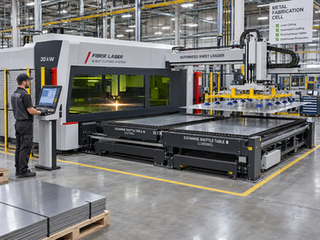
If sheet cutting is your verified constraint, the fiber laser cutting machine range is a place to review relevant equipment categories; select a configuration from your workflow data.
Find the constraint limiting production
Map the route from order release through material prep, programming, cutting, forming, welding, deburring, inspection, and shipping. Record where jobs wait and why. A shift log can capture downtime, changeovers, material shortages, missing drawings, rework, and blocked downstream work.
Look for a recurring constraint, not one bad shift. It may be a machine, shared operator, programming queue, inspection step, or material-handling task. Ask operators what interrupts work and compare their observations with production records. If the bottleneck shifts daily, address scheduling or job readiness before buying equipment.
Track good parts per shift, lead time, waiting, first-pass yield, and downtime at the constraint. Record product mix too: a shift making simple parts cannot be compared directly with one processing complex, low-volume jobs.
In a NIST MEP capacity-planning case study, routing and scheduling information helped identify welding as a bottleneck. Validate the constraint with workflow data before choosing a fix.
Improve the capacity already on the floor
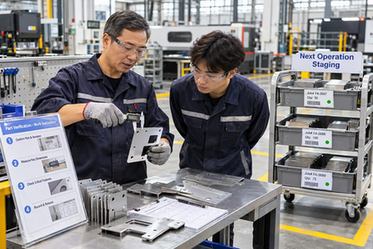
Before automating, remove losses that need no new equipment. Prepare material, programs, fixtures, and inspection requirements before work reaches the constraint. If operators stop to find drawings or confirm revisions, improve job release. If parts wait between steps, review dispatch rules and make the next job visible.
Reduce setup and changeover time by standardizing repeatable preparation. Group compatible work only when it will not create excess work in process or delay urgent orders. Keep common tools near the point of use and define clear handoffs. These steps use machine time better without asking employees to skip checks.
Protect the constraint from preventable downtime. Review recurring failures, maintenance history, and service or parts delays. Schedule maintenance around production where practical, and train operators to spot warning signs. Do not defer essential maintenance to keep a machine running; an unplanned breakdown can interrupt more work.
Balance connected operations instead of maximizing one machine. A faster cutter may create a larger queue at deburring or inspection. Set and review reasonable work-in-process levels around the constraint. If downstream work is overloaded, improve the handoff or job sequence before speeding up the upstream cycle.
Where Metal Fabrication Automation can help
Automation is useful when a repetitive task with clear inputs and outputs consumes time at the constraint. If a laser waits while sheets are moved or parts removed, loading and unloading may be candidates. An automatic sheet-loading system is one category to evaluate. Suitability depends on sheet size and weight, job mix, floor space, safety controls, and remaining manual work.
For metal shops, Metal Fabrication Automation is most useful when it addresses a repeated, measurable loss. Confirm which manual steps disappear and which still need an operator before estimating recovered time.
An exchange-table machine may fit when changeovers repeatedly pause cutting and both tables can stay productive. The Faserlaserschneidmaschine mit Wechseltisch page describes a dual-worktable arrangement. Treat it as a configuration to investigate, not an output guarantee; results depend on parts, operators, loading, and downstream capacity.
Other opportunities include part identification, job tracking, inspection data capture, or interruption alerts. They help when they remove a known handoff or information delay, but cannot fix inaccurate routings, unstable processes, missing material, or unclear priorities.
Compare selective automation with a full-line overhaul. A pilot around one constraint is easier to evaluate. Before committing, list automated and manual steps, operator attention, exceptions, maintenance, training, safety, and integration needs. Estimate recoverable hours from measured waits, then subtract time for loading, monitoring, and exceptions that remain. Include installation and commissioning downtime in total cost. Metal Fabrication Automation should solve a measured problem, not just add equipment.
Make the current team more effective
Standardize repeatable work and document what to do when a part, material, or program falls outside the normal process. Instructions should support judgment, not force a sequence that no longer fits the order.
Cross-train for critical stations where practical, with defined training and authorization. Schedule practice time; do not assume every worker can safely operate every machine or squeeze training into production.
Include operators in selection, cell design, testing, training, and safety reviews. They know where materials stick and which exceptions cause delays. The system should make work more predictable without encouraging skipped quality checks.
Measure whether capacity actually improved
Set a baseline for throughput, lead time, downtime, setup, first-pass yield, overtime, and work in process. Compare after the change using similar product mix, shift length, and demand. Note any differences before attributing output changes to automation.
Another NIST MEP throughput case study describes using a value-stream map to locate bottlenecks, then recommending clearer work division, posted job expectations, visual work-area cues, and staging required components. Treat it as a process example, not a guaranteed result.
Measure both the target task and the whole workflow. A loading system may cut handling time, but gains disappear if the laser waits for programming or sheets wait for sorting. Monitor safety, quality, maintenance, and time spent resolving exceptions. Before expanding a Metal Fabrication Automation pilot, compare recovered productive time with operating and financing costs. Reliable output should improve without shifting cost or risk elsewhere.
A 30-60-90 day capacity improvement roadmap
Days 1–30: establish the baseline. Map one route, gather shift data, interview operators, verify the likely constraint, and choose one recurring loss to address.
Days 31–60: run a focused pilot. Improve readiness, setup, staging, maintenance, or one automation step. Assign an owner, define exception handling and success measures, and train affected employees.
Days 61–90: verify and decide. Compare with the baseline, review quality and safety, and ask operators what changed. If the constraint moved, reassess the route. Scale only when results repeat and costs make sense.
Common mistakes when trying to increase output
Automating an unstable process can accelerate defects or interruptions. Define normal work and exceptions first. Also check downstream operations after each change; capacity depends on the full route.
Do not use utilization alone: keeping every machine busy can create work in process without improving delivery. Treat “no new hires” as a planning constraint, not a reason to overload the team. Hire when safe staffing or quality requires it.
Häufig gestellte Fragen
Can automation increase output without replacing workers?
Yes, if it removes a repeatable delay at a real production constraint. Automation can shift employee time from manual handling to setup, monitoring, quality checks, or other work. The result depends on how the task fits the complete workflow; it should be measured as good parts delivered, not assumed from the equipment specification.
Should a shop automate before improving scheduling?
Usually, first check whether jobs, materials, programs, and priorities are ready when the constrained station needs them. Poor scheduling can leave automated equipment waiting just as it leaves manual equipment waiting. Once the workflow is stable and a repeated task still limits output, automation may be worth testing.
How do I know which process to automate first?
Choose the task that repeatedly restricts finished output, consumes significant operator time, and follows a sufficiently consistent process. Verify the pattern with production data and operator input. Then assess safety, exceptions, integration, maintenance, training, and downstream capacity before selecting a system.
Which metrics show whether capacity has improved?
Track good parts per shift, lead time, downtime at the constraint, setup time, first-pass yield, overtime, and work in process. Compare similar product mixes and note changes in demand or staffing. A real improvement should raise dependable throughput or delivery performance without increasing defects, safety risk, or hidden workload elsewhere.
Final decision: remove the constraint, then scale the solution
The most dependable way to raise capacity without hiring is to find where work stops, remove avoidable delay, and test Metal Fabrication Automation against the remaining constraint. Use operator input, protect quality and safety, and scale only when the pilot improves reliable output under comparable conditions.


