

How to Choose the Right Laser Tube Cutting Machine
Time : Mar 20, 2026 View : 1,459
Selecting a laser tube cutting machine is a massive step for any metal fabrication shop. It is not just about the price tag; it is about finding a system that won’t give you headaches six months down the line.This guide breaks down exactly what you should look for, from the bed structure to the number of chucks, so you can make an investment that actually grows your business. For those looking for a partner with a deep R&D background and over 300 patents, exploring the innovative solutions from Wisecut is a great place to start your journey.
Identifying Your Material Requirements and Production Goals
Before looking at machines, look at your scrap bin. What materials are you cutting? If you deal with a mix of carbon steel, stainless steel, and aluminum alloy, you need a fiber laser that handles them all. Thickness matters too. A solid 3000W setup can slice through 25mm carbon steel or 20mm stainless steel.
Think about your speed goals. High-volume shops need a machine where the running speed hits at least 100m/min to 110m/min. You also have to consider the weight. If your tubes are heavy, look for a table that supports a max loading weight of 1 T. Precision is the final piece of the puzzle. Aim for a positioning accuracy of ±0.03mm and a resetting accuracy of ±0.02mm to keep your parts consistent.
Pain Point: High Material Waste and “Tailling” Loss in Standard Machines?
Many shops lose a lot of money because their machine cannot cut the last few inches of a pipe. This “dead zone” or tailing waste adds up fast when you are processing hundreds of tubes a week. If you are throwing away 20cm of every pipe, you are literally throwing your profit into the recycle bin.
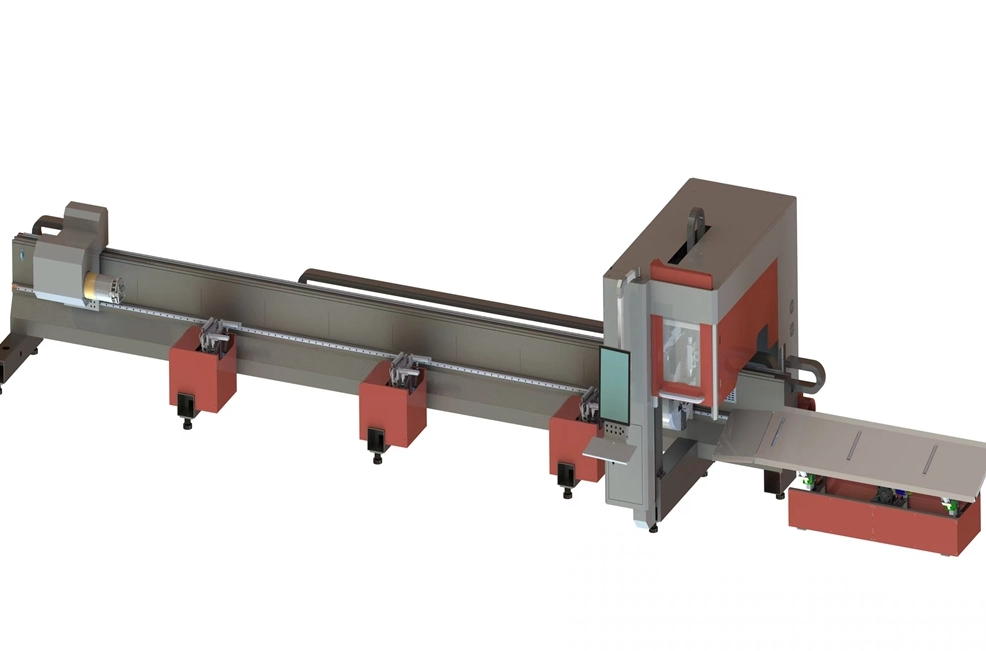
Solution: The Precision of the Two Chuck Pipe Laser Cutting Machine
To fix this, you need a system that clamps the material effectively. The Two chuck Pipe Laser Cutting Machine is designed for exactly this kind of efficiency. By using high-quality components like a Raycus or Max laser source, the beam stays stable, and the cutting is precise even near the ends of the tube.
These machines use Schneider electrical parts and SMC pneumatic components to make sure the clamping is reliable. This setup is perfect for furniture making or fitness equipment where you need clean cuts and minimal waste. Plus, with a 10m flexible fiber, the system is safer and easier to manage in a busy shop. Check out the latest products to see how these specs fit your floor plan.
Pain Point: Difficulty Processing Heavy or Extra-Long Structural Pipes?
If you try to cut a 6-meter heavy structural beam on a standard machine, you will see it sag. Sagging leads to vibration, and vibration ruins your accuracy. Standard two-chuck systems often struggle to support the weight of industrial-grade pipes, leading to deformation and bad cuts.
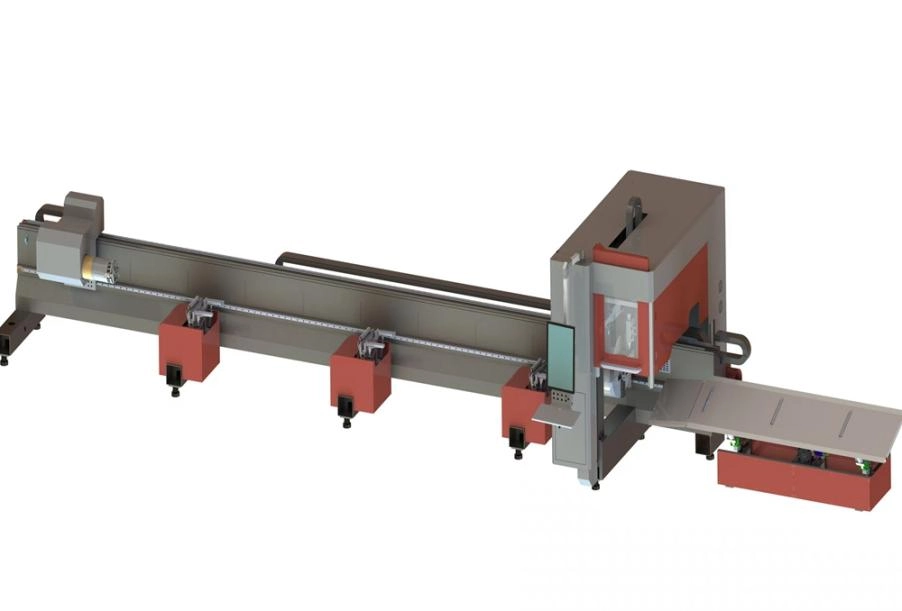
Solution: The Power of the 3 Chuck Heavy Duty Tube Laser Cutting Machine
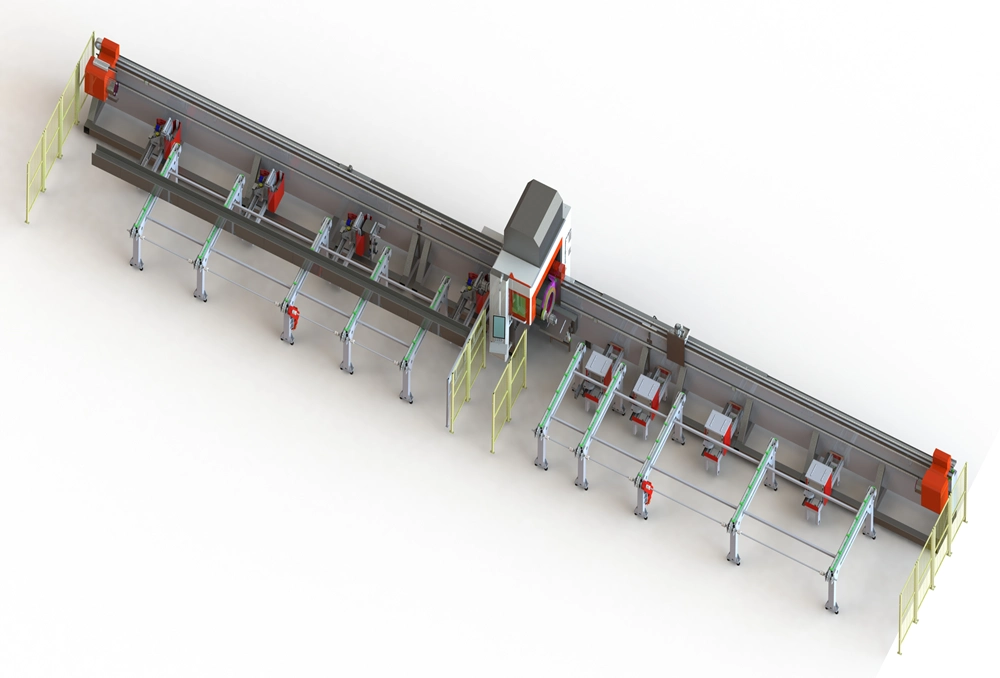
Heavy-duty work requires a different approach. The 3 Chuck Heavy Duty Tube Laser Cutting Machine adds a third chuck to support the tube throughout the entire cutting process. This design virtually eliminates “zero-tailing” issues and keeps the pipe perfectly level.
The machine body itself is built differently. It uses a plate-welded integral welding structure that undergoes secondary vibration aging treatment to remove internal stress. This means the machine won’t warp over time, even if you are constantly hitting it with 1 T loads. It is the workhorse needed for construction machinery and petroleum industries. You can learn more about us and our history of building these massive machines for global markets.
Evaluating Machine Construction and Long-Term Durability
Do not get distracted by a shiny coat of paint. Look at the “bones” of the machine. A high-quality bed is often made of a honeycomb carbon structure. This provides the strength to handle the continuous impact of thick plates.
The motion parts are just as critical. You want Taiwan HIWIN rails for low noise and long service life. Pair those with a Taiwan YYC helical rack and pinion to keep the transmission smooth and high-speed. For cooling, a dual-temperature chiller system is a must. It needs to cool the laser source and the cutting head independently to prevent overheating during long shifts.
Pain Point: Complex Operation and High Training Costs for New Staff?
If a machine has a confusing interface, your new hires will take months to get up to speed. Worse, they might make a mistake that damages an expensive laser head or wastes a whole batch of material.
Solution: User-Friendly Software and The “Friendly 4” Principle
The best way to lower training costs is to choose a machine with a straightforward control system, like CYPCUT. This software makes programming and nesting much easier. Following the “Friendly 4” principle—Friendly Installation, Operation, Service, and Maintenance—ensures that the machine is a help, not a hurdle.
You also need a partner that offers free training until your operators can correctly program and care for the equipment. This includes everything from inspecting the structure to basic troubleshooting. If you ever get stuck, 24/7 remote diagnostics can usually get you back on track without waiting for an engineer to fly in.
Considering After-Sales Reliability and Global Service
A machine is only as good as the support behind it. When a machine goes down, you lose money every hour. Make sure your provider offers on-site engineer support within 48 hours globally.
Check if they have a strong sales network and if their machines are already working in multiple countries. It is also smart to see if they follow strict quality standards like ISO 9001 and ISO 14001. Reliable spare parts supply is another “must-have” to avoid long lead times when a simple component wears out. If you have questions about specific regional support, you should contact us directly to see how our engineers can assist you.
Conclusion
Choosing a laser tube cutting machine is about matching your daily reality to the right hardware. If you are doing light industrial work and want to save on material, a two-chuck system is a smart play. If you are moving heavy structural steel, don’t settle for less than a three-chuck heavy-duty beast. Focus on the bed stability, the quality of the laser source, and the level of support you’ll get after the sale. Finding a reliable partner is the first step toward faster production and better margins.
FAQ
Q1: What materials can these laser machines cut?
A: You can cut a wide variety of metals including carbon steel, stainless steel, aluminum alloy, brass, copper, and galvanized sheet.
Q2: How fast do these machines typically run?
A: The max no-loading running speed can reach 100m/min, with some models reaching up to 110m/min for high-speed production.
Q3: What is the difference between the two-chuck and three-chuck models?
A: Two-chuck models are great for standard efficiency and light tubes, while three-chuck models provide extra support for heavy or extra-long pipes, allowing for “zero-tailing” waste.
Q4: What kind of precision can I expect?
A: High-quality machines offer a positioning accuracy of about ±0.03mm and a resetting position accuracy of ±0.02mm.


