

How to Effectively Use a Handheld Laser Welding Machine for Precision Work
Time : Apr 17, 2026 View : 1,160
Handheld laser welding has steadily emerged as a useful instrument in contemporary workshops. Metal fabrication tasks frequently encounter delays from conventional welding methods. Excessive warmth, noticeable twisting, and extended cleanup periods typically add undue strain to manufacturing. A handheld laser welding machine alters this approach. It produces neater joints, quicker handling, and greater oversight, particularly on slim or intricate components.
Wisecut serves as a solid instance of a producer emphasizing real-world application. Its units center on straightforward assembly, handling, and upkeep. This focus tackles the reluctance many operators face during technology transitions.
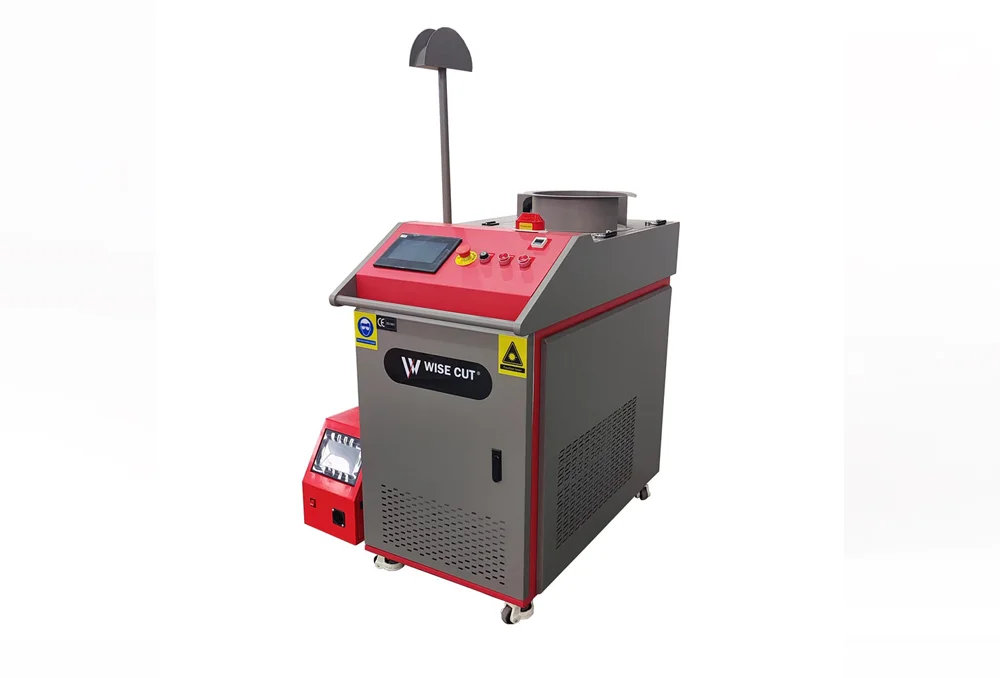
How Does a Handheld Laser Welding Machine Work?
Prior to commencing any task, grasping the procedure clearly aids performance. This knowledge extends beyond concepts. It influences parameter configuration and device management.
Laser Welding Mechanism
A handheld laser welding machine creates an intense energy ray via a fiber laser source. The ray passes through a pliable fiber line, frequently measuring around 10 meters, and concentrates on a tiny spot of the item. That location warms rapidly, liquefies, and then hardens into a joint line.
This method focuses warmth in a compact region. Unlike standard welding, adjacent areas stay firm. During routine operations, this leads to reduced warping and fewer fixes.
Why Precision And Stability Matter
Accuracy relies on factors beyond the ray alone. System steadiness holds a central position. Units with dependable laser sources sustain uniform emission over extended times. Certain arrangements also feature self-shutdown safeguards. When power exceeds secure limits or the fiber warms excessively, the unit halts automatically.
Such engineering averts harm and cuts interruptions. In actual manufacturing, these benefits conserve effort in subtle yet significant manners.
What Preparation Steps Should You Follow Before Welding?
Setup phases often receive insufficient attention. Yet they influence outcomes directly. Basic actions can avoid numerous typical difficulties.
Equipment Setup
Begin with electrical input and temperature regulation. The unit generally needs a firm power level, usually between 205V and 235V. Excessive power variation might render laser emission erratic.
Temperature control holds equal weight. An adequate chiller maintains warmth in a tight span, at times regulated to 1°C. This supports reliable functioning during prolonged shifts. Some setups incorporate separate warmth oversight for the laser source and the welding tip.
The fiber line demands gentle treatment. Sharp curves should be avoided. A curve span of about 80 mm safeguards the inner build.
Workpiece Preparation
Surface state carries greater importance than anticipated. Grease, corrosion, or particles might impair the joint. Surface clearing requires brief effort but boosts quality markedly.
Handheld laser welding excels on regular forms. Parts with extreme irregularity could necessitate additional arrangement.
How Do You Set Parameters For Different Materials?
Configuring settings might seem intricate initially. Practice simplifies the process. Minor tweaks frequently yield substantial improvements.
Power And Speed Adjustment
Laser intensity governs joint depth. Greater intensity boosts depth. However, excess can harm slim substances. Handling pace shapes joint look. Excessive slowness risks overheating. Excessive quickness yields frail bonds.
In practical scenarios, adjustments combine both elements. For instance, modestly raising intensity alongside pace preserves depth and enhances productivity.
Focus And Nozzle Selection
Focal setting dictates energy peak location. The proper focus spot typically falls in a narrow interval, often from -5 to 0 based on arrangement. Locating the brightest spark on a trial item offers a reliable verification method.
Nozzle dimensions ought to align with substance type. Dense substances demand broader nozzles. Slim layers gain from narrower ones for enhanced accuracy.
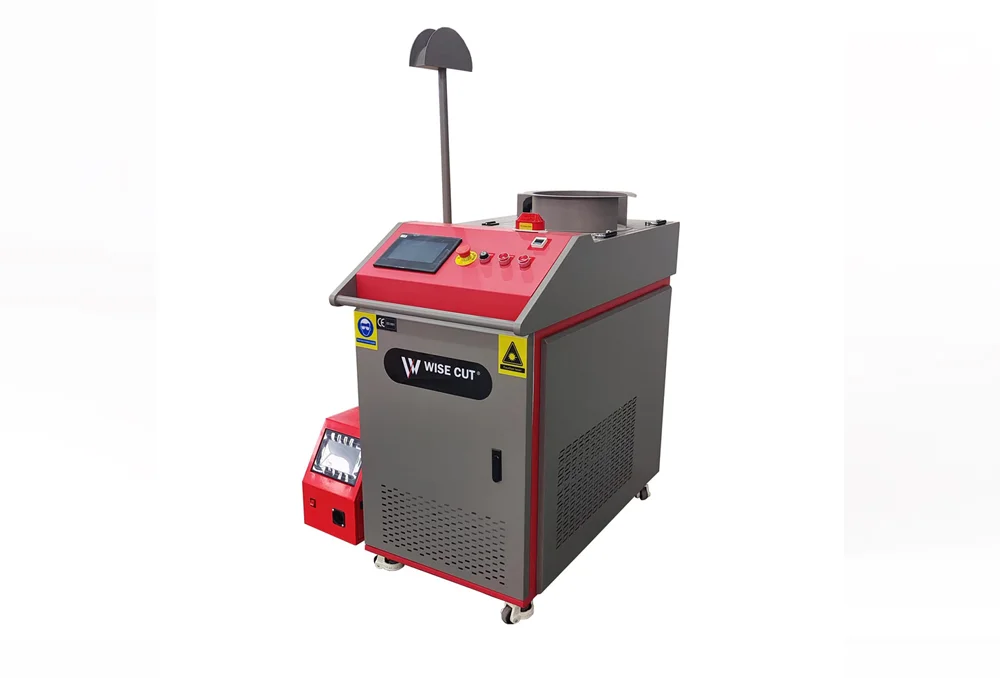
Numerous units, such as Wisecut handheld laser welding systems, permit storing various setting combinations. This facilitates task switches without redundant tweaks.
What Are the Correct Welding Techniques For Best Results?
Proper configurations alone do not guarantee success. Handling methods remain vital. Fine points in operation can alter results.
Welding Angle And Distance
Position the welding tool at nearly a perpendicular angle to the face. Maintain a gap of about 1 to 2 mm from the nozzle to the item. Excessive gap diminishes energy focus. Insufficient gap risks nozzle harm.
A firm stance produces a tidier joint. In application, it resembles directing a marker over a page.
Movement And Speed Control
Advance the tool at a uniform pace. Abrupt pauses or irregular paths generate evident flaws. Through repetition, upholding a regular flow turns instinctive.
Varied welding patterns prove useful too. Steady welding suits extended joints. Intermittent welding aids sensitive zones. Certain setups enable diverse patterns like point joining and scale-like designs. These enhance utility and visual appeal.
What Should You Check After Welding?
Examination following the weld identifies minor faults promptly. It verifies setting accuracy as well.
Visual Inspection
Examine the joint line for fissures, voids, or irregular spots. A solid weld appears even and neat, showing little color shift.
Cooling And Finishing
Permit the substance to temperate naturally. Compelled cooling might induce tension. Typically, minimal buffing suffices, or no treatment at all.
Why Choose a Reliable Supplier For Your Welding System?
A welding unit’s effectiveness stems not solely from its parts but from the backing provided. This encompasses instruction, replacement elements, and follow-up aid.
Wisecut constructs its units with CE-certified parts. It merges essential components like the controller, welding tool, and filler feeder into a single framework. This cohesive structure boosts reliability and lowers mismatch risks.
Aid provision ranks as another key aspect. Prompt replies and distant troubleshooting minimize pauses. Occasionally, expert groups deliver support within 48 hours. This keeps manufacturing aligned.
Protection elements warrant consideration too. Arrangements frequently feature urgent halt switches, spill safeguards, and pressure monitors. These functional aspects shield users and gear in everyday scenarios.
FAQ
Q1: Is a handheld laser welding machine suitable for beginners?
A: Yes. The operation is relatively simple compared to traditional welding. With basic training and preset parameters, most users can start quickly.
Q2: What materials can be welded?
A: Common materials include stainless steel, carbon steel, aluminum, and some alloys. Each material requires different parameter settings.
Q3: How often should maintenance be performed?
A: Regular cleaning of lenses and checking the cooling system is recommended. Daily checks can prevent most issues.
Q4: What causes unstable laser output?
A: Common reasons include voltage fluctuation, dirty lenses, or loose connections. Keeping the system stable usually solves the problem.
Q5: Does handheld laser welding reduce post-processing work?
A: Yes. The weld seam is usually clean and smooth, so grinding and polishing are minimal or not required.


