

Post-Show Review: Practical Metal Fabrication Needs Seen at METALTECH & autoMEX 2026
Time : Jun 04, 2026 View : 854
METALTECH & autoMEX 2026 gave many buyers a direct look at how a fiber laser cutting machine manufacturer can respond to real workshop pressure rather than just present machine specifications. At Booth 4320, discussions around laser cutting, welding, bending, and material handling showed a clear shift in buying behavior. More visitors were asking about complete metal fabrication solutions, machine stability, after-sales response, and whether the supplier could match equipment configuration to actual production conditions.
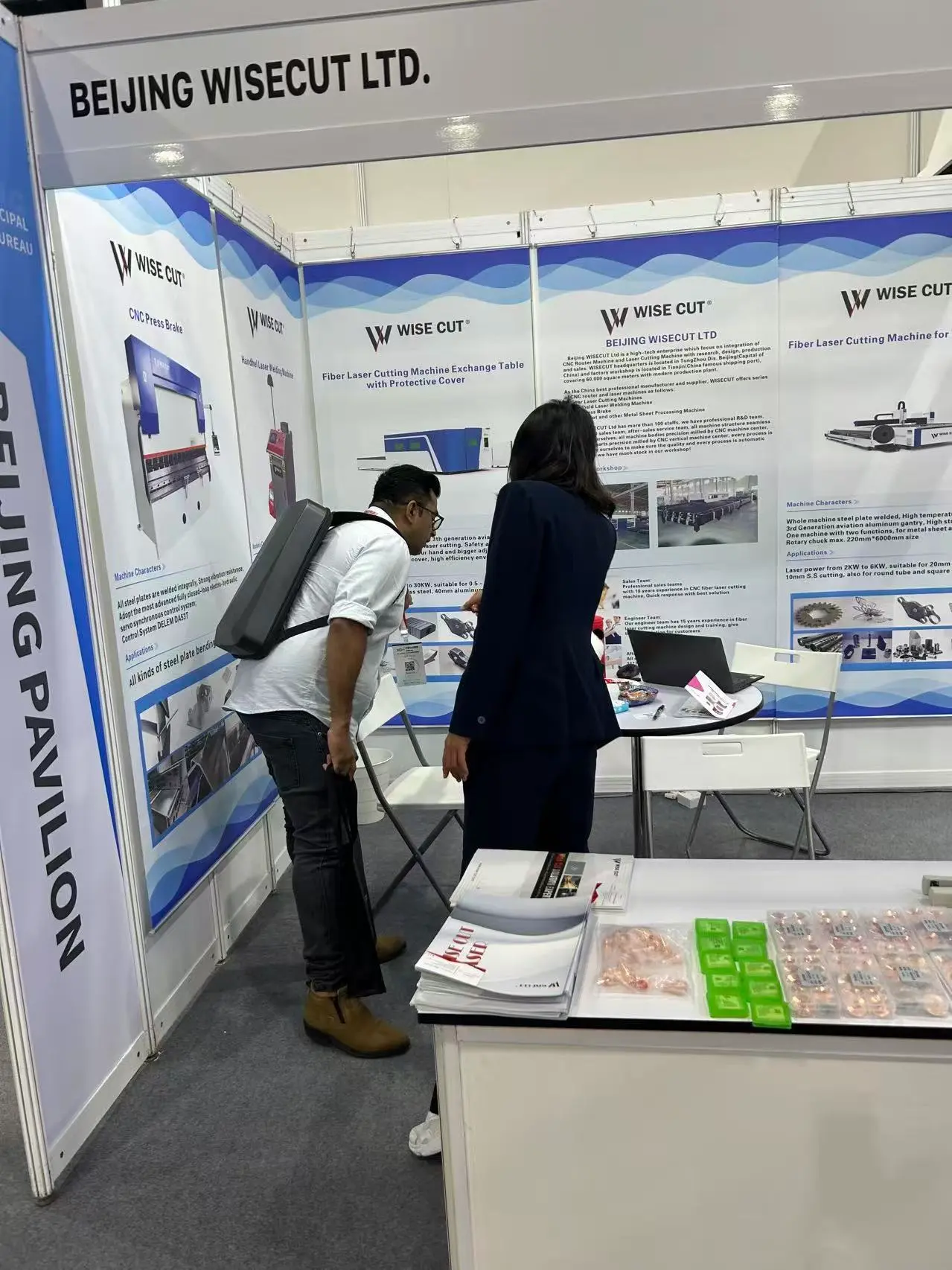
For BEIJING WISECUT LTD, the exhibition was a useful checkpoint for understanding how manufacturers, distributors, and fabrication shops are evaluating equipment in today’s market. Price still matters, but it is rarely the only factor behind a serious purchase decision. Buyers are comparing machine structure, cutting quality, operating cost, service availability, operator training, and future upgrade possibilities.
Buyers Came with Production Problems, Not Just Purchase Lists
One noticeable point at the booth was that many visitors already had clear production pain points. Some were processing stainless steel sheets and needed cleaner cutting edges. Some were looking for a tube and plate laser cutting machine to handle more product categories without adding too much floor space. Others were comparing handheld laser welding machine options because traditional welding methods were increasing labor dependence and finishing work.
In this type of B2B environment, a machine brochure can only answer part of the question. A buyer may ask about laser power, but the real issue may be cutting thickness, nesting efficiency, assist gas cost, or table loading speed. A customer may ask about welding speed, while the deeper concern is weld seam appearance, operator skill level, or post-weld grinding.
This is where supplier experience becomes important. A practical recommendation must be based on material type, thickness range, production volume, working size, and maintenance conditions. For a metal fabrication workshop, choosing the wrong configuration can create long-term cost pressure even if the initial purchase price looks attractive.
Cutting, Welding, and Bending Need to Be Planned Together
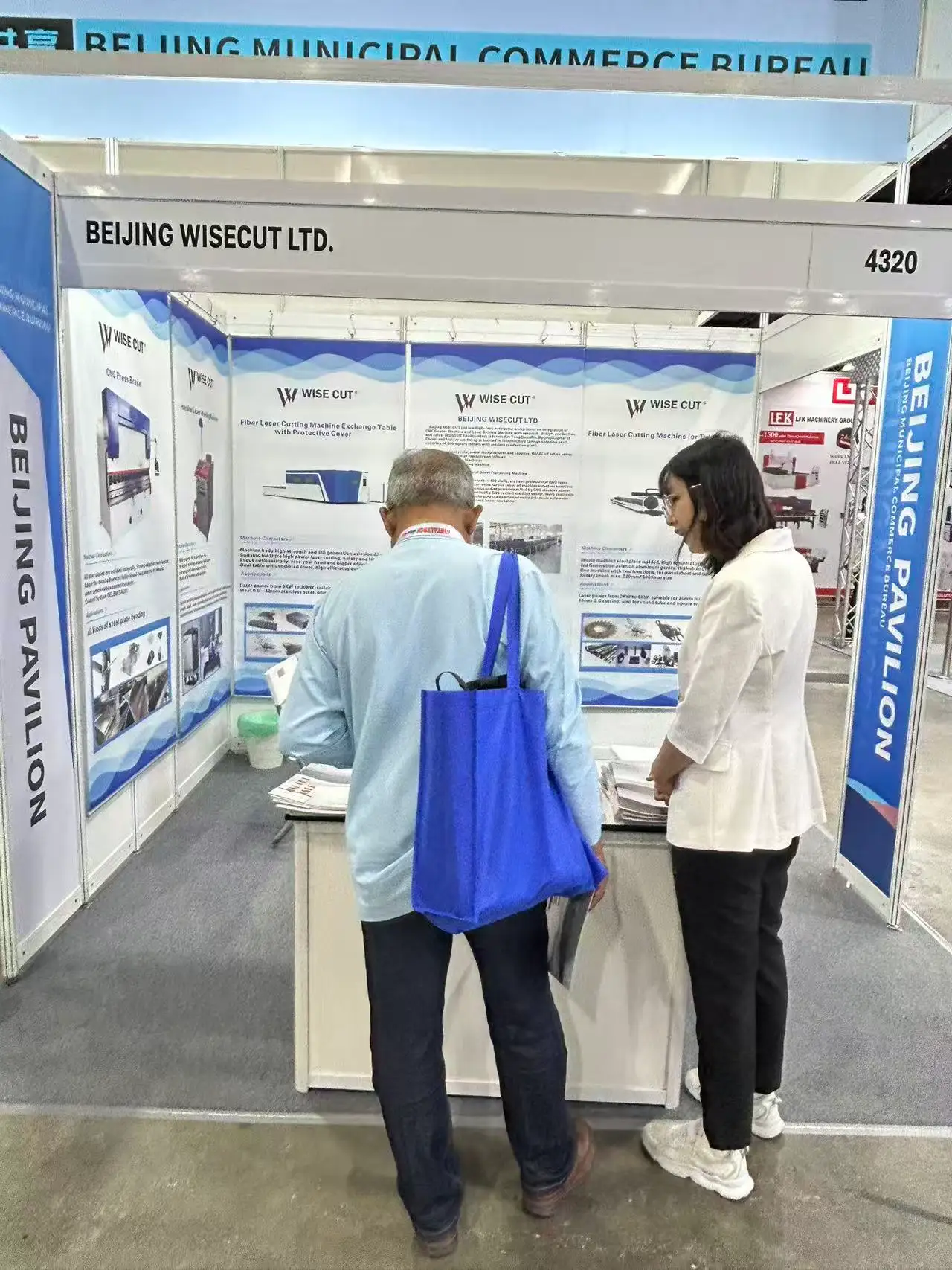
The exhibition display showed several machine categories related to sheet metal and structural metal processing. These included fiber laser cutting machines, exchange table cutting systems, tube and plate laser cutting machines, handheld laser welding equipment, and CNC press brake solutions.
For many factories, these processes are connected. Laser cutting determines part accuracy and edge quality. Press brake bending affects forming precision and assembly fit. Welding determines final strength and appearance. If these steps are purchased and planned separately, the workshop may face inconsistent output or unnecessary handling between processes.
That is why complete metal fabrication solutions are becoming more relevant for industrial buyers. A factory that cuts stainless steel cabinets, machinery covers, agricultural parts, elevator components, or metal frames may need more than a single cutting machine. It may require a laser cutting system, a CNC press brake, a welding process, and later an automation upgrade.
WISECUT’s product range supports this type of workflow planning. For smaller workshops, the starting point may be a standard fiber laser cutting machine and a handheld laser welding machine. For higher-volume production, the better direction may be an exchange table system, automatic sheet loading, or a tube and plate laser cutting machine.
What Buyers Were Checking at the Booth
The visitors at Booth 4320 paid close attention to practical machine details. For cutting machines, common questions focused on working area, laser source, cutting head, control system, bed structure, guide rails, cooling system, and electrical components. These details have a direct impact on accuracy, speed, stability, and service life.
For welding machines, visitors were more concerned about operation difficulty, torch design, wire feeding stability, safety interlocks, lens protection, weld appearance, and training support. Handheld laser welding has become attractive because it can reduce grinding work and improve welding speed, but buyers still need to know whether the machine is suitable for their operators and materials.
The CNC press brake category also attracted attention from visitors who wanted to improve forming accuracy after cutting. A CNC press brake manufacturer must understand not only bending force and control systems, but also how the bending process fits into the full sheet metal production chain.
These conversations showed that buyers are becoming more technically informed. They are no longer satisfied with general claims such as “high speed” or “stable quality.” They want to know which components are used, how the machine is maintained, how quickly spare parts can be supplied, and what happens after installation.
Service Support Has Become a Purchase Factor
For overseas buyers, after-sales service is often as important as machine configuration. A workshop may lose orders if a machine is down for several days. Distributors may lose customer trust if technical issues cannot be handled quickly. This makes remote diagnostics, English support, spare parts supply, and engineer availability important parts of supplier evaluation.
WISECUT’s service model is positioned around technical consultation before purchase, configuration support during order confirmation, and training or troubleshooting after delivery. For a buyer comparing several suppliers, this type of support can reduce project risk.
The exhibition also helped clarify the importance of operator-friendly equipment. A machine that is difficult to install, operate, maintain, or troubleshoot will create extra cost after delivery. The “friendly installation, friendly operation, friendly service, and friendly maintenance” concept fits well with what many visitors were asking at the booth.
From Exhibition Contact to Real Project Evaluation
A trade show discussion is only the first step. Serious buyers usually need to provide more technical information after the exhibition. Useful details include material type, maximum and common thickness, daily production volume, part size, tolerance requirements, workshop layout, available power supply, air supply, operator experience, and future automation plans.
With this information, WISECUT can recommend a more suitable machine instead of offering a generic model. For example, a workshop cutting both sheets and tubes may need a tube and plate laser cutting machine rather than two separate systems. A factory with high-volume sheet processing may benefit from an exchange table or automatic loading system. A distributor serving different end users may need flexible configuration options and localized after-sales planning.
This is also where a reliable fiber laser cutting machine manufacturer can provide more value than a simple trading company. The buyer is not only purchasing equipment; the buyer is selecting a technical partner that can support production planning, machine selection, customization, installation, training, and later expansion.
Conclusion
METALTECH & autoMEX 2026 showed that the metal fabrication market is becoming more application-driven. Buyers are paying closer attention to machine structure, workflow efficiency, safety, automation potential, and service support. The most productive conversations at Booth 4320 were not limited to price or machine appearance. They focused on how equipment could solve specific production problems.
For manufacturers, distributors, and workshop owners evaluating laser cutting, welding, or bending equipment, the next step is to prepare clear project information. Material type, thickness range, working size, output target, and workshop conditions will help WISECUT recommend a practical configuration for long-term production use.
FAQ
Q1: What information should buyers provide before requesting a fiber laser cutting machine quotation?
A1: Buyers should provide material type, maximum thickness, common thickness, working size, daily production volume, required cutting quality, and available workshop space. These details help the supplier recommend the correct laser power, table size, and machine configuration.
Q2: When is a tube and plate laser cutting machine more suitable than a standard sheet laser cutter?
A2: A tube and plate laser cutting machine is suitable when a workshop needs to process both flat sheets and metal tubes. It helps reduce separate equipment investment and improves production flexibility for mixed product orders.
Q3: Why should laser cutting and CNC bending be considered together?
A3: Cutting accuracy directly affects bending quality. When a fiber laser cutting machine and CNC press brake are planned together, the finished parts usually have better dimensional consistency, easier assembly, and fewer production adjustments.
Q4: What makes handheld laser welding attractive for metal fabrication shops?
A4: A handheld laser welding machine can improve welding speed, reduce weld deformation, and produce cleaner seams with less post-weld grinding. It is especially useful for stainless steel, sheet metal products, cabinets, frames, and customized metal parts.
Q5: How does after-sales service affect laser machine purchasing decisions?
A5: After-sales service affects machine uptime and long-term operating cost. Remote diagnostics, spare parts supply, training, and technical support help workshops solve problems faster and reduce production delays.


