

Air-Cooled vs Water-Cooled Laser Welding Machine
Time : Oct 16, 2026 Visualizzazioni: 103
Cooling systems decide where a handheld laser welding machine goes on the shop floor. Air-cooled units are small. Moving them is easy. Water-cooled tools use a chiller to take heat from the laser source and optics. The right choice depends on real shop facts. Think about actual weld times. Look at metal thickness. Room heat, floor space, and repair skills matter too. Check these facts against the tool’s rating before buying.
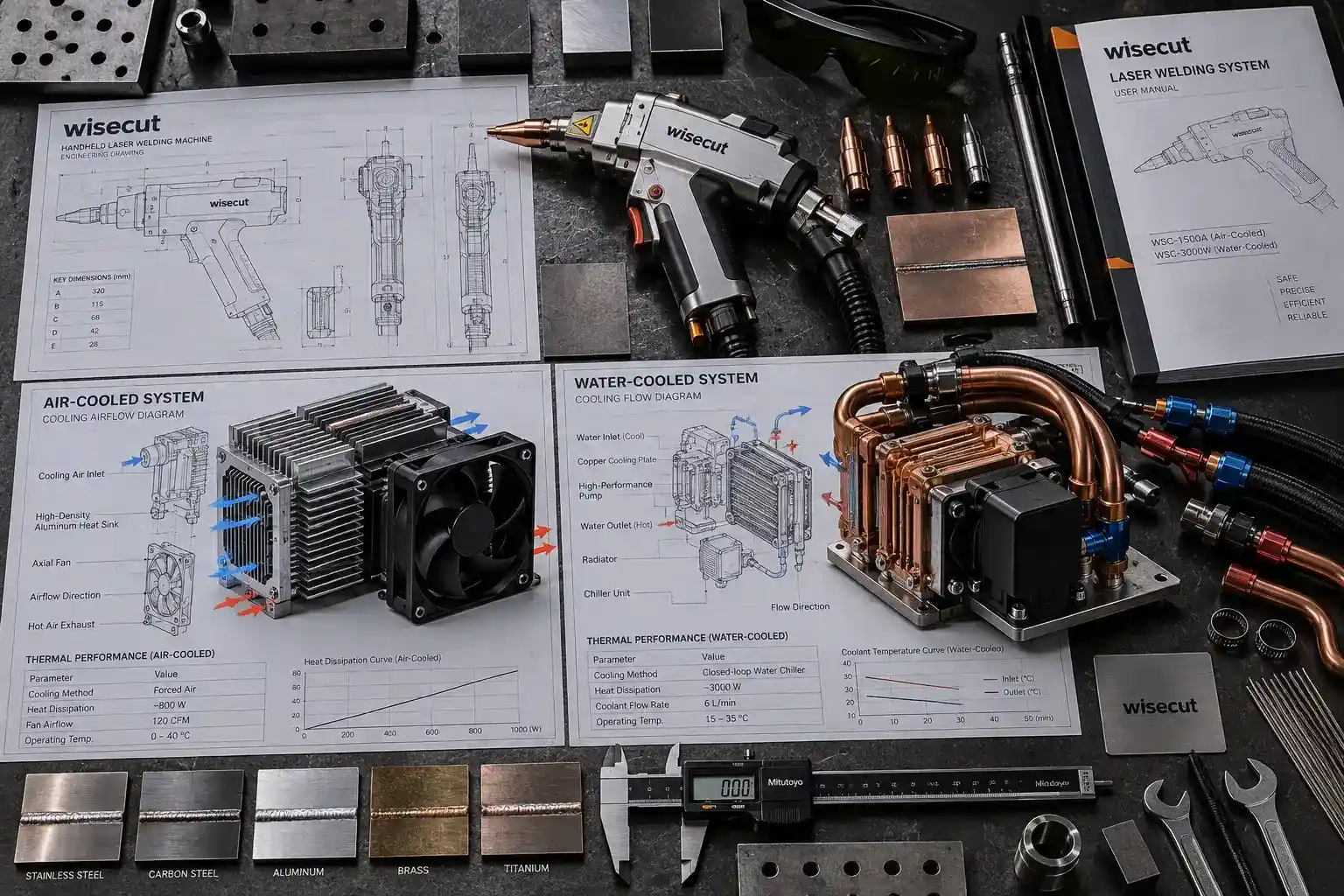
How Air-Cooled and Water-Cooled Systems Work
Both setups cool the laser down. They just use different paths. Their setup steps differ too.
Air Cooling
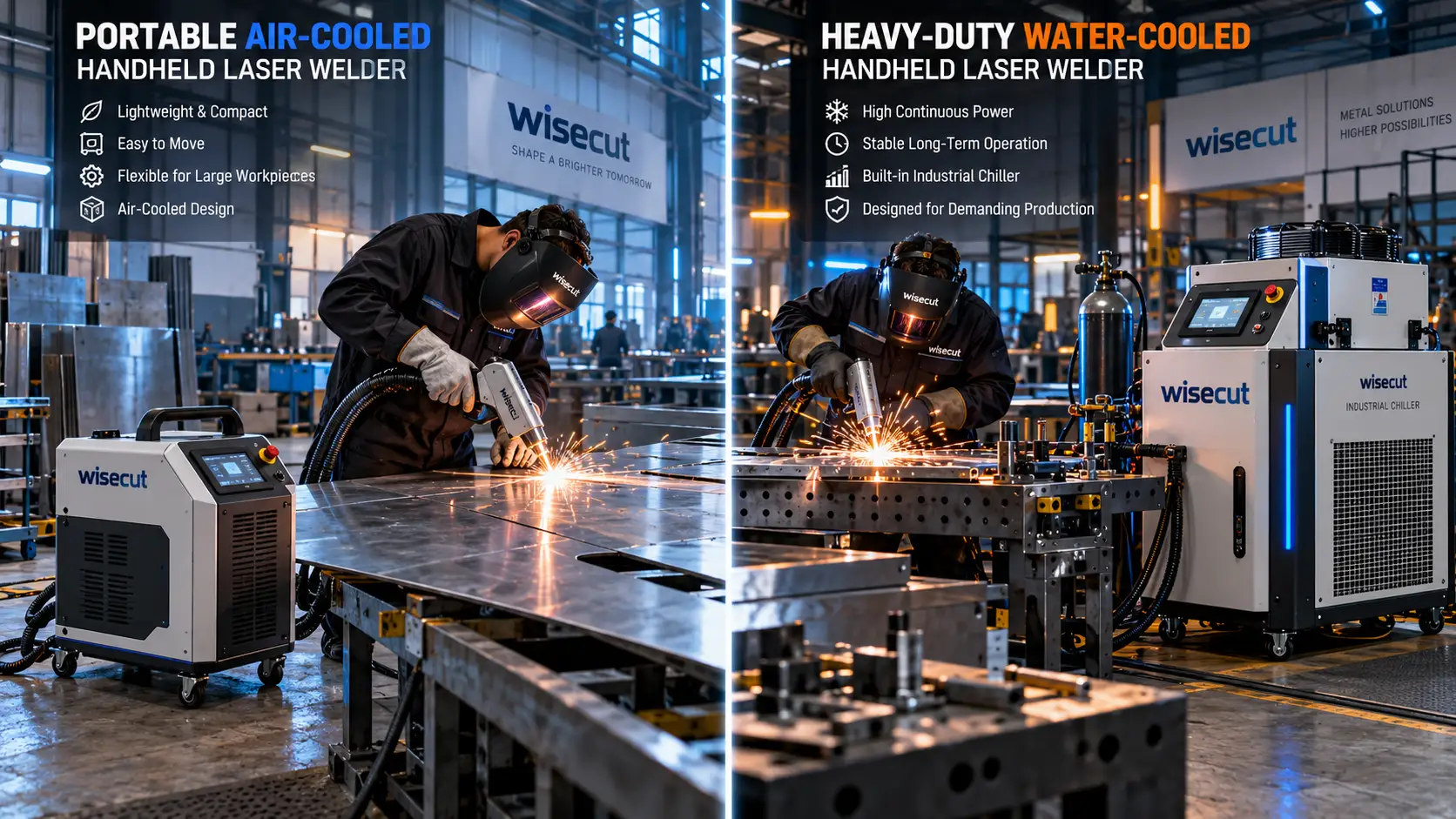
An air-cooled welder sends heat into metal heat sinks inside the box. Fans then blow that hot air out through vents. This design skips the fluid, water pump, tank, and outside chiller. Workers carry less gear. First setup takes minutes, not hours.
But room air still does the heavy lifting. Dust can plug the wind flow fast. A hot summer shop drops the cooling power. Buyers need to match the maker’s safe heat range with their daily work goals.
di WiseCut saldatrici laser portatili category includes both cooling approaches, allowing buyers to compare configurations for the same type of metal fabrication work.
Water Cooling
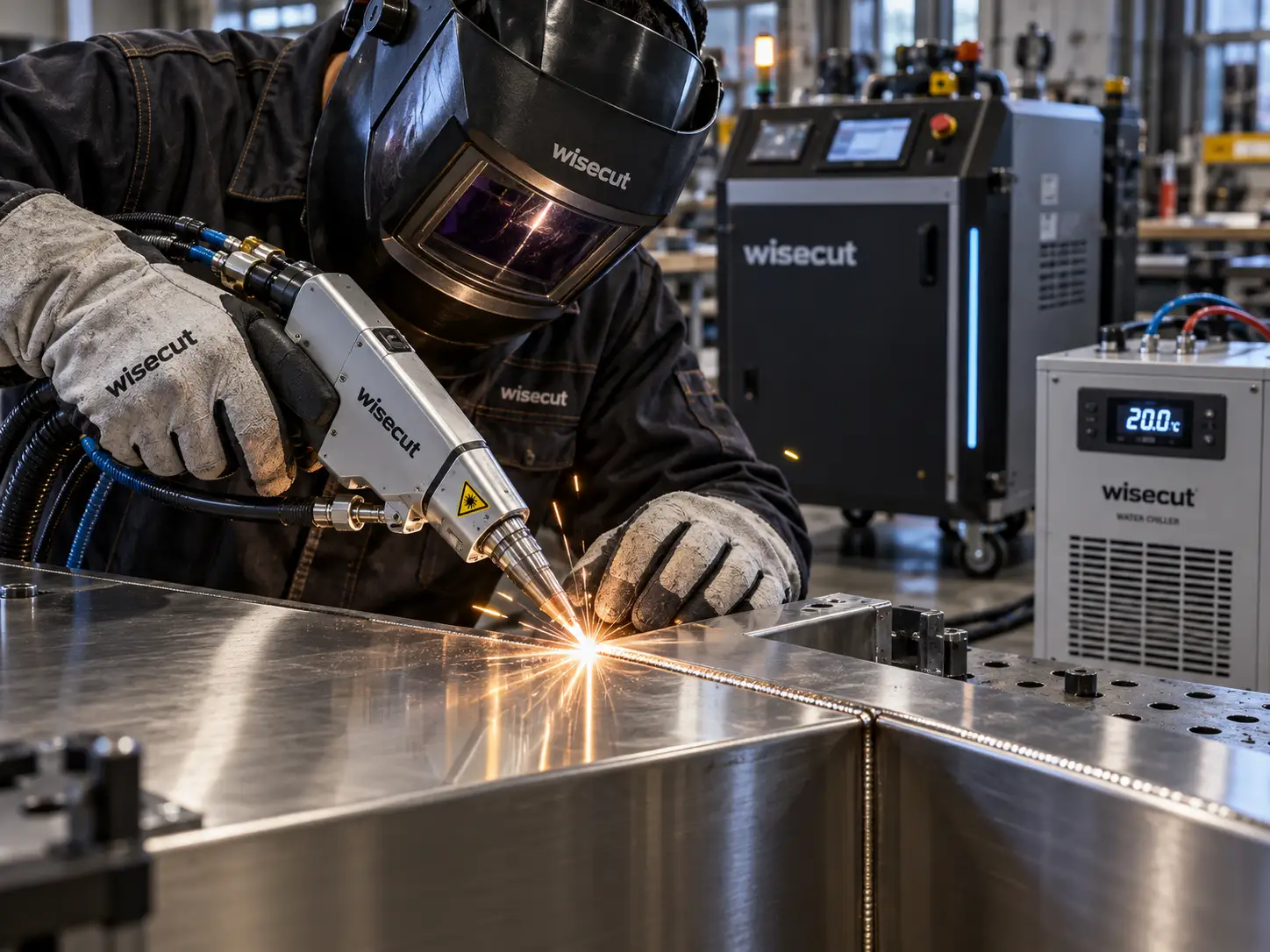
A water-cooled layout pumps treated liquid through a chiller. This liquid also flows through pipes hooked to the laser system. The chiller keeps the liquid cold. It then dumps the heat into the room using a condenser. Cold fluid helps keep things stable during repeat welding. This matters when the laser runs hot for a long time.
Picking this adds a chiller, rubber hoses, a pump, and flow sensors into the shop. Workers now must check water quality. They need to watch flow rates, heat alarms, and leaks. Winter ice is another big issue. Planners have to add these tasks to the daily checklist before the equipment even ships.
Air-Cooled vs Water-Cooled: Key Differences
Look at the complete machine when comparing cooling styles. The chart below shows the main points to ask. Exact answers change with the chosen model.
|
Fattore |
Air-Cooled Handheld Welder |
Water-Cooled Handheld Welder |
|
Heat removal |
Fans, heat sinks, and room air |
Closed-loop fluid and chiller |
|
Mobility |
Small all-in-one build is easy to move |
Chiller and fluid parts add weight and take up space |
|
Setup |
Power cord, air vents, and safe space |
Power cord, chiller spot, hoses, and fluid checks |
|
Long welds |
Check duty cycle and heat limits |
Good for high heat tasks if rated for them |
|
Routine care |
Vents, dust filters, and fans |
Fluid health, flow, filters, heat, and leaks |
|
Main site concern |
Hot or dusty air lowers cooling |
Freezing, bad water, or blocked air flow |
Compare weight, power draw, and cable length fairly. Find out the space needed for repairs. A light welding gun does not mean the whole rig is mobile. The main power box or chiller might sit bolted to one spot.
Match the Cooling System to Your Welding Workload
Daily work speed tells you more than asking which cooling method is best. Time how long the laser runs during a shift. Count how many times the operator stops to move a metal piece.
Moving Between Workstations
Air cooling shines when jobs move across large bays. It handles huge metal parts well. WiseCut builds a portable air-cooled laser welding machine named the WT-A1500. This unit delivers a 1,500 W output. The machine weight is 41 kg. Its dimensions are 610 × 390 × 570 mm, running on a single-phase 220 VAC supply. Test the power limit for the specific metal, joint shape, and wire using a real sample weld.
The all-in-one box cuts down heavy lifting. But the travel path needs a good power plug and shielding gas. Safe cable spots are a must. Portability pays off when workers pack up and shift spots all day long.
Repeated Welding and Long Seams
Water cooling fits long seams and matching parts better. It takes higher heat and stays put in a fixed work cell. The chiller provides a steady heat escape. This works as long as the chosen model matches the laser power.
WiseCut offers saldatrice laser raffreddata ad acqua builds under the WT-WELD and WT-WELD II names. These units are rated at 1,500 W and 2,000 W. The 1,500 W WT-WELD has a listed machine weight of 141 kg. Its size is 1,000 × 600 × 820 mm. The built-in chiller and wheels let it roll across flat shop floors. Check out this heavier build. Compare it to the lighter air-cooled unit. Test the actual welding power on shop metal.
If jobs jump between quick tack welds and long seams, count the finished parts per hour. Add warm-up time, part moving, fluid checks, and heat stops to the math.
Maintenance and Total Operating Cost
Air cooling cuts out liquid upkeep. Water cooling brings heat control and a fluid loop. Both setups require scheduled care.
For an air-cooled unit, check the air vents, filters, fans, and heat sinks. Do this exactly when the manual says. Stop dust from filling the air paths. A choked vent spikes the inside heat. This triggers the safety shut-off before a weld finishes.
For a water-cooled tool, check the fluid level and heat. Keep an eye on flow alarms, rubber hoses, and condenser filters. Use only approved water quality. Follow the manual to change fluids. Do not pour in random fluids. Odd chemicals will ruin the cooling pipes.
Find the total cost using the real shop routine. Add up the buy price, power bills, and new filters or fluid. Include planned fixes and bad welds. Paying more upfront makes sense if a fixed cell pumps out enough good parts. That extra output pays for the chiller gear. But a small air machine saves cash if it stops workers from wasting time moving heavy boxes.
What to Confirm Before Buying
Ask the supplier to match the cooling style with the entire welding job. Give them these facts:
- Metal types, surface dirt, thickness, joint style, and desired final look.
- Normal weld length, daily part count, and the longest non-stop weld.
- Laser power needs. Note if wire feeding, cutting, or cleaning tools are needed.
- Shop room heat, wetness, dust levels, wind flow, and winter cold.
- Wall voltage, open floor space, lifting cranes, and table movement.
- Filter types, fluids, alarms, spare parts, training, and repair times.
Demand a sample test using real metal and joint cuts. Check the melt depth, weld bead shape, sparks, and metal bending. Do this right after a hard work cycle. Write down the tool state and dial numbers so workers can copy the exact result.
Check the repair and help plans. Look closely at setup help, teaching, and fix-it deals.
To discuss a welding task with WiseCut, send the part drawings, metal types, and output targets. Ask for a clear quote showing the exact machine build, safe working limits, and repair timetable.
Domande frequenti
Which Cooling System Is Better for a Handheld Laser Welding Machine?
Pick based on the daily workload. Air cooling fits moving, stop-and-go work well. This works if the tool’s power matches the task. Water cooling is a strong pick for a fixed station doing longer welds. A real sample test gives a better answer than just picking a cooling type.
Can an Air-Cooled Laser Welder Run Continuously?
It runs for the time allowed by its duty cycle, room heat limit, and power dial. The term “continuous fiber laser” names the type of laser beam. It does not mean the box blasts at top power forever without a break. Check the maker’s test rules.
Does Water Cooling Automatically Improve Weld Quality?
Water cooling holds a steady heat level during heavy work. Yet the final weld quality relies on laser power, travel speed, and beam focus. Shielding gas, joint gaps, filler wire, and human skill matter just as much. Test the full setup with real metal parts.
Does a Water-Cooled Laser Welder Need a Mains Water Connection?
Many of these tools use a closed-loop chiller. The chiller pumps the same liquid around in a circle. They do not need a direct wall pipe. They do need fluid top-offs, heat checks, and approved fluid changes. Check the chiller setup, drain steps, and winter cold rules with the seller.
Is an Air-Cooled Laser Welding Machine Maintenance-Free?
No shop machine is free from upkeep. An air-cooled box skips daily water checks. Its dust filters, fans, air vents, glass guards, and safety parts still need regular check-ups. Follow the printed repair schedule carefully.


