

Warum emittiert meine Laserschweißmaschine kein Licht? Ursachen und Lösungen
Zeitpunkt: 7. August 2026 Ansicht : 805
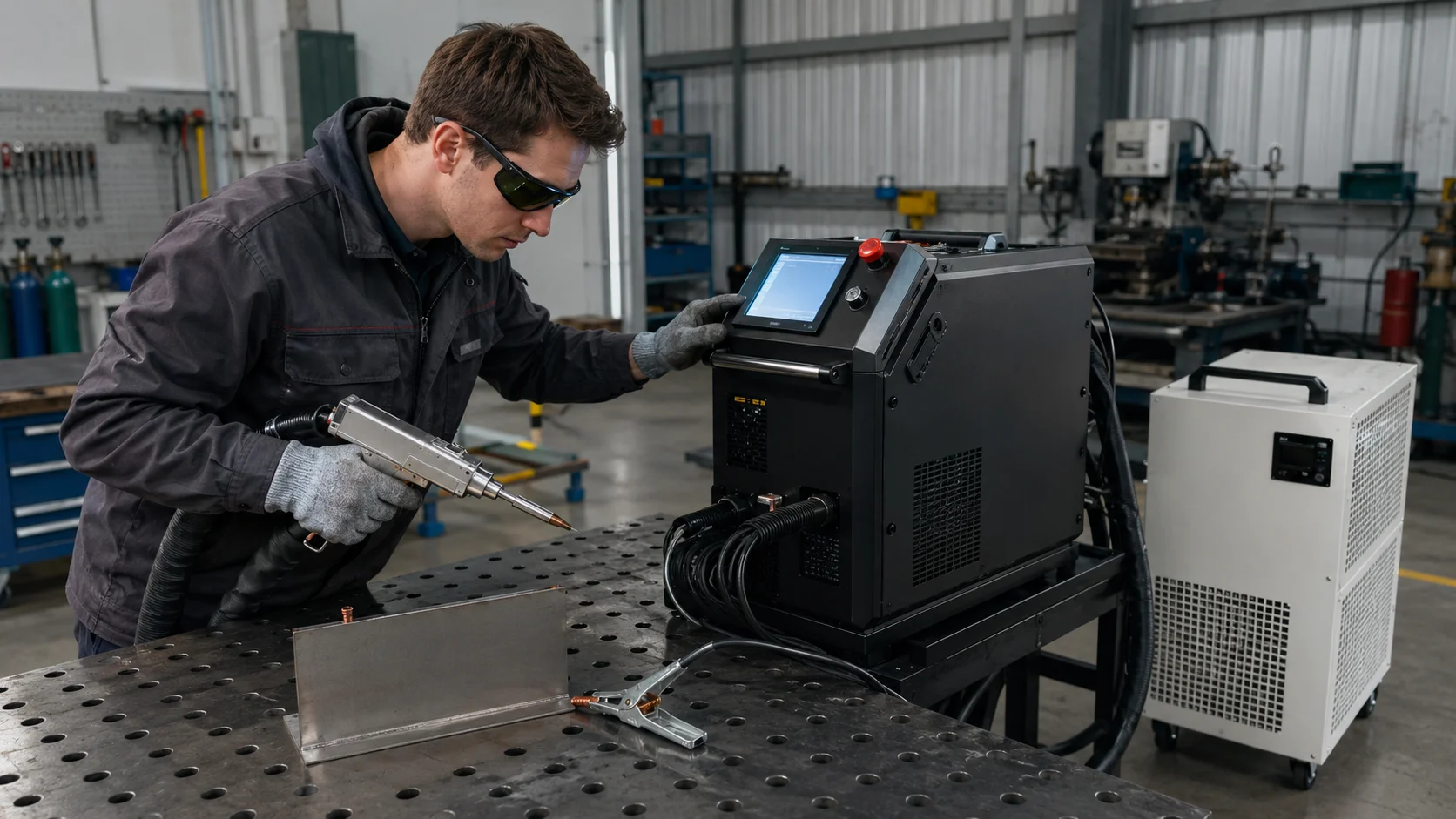
Wenn Ihre Laserschweißanlage kein Licht aussendet, kann die Produktion ohne Vorwarnung zum Stillstand kommen. Nicht immer ist die Lichtquelle defekt. Eine Sicherheitsverriegelung, ein lockerer Stecker, ein Kühlungsalarm, ein schlechter Erdungskontakt oder eine falsche Einstellung können die Emission blockieren.
Beginnen Sie mit den sichtbaren Symptomen. Betätigen Sie nicht wiederholt den Abzug, umgehen Sie keine Verriegelung und öffnen Sie nicht den Schaltschrank, um eine Theorie zu testen.
Was sollten Sie überprüfen, wenn eine Laserschweißmaschine kein Licht aussendet?
Achten Sie auf den Gasfluss, halten Sie Ausschau nach dem roten Kontrolllicht und lesen Sie jeden Alarm, bevor Sie eine Einstellung ändern.
|
Symptom |
Wahrscheinliches Gebiet |
Erste Überprüfung |
|
Kein Gas und kein Laser |
Sicherheits- oder Auslöseschaltung |
Masseklemme, Triggersignal, Stecker |
|
Gas strömt, aber kein Laser |
Laser aktivieren oder Quelle |
Bildschirmstatus, Alarm, Signalkabel |
|
Rotes Licht, aber kein Lichtstrahl |
Verriegelung oder Befehl |
Emissionsgenehmigung, Quellenstatus |
|
Das Licht geht an und aus |
Stromversorgung oder Kühlung |
Spannung, Wasserdurchfluss, Temperatur |
|
Die Leistung ist schwach |
Linse, Fokus oder Gas |
Linsenzustand, Fokus, Gasversorgung |
Steuerung, Pistole und Drahtvorschubgerät arbeiten als ein System. Ein fehlendes Signal kann den Schussvorgang stoppen. Überprüfen Sie die Handheld Laserschweißmaschine Layout vor der Kabelverfolgung.
Welche Sicherheitsüberprüfungen kommen zuerst?
Sicherheitsvorrichtungen sind Bestandteil des Zündkreises. Die Erdungsklemme, der Schlüsselschalter, der Not-Aus-Schalter, der Luftdrucksensor und die Alarme der Steuerung können die Stromabgabe unter unsicheren Bedingungen verhindern.
Not-Aus-Schalter und Zündschalter prüfen
Lösen Sie den Not-Aus-Schalter und überprüfen Sie die Stellung des Schlüsselschalters. Prüfen Sie auf dem Display, ob Standby- oder Emissionsberechtigungen vorliegen. Einige konfigurierte Systeme wechseln nach zehn Minuten in den Standby-Modus und benötigen einen Neustartbefehl.
Die Sicherheitsschleife darf niemals umgangen werden.
Die Masseklemme schließt den Stromkreis zwischen Werkstück, Brennerkopf und Abzug. Klemmen Sie sie an sauberem Metall in der Nähe der Schweißnaht fest. Farbe, Rost oder eine lockere Klemmbacke können dazu führen, dass die Sicherheitsverriegelung nicht erkannt wird.
Halten Sie an, wenn Sie Wasser in der Nähe von elektrischen Bauteilen oder Beschädigungen an Glasfasern feststellen. Interne Spannungsmessungen dürfen nur von geschultem Personal durchgeführt werden.
Warum gibt es kein Gas und keinen Laser?
Wenn beide Ausgänge fehlen, überprüfen Sie den Auslöser, die Sicherheitsverriegelung, den Stecker und das Steuersignal, bevor Sie sich die Optik ansehen.
Trigger- und Klemmsignale prüfen
Drücken Sie den Auslöser einmal, während Sie den Monitor beobachten. Wenn sich das Signal nicht ändert, schalten Sie das Gerät aus und überprüfen Sie den Stecker in der Nähe des Taschenlampenkabels. Ein lockerer Stecker nach dem Transport des Geräts ist keine Seltenheit.
Bewegen Sie die Klemme an blankes Metall in der Nähe des Pistolenkopfes. Leuchtet die Anzeige wieder auf, war der erste Kontaktpunkt nicht ausreichend leitfähig. Andernfalls überprüfen Sie das Klemmenkabel. Schließen Sie niemals Klemmen kurz, um einen Abzug zu simulieren.
Warum strömt Gas, aber es kommt kein Laserstrahl heraus?
Der Gasdurchfluss beweist, dass ein Teil der Auslösesequenz funktioniert, nicht aber, dass die Quelle emittieren kann. Überprüfen Sie die Kontrollleuchte, den Status der Quelle, die Einstellungen und die Signalleitung.
Lesen Sie den Quellstatus
Vergewissern Sie sich, dass die Quelle eingeschaltet und betriebsbereit ist. Notieren Sie den Alarm vor dem Neustart. Verbindungs-, Stromversorgungs-, Temperatur- und Kommunikationsfehler können die Emission unterbrechen.
Ein dokumentiertes 220-V-System spezifiziert 205 bis 235 V Wechselstrom und weniger als 5 V zwischen Neutralleiter und Erde. Dies sind modellspezifische Prüfungen durch den Techniker. Die Angaben auf dem Typenschild haben Vorrang.
Bildschirmparameter und Kabel überprüfen
Überprüfen Sie Leistung, Tastverhältnis, Scanbreite und Modus anhand der genehmigten Vorgaben. Ein Diagnosebeispiel verwendet ein Tastverhältnis von 100 % und eine Leistung über 200 W, dies ist jedoch nicht die Regel.
Schalten Sie das Gerät aus und überprüfen Sie anschließend beide Enden des Quellsignalkabels auf lose Ringe, verbogene Pins oder Beschädigungen.
Kann ein Kälteanlagenalarm die Laserleistung stoppen?
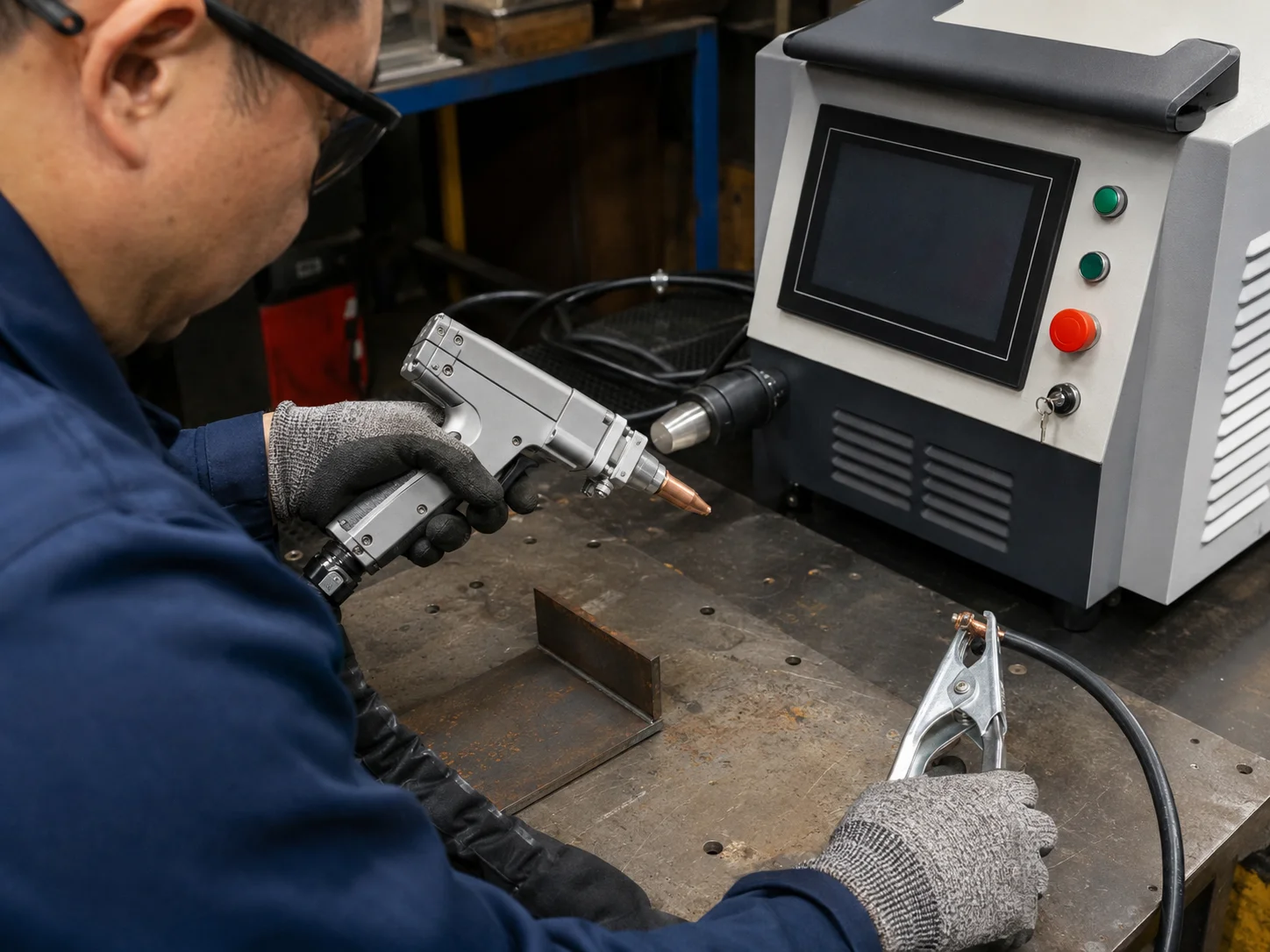
Ja. Ein wassergekühltes System kann den Lichtstrahl blockieren, wenn Temperatur, Wasserstand, Sensorstatus oder Durchfluss außerhalb des zulässigen Bereichs liegen.
Tankfüllstand, Schlauchbiegungen, Pumpengeräusche, Filter und Abgasraum prüfen. Füllmaterial oder verschmutzte Filter können Hochtemperaturalarme auslösen. wassergekühltes Schweißsystem Möglicherweise gibt es separate Schaltkreise für die Quelle und den Pistolenkopf, daher lesen Sie den genauen Alarmkanal ab.
Wenn ein Durchflussalarm erscheint, setzen Sie ihn nicht ständig zurück. Prüfen Sie, ob die Wasserleitung verstopft, der Sensor defekt oder die Pumpe stillgelegt ist. luftgekühltes Laserschweißgerät folgt einem anderen Kühlweg.
Warum gibt es ein rotes Licht, aber keinen Schweißstrahl?
Der rote Punkt dient als Zielhilfe. Er zeigt an, dass ein Teil des Systems aktiv ist, bestätigt aber nicht die Hauptlaseremission.
Überprüfen Sie das rote Licht und die Linsen.
Ein normales Führungslicht bildet einen klaren Punkt an der Düse. Ein Halo oder ein deutlicher Versatz können auf Verunreinigungen oder Fehlausrichtungen hinweisen und erfordern eine Wartung durch Fachpersonal.
Nach dem Abschalten die Schutzlinse an einem sauberen, ruhigen Ort auf schwarze Flecken oder Staub prüfen. Ist sie sauber, die Fokussierlinse gemäß dem zugelassenen Verfahren prüfen.
Häufige Schäden können durch Verschmutzung, fehlerhafte Ausrichtung, falsche Fokussierung oder ungeeignetes Gas entstehen. Eine dokumentierte Konfiguration empfiehlt reines Argon oder Stickstoff mit einem Druck von etwa 0,150 MPa. Bitte überprüfen Sie den korrekten Wert für Ihr Gerät.
Was sollten Sie tun, wenn die Ausgabe zeitweise ausfällt?
Ein sporadisch aufleuchtendes Licht deutet oft auf eine instabile Stromversorgung, einen unzureichenden Kühlkreislauf oder eine lockere Verbindung hin. Die gemeinsame Nutzung des Stromkreises mit großen Schweißgeräten kann Störungen verursachen.
Verwenden Sie bei Bedarf eine separate Stromversorgung. In einem Verfahren wird ein Mindestabstand von 5 Metern zu WIG-, MAG- und Argon-Lichtbogenschweißgeräten empfohlen. Eine dokumentierte 10-Meter-Faser hat einen minimalen Biegeradius von 80 mm und kann nach Verschleiß, Hitzeeinwirkung, übermäßiger Biegung oder Leckagen die Leistung einstellen.
Wann sollten Sie den technischen Support kontaktieren?
Die grundlegenden Überprüfungen sollten eingestellt werden, sobald der Fehler über eine externe Verbindung oder eine genehmigte Einstellung hinausgeht.
|
Situation |
Sicherer nächster Schritt |
|
Die Klemme sitzt auf Lack oder Rost. |
Bewegen Sie es auf sauberes Metall. |
|
Der Außenstecker ist locker. |
Schalten Sie es aus und setzen Sie es wieder ein. |
|
Der Alarm wird nach einem Reset erneut ausgelöst. |
Nehmen Sie es auf und kontaktieren Sie den Support. |
|
Wasserlecks in der Nähe von Elektrogeräten |
Stromzufuhr sofort unterbrechen. |
|
Die Faser ist beschädigt |
Die Maschine nicht starten. |
|
Schranktests sind erforderlich |
Beauftragen Sie einen qualifizierten Elektriker. |
Fotografieren Sie den Alarmbildschirm, das Modell, die Quellenanzeigen, die Anzeige des Kühlers und die Anschlüsse. Wenn Ihre Laserschweißmaschine nach diesen Überprüfungen kein Licht aussendet, wenden Sie sich bitte an [Kontaktinformationen einfügen]. technischer Kundendienst anstatt das Gerät immer wieder neu zu starten.
Eine praxisnahe Lieferantenperspektive von BEIJING WISECUT LTD
BEIJING WISECUT LTD liefert Anlagen zur Automatisierung von Laserschweißen, -schneiden, -reinigen, -biegen und Metallbearbeitung. Die Schweißsysteme vereinen Quelle, Schirm, Brennerkopf, Drahtvorschubgerät, Kühleinheit, Sicherheitsvorrichtungen und Verkabelung in einem Komplettsystem.
Diese Systemansicht ist bei einem Lichtausfall von Bedeutung. Das Unternehmen bietet Musterprüfungen, Geräteauswahl, kundenspezifische Zeichnungen, Bedienerschulungen, englischsprachige Ferndiagnose, Ersatzteile und organisierten Technikerservice. Die technischen Unterlagen umfassen Sicherheitsverriegelungen, Auslösefehler, Linsen, Erdung, Kühlungsalarme, Gasstörungen und Softwarediagnose. Der Support kann auch nach der Lieferung fortgesetzt werden und endet nicht mit der Bereitstellung eines Handbuchs.
FAQ (häufig gestellte Fragen)
Frage 1: Warum zeigt mein Laserschweißgerät rotes Licht, aber keinen Laserstrahl?
A: Das Leitlicht kann auch bei blockiertem Hauptlicht funktionieren. Prüfen Sie die Emissionsberechtigung, den Sicherheitsregelkreis, die Alarme und das Steuersignal.
Frage 2: Kann eine defekte Erdungsklemme die Zündung der Maschine verhindern?
A: Ja. Schlechter Kontakt auf lackierten, rostigen, öligen oder oxidierten Oberflächen kann dazu führen, dass der Sicherheitskreis offen bleibt.
Frage 3: Kann ein Kältemittelalarm dazu führen, dass kein Laserstrahl ausfällt?
A: Ja. Fehler bei Temperatur, Durchfluss, Wasserstand, Pumpe oder Sensoren können den Schutz aktivieren.
Frage 4: Warum tritt Gas aus, aber der Laser nicht?
A: Ein Quellenalarm, ein deaktivierter Emissionsbefehl, ein loses Signalkabel oder eine falsche Einstellung können den Strahl blockieren.
Frage 5: Wann sollten Sie den Hersteller kontaktieren?
A: Rufen Sie um Hilfe, wenn Alarme erneut auftreten, die Glasfaser beschädigt ist, Wasser an elektrische Teile gelangt, die Stromquelle nicht betriebsbereit ist oder interne Tests erforderlich sind.


