

1kW vs 3kW vs 6kW vs 12kW Fiber Laser Cutting Machine
Time : Sep 18, 2026 Vista : 36
Elegir un fiber laser cutting machine starts with the thickness you cut every day. A 1kW system serves light sheet work, 3kW covers a broad range of general fabrication, 6kW supports higher throughput and medium plate, and 12kW targets heavy plate or high-volume production. The right choice also depends on material grade, assist gas, sheet size, loading method, edge-quality target and production hours.
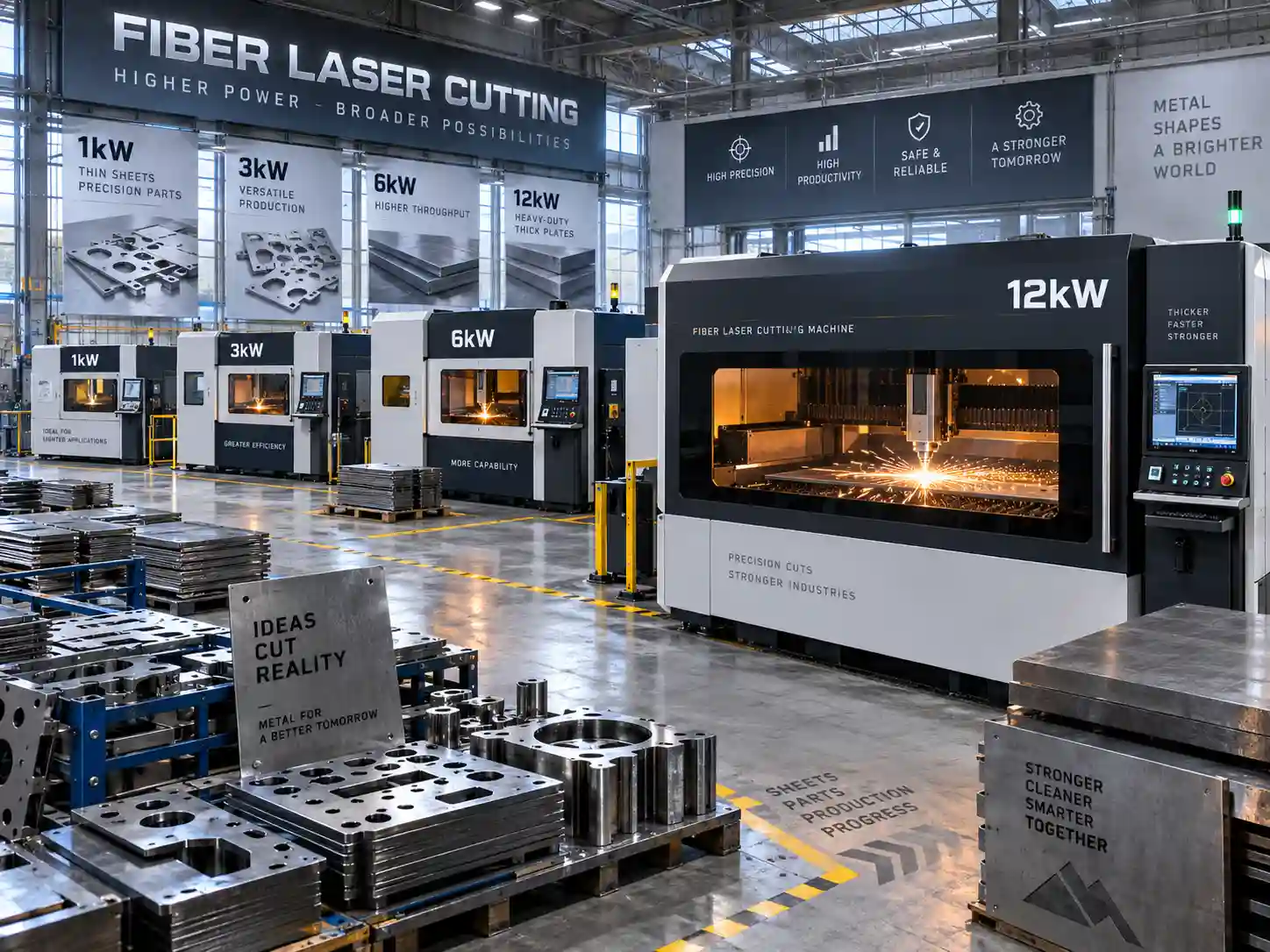
What Does Laser Power Change in a Fiber Laser Cutting Machine?
Laser power is the optical energy available at the cutting head. More power can widen the usable process window and support thicker material, but the machine still needs the correct focus, nozzle, gas flow, pierce strategy and motion control. A power rating does not equal a fixed cutting speed or a guaranteed thickness.
Actual output includes piercing, acceleration, corners, small holes and part handling. A machine may move quickly between cuts while using a slower feed rate through thick plate. Compare complete cycle time and edge quality when you evaluate quotations.
1kW vs 3kW vs 6kW vs 12kW: Quick Comparison
The ranges below are planning references for common flat-sheet work. Alloy, thickness tolerance, reflectivity, gas, nozzle and quality requirements can move the practical limit. Ask for a test cut on your material before approving a production specification.
|
Power class |
Typical work pattern |
Planning thickness focus |
Main checks |
|
1 kW |
Thin carbon steel, stainless steel or aluminum; lower-duty work |
Thin sheet and small batches |
Daily thickness, pierce time, future growth |
|
3 kW |
General job-shop and sheet-metal fabrication |
Thin to medium sheet |
Material mix, gas choice, bed utilisation |
|
6 kW |
Faster thin-sheet work and regular medium plate |
Medium gauges and higher hours |
Throughput, thermal stability, gas capacity |
|
12 kW |
Heavy plate work and high-volume production |
Medium to thick plate |
Test-cut evidence, loading, extraction, power supply |
Planning focus. The supplier’s model-specific chart determines final selection.
A practical rule is to select the lowest power class that meets your required cycle time and thickness mix with usable edge quality. Include expected growth when the machine will run for multiple shifts or replace several older processes.
How Does Each Power Class Fit a Real Shop?
1kW: Thin Sheet and Lower-Duty Work
1kW suits shops that mainly cut thin sheet, prototypes, signs, light enclosures or occasional production parts. The lower power demand can simplify site preparation, while the narrower process window makes nozzle condition and piercing discipline important. Record the thicknesses that fill most of the schedule. A 1kW machine becomes a poor fit when medium plate appears frequently or long pierce times limit output.
3kW: General Sheet-Metal Production
3 kW is a common starting point for mixed sheet-metal work. It gives a wider usable range for carbon steel, stainless steel and aluminum when the gas and cutting head match the job. Review the speed at your top three thicknesses and compare those results with the supplier’s documented test conditions. This class often fits job shops that need flexibility across short runs and repeat orders.
6kW: Higher Throughput and Medium Plate
6kW supports higher feed rates on thin and medium sheet and gives more headroom for thicker carbon steel or stainless steel. The benefit appears when the shop has enough work to use the extra capacity. Check chiller rating, electrical supply, gas storage, extraction and loading time. If the bottleneck is material handling, a higher laser rating alone will not shorten the complete job cycle.
12kW: Heavy Plate and High-Volume Lines
12kW targets production environments that cut medium and thick plate regularly. The machine, cutting head, bed, chiller and gas system must work as one process. A supplier should demonstrate piercing, straight cuts, holes and corners on the exact grades and thicknesses in your schedule. Heavy-duty capacity has value when the workflow can feed the machine continuously and downstream operations can handle the output.
Which Laser Cutting Parameters Still Matter?
Material Grade and Thickness
Two sheets with the same nominal thickness can require different recipes because alloy, coating, surface rust and flatness change heat transfer and melt ejection. Separate carbon steel, stainless steel and aluminum programs. Keep the heat number or batch information with the approved recipe when repeatability matters.
Assist Gas, Nozzle, and Focus
Oxygen, nitrogen and air create different cutting conditions. Gas pressure and purity affect the kerf, while nozzle diameter and alignment control the jet that removes molten metal. Focus position sets energy density through the sheet. A blocked nozzle or damaged protective window can create dross at any power level.
Piercing, Edge Quality, and Workflow
Thick plate spends more time in piercing and corner control. Ask suppliers to report pierce time, hole quality, dross and striation alongside straight-line speed. Also compare shuttle-table or loading options, extraction, chiller maintenance and operator access. These details determine usable output on the shop floor.
How Do You Choose Power for Your Thickness Mix?
Create a simple worksheet from recent production orders:
- List each material grade and thickness. 2. Calculate the share of cutting hours for thin, medium and thick work. 3. Record required edge quality, hole diameter and tolerance. 4. Note shifts per day, loading method, gas supply and available electrical capacity. 5. Request a test coupon and a parameter sheet for the most frequent and most demanding jobs.
Use the results to compare cycle time, consumables and operator workload. A higher-power machine earns its place when it reduces the time spent on recurring work or opens a documented thickness range that the shop can sell.
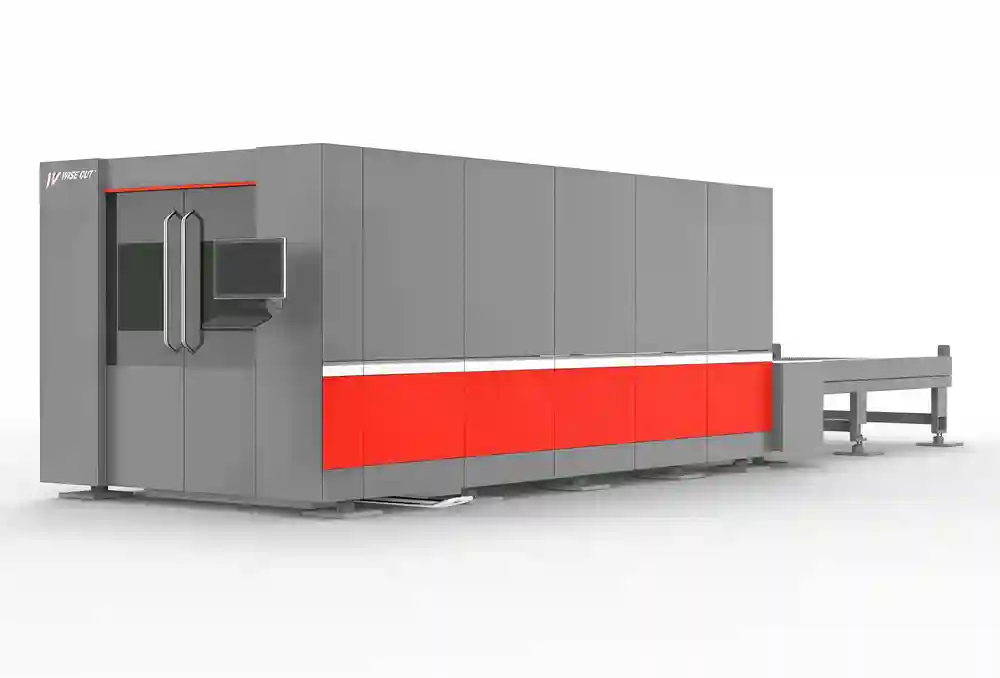
WiseCut Configuration Considerations
WiseCut’s official product page lists the WT-12025 high-power full-cover fiber laser cutting machine with a 6,000–30,000 W laser-power range. The page lists an FSCUT8000E control system, a BOCI BLT662 auto-focus head and a Raycus 20,000 W global-series CW fiber laser example. It also lists 120 m/min as maximum no-load running speed. That figure describes positioning movement; material cutting speed depends on the complete recipe.
The product page describes work on stainless steel, carbon steel, alloy steel, aluminum alloys, galvanized sheet, aluminized-zinc sheet, other metal plate and steel pipes. Its description and specification field use different maximum-thickness statements, so buyers should request the applicable model, material, gas and test conditions in writing.
Conclusion: Choose the Power You Can Use Every Day
The best fiber laser cutting machine matches your daily thickness distribution, required cycle time and site infrastructure. A 1kW system fits light work, 3kW supports mixed sheet-metal production, 6kW serves higher-throughput and medium-plate schedules, and 12kW supports demanding plate work with the matching gas, optics and handling system.
WISECUT BEIJING WISECUT LTD provides fiber laser cutting machines with documented power, control and cutting-head options. Send material grades, thickness mix, sheet dimensions, gas preference, edge-quality target, sample files and production hours to the WiseCut contact team. Those details allow a model recommendation and a written test-cut plan tied to your process.
Preguntas frecuentes
P1: Is 3kW enough for most sheet-metal work?
R: 3kW can fit mixed sheet-metal work when the required thickness and cycle time sit within the supplier’s tested range. Confirm the top three production thicknesses with a test coupon.
P2: When does a 6kW fiber laser make sense?
R: 6kW makes sense when thin-sheet throughput and regular medium-plate work consume enough hours to use the added capacity. Check gas, power supply, chiller and handling capacity before selecting it.
P3: What is the main reason to choose a 12kW fiber laser?
R: A 12kW system provides a larger process window for demanding thicknesses and high-volume schedules. The supplier should demonstrate piercing and edge quality on the exact material grades in your job mix.
P4: Does higher laser power always mean faster cutting?
R: Higher power can support higher speed at selected thicknesses. Actual cycle time also includes piercing, acceleration, corners, gas flow, loading and part handling.
P5: What information should you send a supplier before selecting power?
R: Send material grades, thickness distribution, sheet size, edge-quality target, hole sizes, shifts per day, gas availability, electrical limits and sample files. The supplier can use this information to prepare a model-specific test plan.


