

How to Choose a Handheld Laser Welding Machine
Time : Sep 25, 2026 View : 320
A handheld laser welding machine should match the parts that move through your shop. Start with the material grade, thickness, joint type, expected gap, weld length, finish requirement, production volume, and site safety layout. These inputs show whether laser welding can take work from MIG or TIG, reduce finishing steps, or shorten the measured cycle time for a defined part family.
Use a representative sample before approving a machine. The sample should use the planned material, joint, fixture, filler wire, shielding gas, and inspection method. It turns a product discussion into a production decision.
What Is the Best Handheld Laser Welding Machine for Your Work?
A cabinet seam, frame corner, and repair joint place different demands on fit-up, access, heat control, filler metal, and finish.
Start With the Part and Power Requirement
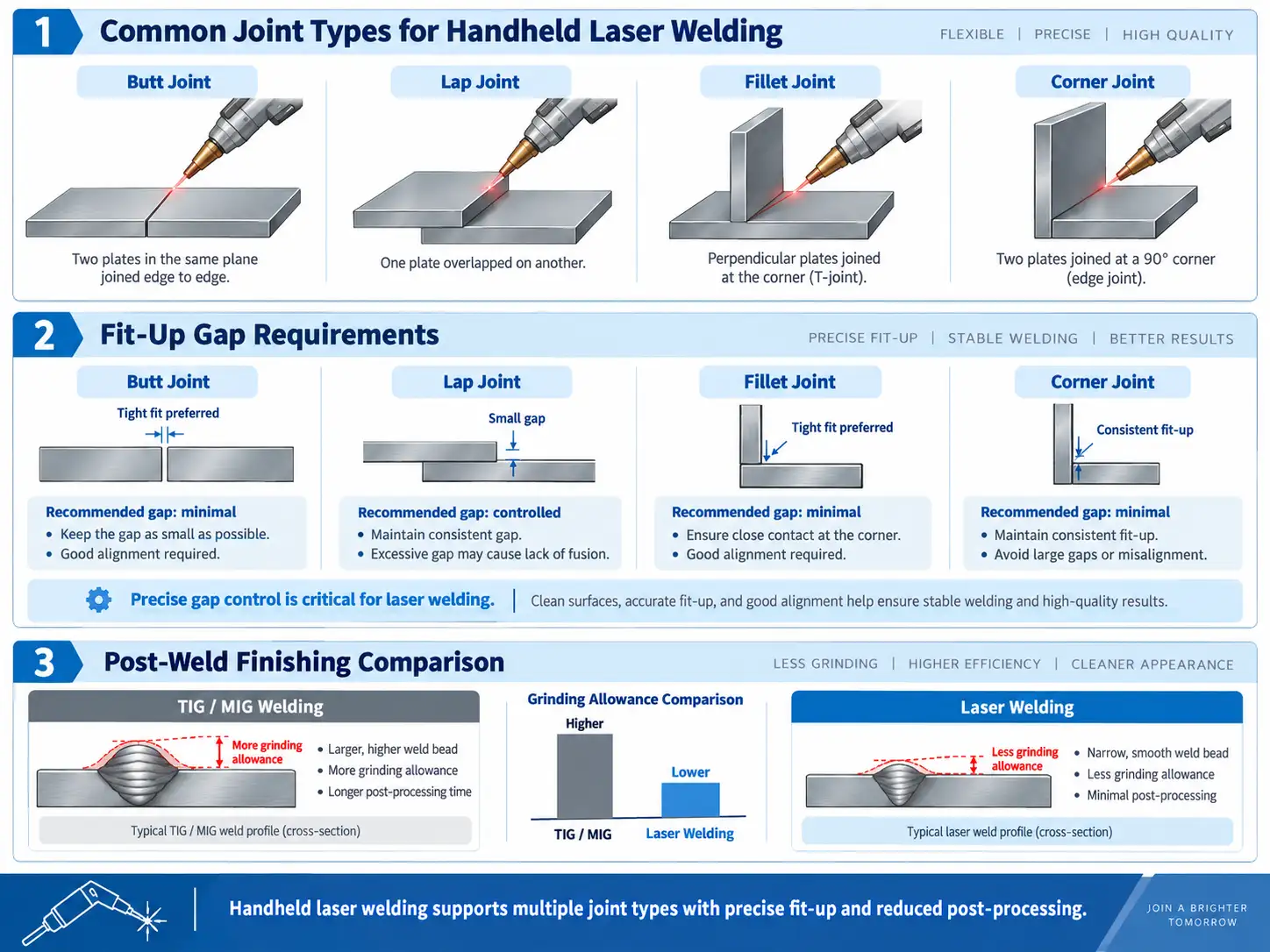
List every material and thickness that the machine will process. Record the joint as butt, lap, fillet, corner, or another approved geometry. Include the expected joint-gap range and whether the welded surface stays visible after painting, polishing, or assembly.
Decide Whether You Need a Supplement or a MIG/TIG Replacement
Laser welding can take repeated, well-fixtured seams into a defined work route. TIG serves repair work, changing geometry, and jobs that depend on direct puddle control. MIG serves joints with greater gap variation or a larger filler-metal volume. Assign each process by part family and approved sample result.
Set Measurable Goals for Speed, Grinding, and Operator Variation
Write measurable targets for cycle time, grinding minutes, rework, seam appearance, penetration, and operator qualification. Repeat the sample across operators and shifts.
|
Buying input |
What to document |
Decision use |
|
Material and thickness |
Grade and thickness range |
Sets the sample and power discussion |
|
Joint and gap |
Geometry, access, gap range |
Sets fit-up, wire, and fixture needs |
|
Finish target |
Visible surface and dressing limit |
Defines appearance and rework acceptance |
|
Production pattern |
Batch size and weld length |
Defines cycle-time and duty review |
|
Site conditions |
Power, space, extraction, access |
Defines cooling and safety configuration |
Which Technical Specifications Matter When You Choose a Handheld Laser Welder?
Technical data matters when it maps to a part and a procedure.
Laser Power and Required Penetration
Power selection follows material, thickness, joint design, travel speed, wire use, shielding gas, and acceptance criteria. WISECUT presents its WT-W handheld range with a published 1000-6000W power range and a listed maximum welding thickness of 14 mm. Treat that thickness figure as a planning input. The applicable result still needs confirmation for the exact material, joint, gas, wire, cooling arrangement, and inspection method.
Material Compatibility and Welding Thickness
Stainless steel, carbon steel, aluminum, galvanized material, and coated parts require their own sample plan. Surface condition, reflective behavior, coating fumes, and joint access affect the process route.
Wire Feeding, Wobble/Seam Width, and Torch Configuration
Wire feeding can support a joint that needs filler metal. The WISECUT WT-W1500 and WT-W2000 table lists wire sizes of 0.8, 1.0, 1.2, and 1.6 mm for aluminum, carbon-steel, and stainless-steel wire. It also lists an adjustable weld seam width of 0-6 mm and a 10 m torch cable. Confirm the selected wire, diameter, seam setting, torch access, and sample parameters in the quotation.
Shielding Gas and Cooling Requirements
Shielding gas protects the weld zone and belongs in the sample-weld record. Cooling belongs in the production review because machine duty, ambient conditions, and the proposed model define the operating arrangement. The handheld laser welding machines category provides the relevant WISECUT product route.
Air-Cooled or Water-Cooled: Which Configuration Fits?
Cooling affects floor layout, maintenance, and machine duty assumptions.
Air Cooling for Layout and Duty Constraints
An air-cooled machine may fit a shop that needs a compact equipment route or relocates the machine between work areas. Review the proposed model’s environmental and duty limits with the supplier. The air cooling laser welding machine route supports that review.
Water Cooling for the Proposed Duty and Environment
Water-cooled configurations include a cooling system in the equipment plan. The quotation should state the model, chiller arrangement, utilities, ambient conditions, maintenance tasks, and included accessories.
Can a Handheld Laser Welder Replace MIG or TIG?
A handheld laser welder can serve repeated seams where joint fit-up and fixture position stay controlled. The process decision includes the part and its production controls.
Where Laser Welding Can Reduce Manual Variation
Defined parameter recipes, stable fixtures, gap control, and documented work instructions give operators a repeatable route. Quality staff can review the same appearance, penetration, and inspection criteria across the sample set.
When TIG Remains Necessary
TIG serves manual puddle control, repair access, and changing geometry. Keep it in the routing plan when the sample shows that laser fit-up requirements do not match the part.
When MIG Still Fits Wider Gaps and Filler-Heavy Joints
MIG supplies filler wire continuously for joints that call for weld build-up. Record gap, filler volume, inspection, and finish requirements before assigning the route.
How Can You Reduce Grinding and Improve Welding Speed?
Grinding and cycle time follow the whole route, including fit-up, settings, inspection, and downstream finishing.
Control Fit-Up, Fixture Stability, and Joint Preparation
Measure the gap range on real parts. Use fixture points that hold the seam location during welding. Clean oil, scale, coatings, and contaminants according to the approved procedure.
Define a Finish and Rework Acceptance Target
Set acceptance criteria for seam profile, discoloration, spatter, undercut, distortion, and dressing. Record grinding and repair during the trial.
Measure Cycle Time on the Same Part and Route
Time loading, clamping, welding, inspection, dressing, and unloading. Compare approved samples made from the same part revision.
How Much Operator Skill and Training Does Laser Welding Need?
Handheld operation requires trained personnel, a documented work method, and quality control.
Parameter Recipes and Repeatable Work Instructions
The approved procedure should identify material, thickness, joint, gap, wire, gas, power, seam width, travel method, inspection steps, and acceptable results. Store the record with the part route.
Ergonomics, Torch Handling, and Safe Work Practice
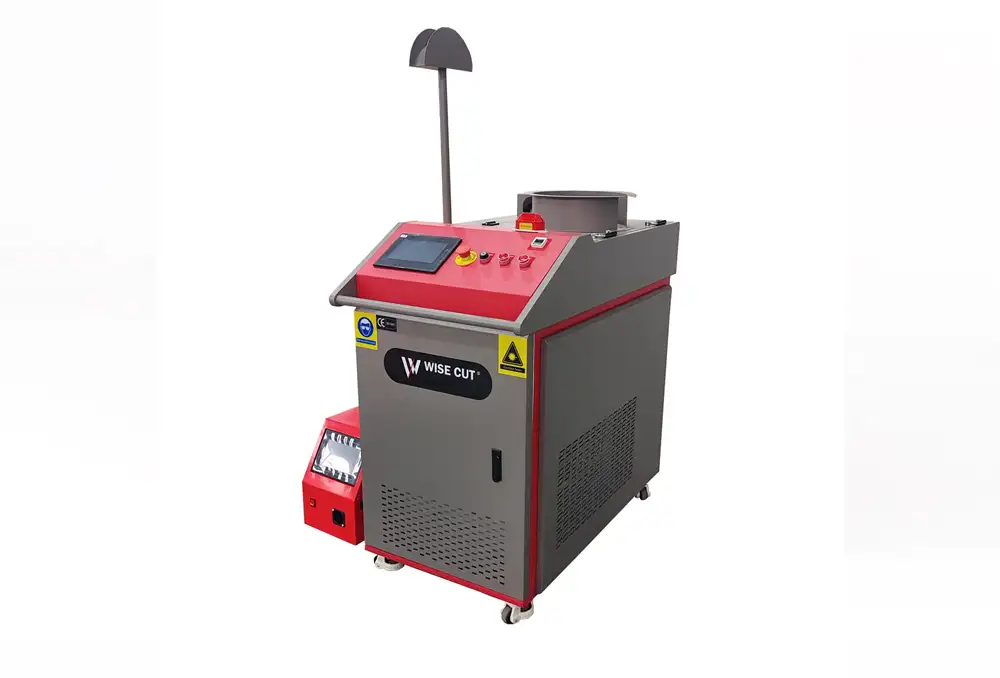
Review reach, cable routing, part support, torch storage, and access control. The WISECUT Handheld Laser Welding Machine page lists the WT-W product range; the exact machine manual defines operation and maintenance limits.
What Safety Requirements Should Buyers Check?
Laser welding involves beam exposure, reflected light, fumes, shielding gas, hot metal, and fire hazards.
Laser Classification, Eyewear, Enclosure, and Interlocks
Ask for the laser class, eyewear specification, warning signs, interlocks, screens or enclosure plan, and access-control procedure for the proposed model. Keep reflective workpieces and open beam paths within the documented safety layout.
Fumes, Shielding Gas, Reflections, and Hot Material
Include local extraction, gas-cylinder handling, fire controls, and hot-part handling in the risk assessment. The OSHA welding, cutting, and brazing overview provides general hazard resources. Apply destination-country rules and the machine manual to the final site plan.
What Should You Send a Supplier Before Requesting a Quote?
|
RFQ item |
Information to send |
|
Part data |
Drawing, photographs, material grade, thickness, joint, gap range, weld length |
|
Production target |
Batch size, shift pattern, current process, cycle-time baseline, finish and grinding target |
|
Quality plan |
Appearance standard, penetration requirement, inspection method, sample acceptance criteria |
|
Site plan |
Power supply, floor space, cooling preference, gas, extraction, safety layout, destination market |
|
Commercial scope |
Requested accessories, wire feeder, PPE, screens, training, spares, documents, delivery terms |
Conclusion: Choose the Machine by the Process You Need to Prove
Choose a handheld laser welding machine after defining the part, procedure, finish, safety layout, and sample acceptance criteria. Include the drawing, material grade, thickness, joint, gap, volume, cycle time, finish, inspection method, and site utilities.
WISECUT BEIJING WISECUT LTD offers the WT-W handheld laser welding route with published power, wire-feed, torch-cable, seam-width, and cooling configuration details. Buyers can send the production inputs for a configuration discussion and a sample-weld scope that matches the proposed work.
FAQ
Q1: How should a buyer choose power for a handheld laser welding machine?
A: Match power to material, thickness, joint, gap, wire, gas, and inspection criteria. Ask for a named model and confirm it with a production-part sample.
Q2: Can a handheld laser welder replace MIG or TIG welding?
A: A handheld laser welder can process repeated seams with controlled fit-up. TIG and MIG remain suitable for repair work, changing joints, wider gaps, and filler-heavy welds shown by the sample evaluation.
Q3: Will a handheld laser welding machine reduce grinding and rework?
A: It can support a finish target when preparation, fit-up, fixtures, settings, and inspection are controlled. Measure grinding, rework, appearance, and distortion on approved samples.
Q4: Is air cooling or water cooling better for a handheld laser welder?
A: The suitable route depends on model, duty, layout, ambient conditions, maintenance, and utilities. Ask the supplier to state these conditions and verify them against the manual.
Q5: What should a buyer test before purchasing a handheld laser welding machine?
A: Test the actual material, thickness, joint, gap, fixture, wire, gas, weld length, and finish. Record parameters, cycle time, appearance, penetration, distortion, dressing, and inspection in the sample report.


