

Tube Laser Cutting Solutions for Automotive Parts
Time : Sep 25, 2026 View : 311
Tube laser cutting gives automotive manufacturers one CNC process for cutting profiles, holes, slots, notches and end features. The method fits parts that need repeatable geometry before bending, welding, coating or assembly. A suitable solution starts with tube shape, material, wall thickness, feature list, tolerance and production volume.
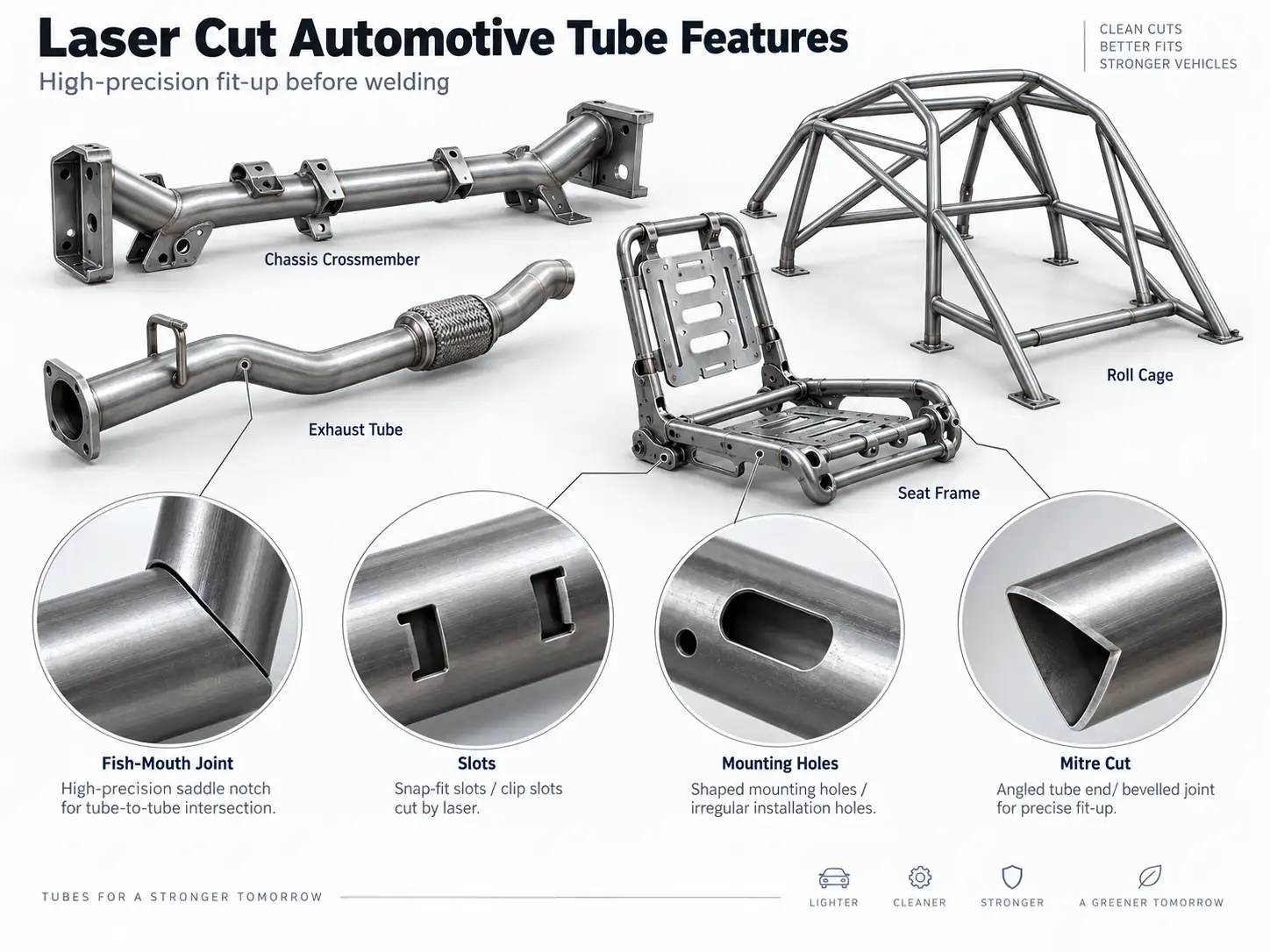
Where Is Tube Laser Cutting Used in Automotive Parts?
Automotive tubes carry loads, guide systems or form the base of a welded assembly. Laser cutting works well when one blank needs several features positioned around its circumference.
Chassis and Frame Components
Square and rectangular tubes for subframes, cross-members and support structures often need holes, slots and angled ends. CNC rotation keeps each feature in the programmed position, which reduces manual layout work before welding. The final suitability depends on tube stiffness, wall thickness, fixture design and the required fit-up.
Exhaust, Seat, and Structural Tubes
Exhaust tubing may require openings, sensor holes, mitres and joint preparation. Seat frames and interior structures use lighter profiles with repeated holes and tabs. The program should control heat input and part support so thin walls hold their shape during cutting.
Roll Cages, Impact Beams, and Brackets
Roll-cage members, door-impact beams and tubular brackets can include intersecting notches or fish-mouth joints. A laser can place these features before forming and welding, reducing separate drilling, sawing and manual notching steps. Safety-critical parts still require the customer’s drawing tolerances, material traceability and validation plan.
What Does a Tube Laser Cutting Workflow Include?
The process begins with a controlled tube specification. Record the profile type, outside dimensions, wall thickness, material grade, length, surface coating and batch information. The CAD/CAM program then unfolds the part features around the tube and nests parts along each raw length to manage scrap.
During loading, the machine supports the tube while chucks position and rotate it. The cutting head follows the programmed path for holes, slots, mitres and end cuts. After cutting, inspect feature location, burrs, dross, heat tint and deformation. The approved parts move to bending, welding, coating or assembly with the inspection record attached.
Short production runs benefit from fast program changeover. Repeated high-volume parts require stable loading, reliable remnant handling and a recipe that operators can retrieve by part number and material. For a supplier discussion, start with the listed Tube fiber laser cutting machines and match the machine family to the part list.
Which Machine Features Matter for Automotive Tube Parts?
Chuck Configuration and Tube Stability
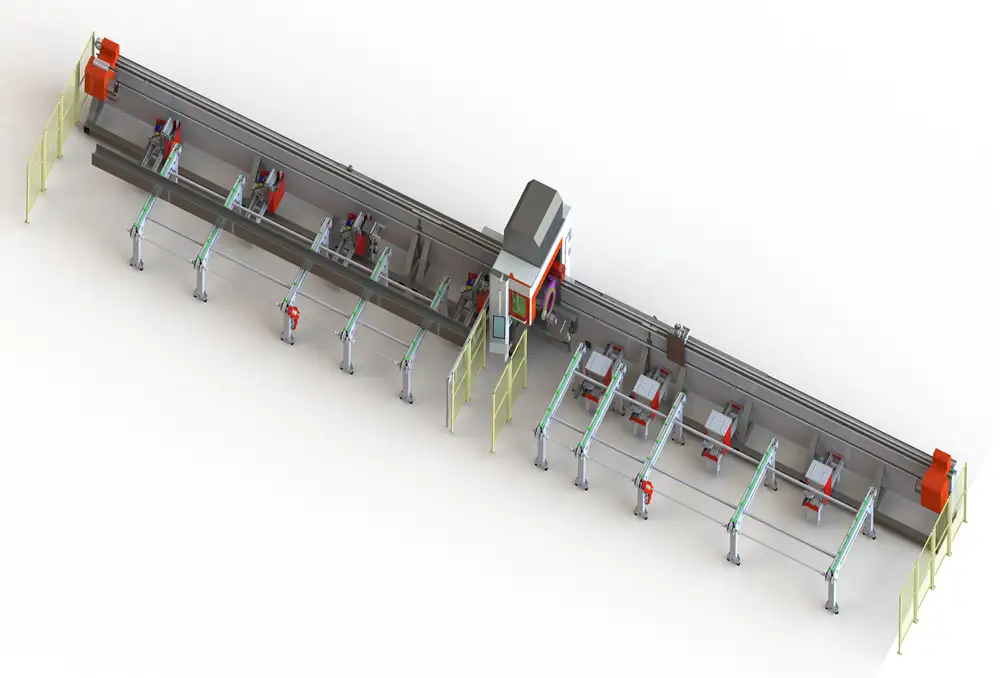
Chuck count affects how the system supports and rotates long or heavy profiles. A two-chuck layout may fit standard pipe work and shorter parts. Three- and four-chuck arrangements add support points for longer, heavier or more flexible sections. Confirm the actual tube range, load length and weight with the machine supplier.
A two-chuck pipe laser cutting machine can be a relevant route for standard pipe work when the stock size, length and weight stay within the quoted range. Confirm those limits against the automotive part drawings.
A 3-chuck heavy-duty tube laser cutting machine adds another support and transfer point for applications involving longer or heavier profiles. Ask the supplier to validate clamping sequence, tail handling and feature access on a representative sample.
Hole, Slot, Mitre, and End-Feature Capability
Ask whether the cutting head and software support the features shown on your drawings. Include angled cuts, intersecting holes, slots, notches and weld-preparation ends in the sample program. A straight-cut demonstration does not verify those operations. Request a test part with the smallest hole, tightest feature spacing and most demanding joint.
Automation, Traceability, and Part Changeover
Automotive programs often run several variants on one line. Review loading and unloading options, barcode or part identification, remnant control, program permissions and inspection data. Stable material flow can matter as much as laser power when the cutting cell feeds downstream welding.
How Do You Select a Tube Laser Cutting Solution?
Use the following worksheet before requesting a quotation:
|
Decision field |
Information to prepare |
Why it matters |
|
Profile |
Round, square, rectangular, channel or special profile |
Determines chuck and software requirements |
|
Material |
Carbon steel, stainless steel, aluminum or coated tube |
Sets cutting recipe and assist-gas choices |
|
Wall and length |
Wall thickness, raw length, finished length and weight |
Defines support, piercing and handling needs |
|
Features |
Holes, slots, mitres, notches and end cuts |
Confirms head motion and software capability |
|
Volume |
Prototype, batch, daily parts and shifts |
Guides automation and changeover decisions |
|
Quality |
Feature tolerance, burr limit, weld fit-up and inspection records |
Defines test-part and acceptance criteria |
Send drawings and a representative tube sample when the geometry includes tight weld joints or thin walls. Ask the supplier to return a written process window, supported dimensions, test photos or measurement results, and a list of assumptions.
What Tube Laser Cutting Options Does WiseCut Offer?
WiseCut’s tube-machine category covers tube and profile cutting routes for industrial work. The listed product directions include two-chuck, three-chuck and four-chuck configurations for different profile-handling needs.
The category page does not publish model-specific tube diameter, length, power, tolerance or automotive test data in the available content. Request those details against your drawings and material list. The same product navigation also includes sheet-and-tube combined fiber laser cutting machines for operations that process both flat sheet and profile stock.
Conclusion: Build the Process Around the Part
Tube laser cutting supports automotive production when the part geometry, material flow and inspection plan are defined together. The most useful machine comparison covers chuck support, feature capability, loading, program changeover, remnant control and the acceptance test for the finished tube.
WISECUT BEIJING WISECUT LTD lists two-, three- and four-chuck tube laser cutting options for different profile-handling needs. Send tube shape, dimensions, wall thickness, material grade, feature drawings, monthly volume and quality records to the WiseCut contact team. The supplier can then confirm the applicable model range and prepare a test-cut plan for your automotive parts.
FAQ
Q1: What automotive parts can a tube laser cutting machine produce?
A: It can process tubular and profile components such as chassis members, cross-members, exhaust tubes, seat frames, roll-cage sections, impact beams and brackets. The exact range depends on profile dimensions, material, wall thickness and machine support.
Q2: Can tube lasers cut holes and slots in square or rectangular tubes?
A: Yes, a tube laser can program holes and slots around square or rectangular profiles when the chuck, head travel and software support the geometry. Validate the smallest feature and its position with a test part.
Q3: How do two-chuck and three-chuck tube lasers differ in application?
A: Chuck layouts provide different levels of tube support during rotation and cutting. Two-chuck systems can suit standard pipe work, while three-chuck systems can add support for longer or heavier profiles; confirm limits for the specific model.
Q4: What information should an automotive supplier provide for a tube-laser quote?
A: Provide profile shape, dimensions, wall thickness, material grade, raw and finished lengths, feature drawings, tolerance, monthly volume, loading method and inspection requirements. Sample tubes help the supplier plan a representative test.
Q5: How do you validate tube laser cut quality before production?
A: Cut a sample using the production material and program, then inspect feature location, burrs, dross, heat tint, deformation and weld fit-up. Record the approved recipe and measurement results with the part number.


