

Comment choisir une machine d'ébavurage par adsorption sous vide pour petites pièces métalliques
Date : 31 juillet 2026 Vue : 489
Les petites pièces révèlent un problème de maintien
Une machine d'ébavurage de grande capacité peut néanmoins compromettre le bon déroulement du processus, même pour la plus petite pièce à traiter. Dès qu'une bande abrasive ou une brosse rotative entre en contact avec une pièce légère, l'abrasif exerce une force sur sa surface. Si le convoyeur ne peut retenir la pièce, celle-ci risque de tourner, de glisser ou de se soulever avant que le bord ne soit correctement ébavuré.
Le résultat est facilement visible en atelier. Un coin est trop travaillé, un autre à peine effleuré, et la surface présente une rayure absente de l'échantillon approuvé. Dans le pire des cas, deux pièces détachées s'entrechoquent à l'intérieur de la machine.
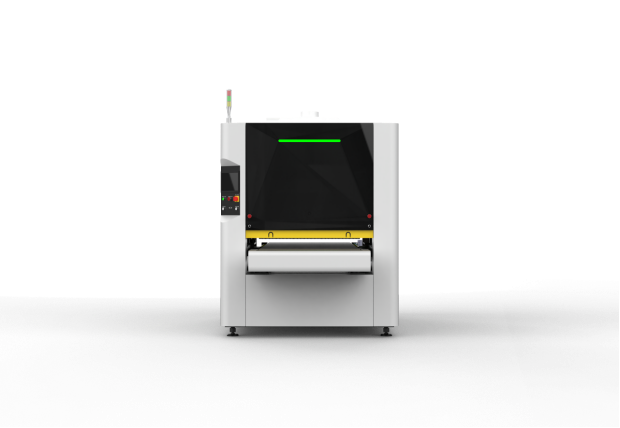
WiseCut résout ce problème sur la machine d'ébavurage de tôles 1300BRBP grâce à une plateforme d'adsorption sous vide et un ventilateur d'adsorption dédié. Ce système est conçu pour les composants plats en acier inoxydable, aluminium, cuivre et autres matériaux nécessitant un transport stable lors des opérations d'ébavurage, d'arrondi des bords et de tréfilage.
Pourquoi les pièces bougent-elles pendant l'ébavurage ?
Le convoyeur transporte la pièce vers l'avant, tandis que l'abrasif s'y oppose. Cela crée des forces s'exerçant dans plusieurs directions. Une grande plaque lourde possède une masse et une surface de contact suffisantes pour rester en place dans de nombreuses situations. Un petit couvercle en aluminium ou une fine pièce en cuivre opposent beaucoup moins de résistance.
La taille n'est qu'un élément du calcul.
Deux pièces de mêmes dimensions extérieures peuvent se comporter très différemment. Une plaque pleine offre à la plateforme à vide une large zone d'étanchéité. Une grille perforée de même dimension laisse passer davantage d'air, réduisant ainsi la différence de pression qui la maintient en place. Les languettes pliées, le film protecteur, les ondulations de surface et les grandes découpes internes influent également sur le contact avec la courroie.
C’est pourquoi une dimension minimale ne peut à elle seule garantir une alimentation stable. Le matériau, l’épaisseur, le poids, la surface de contact et la surface de contact doivent être considérés conjointement.
La tête de finition modifie la charge
Une large bande abrasive élimine les bavures et les scories de surface grâce à un motif de contact différent de celui d'une brosse à rouleau multidirectionnelle. La pression de la brosse, le grain, la vitesse d'avance et la quantité de matière enlevée influent tous sur la force exercée sur la pièce. Une méthode de maintien efficace pour un brossage léger peut nécessiter un ajustement pour un ébavurage plus important.
Comment l'adsorption sous vide maintient une pièce plate
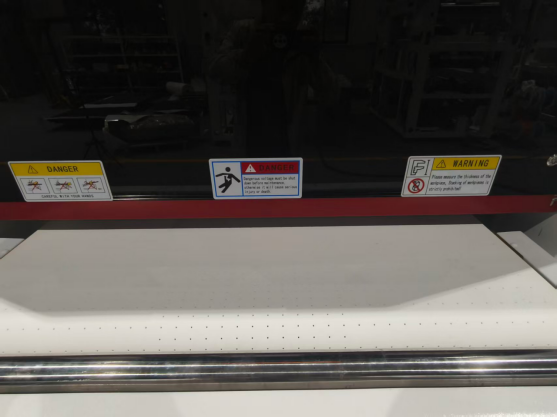
Un ventilateur aspire l'air à travers des ouvertures pratiquées dans la plateforme et le tapis convoyeur perforé. La différence de pression attire la pièce vers le tapis lors de son déplacement dans la machine. La pièce doit toutefois présenter une surface utile suffisante pour que le système assure un maintien fiable.
L'espacement standard des grilles d'aspiration pour la plateforme WiseCut est de 25 mm. Pour les pièces particulièrement petites, il est possible d'envisager une grille non standard plus dense ou une version à adsorption renforcée. Le choix optimal dépend de la pièce elle-même et non d'une promesse générale selon laquelle le vide suffirait à tout retenir.
Quand le transport par le vide est judicieux
L'adsorption sous vide est particulièrement utile lorsque le matériau ne réagit pas de manière fiable aux aimants. C'est le cas, par exemple, de l'aluminium et du cuivre, ainsi que de certains aciers inoxydables. Elle peut également faciliter le traitement de petites pièces plates et légères, plus difficiles à contrôler par simple frottement sur un convoyeur.
- Couvercles, façades et boîtiers électroniques en aluminium avec ouvertures découpées.
- Plaques de cuivre ou composants plats de type barre omnibus nécessitant un nettoyage des bords.
- Panneaux en acier inoxydable où l'aspect de surface et la stabilité des pièces sont tous deux importants.
- Lots mixtes contenant de petites pièces plates présentant différents profils extérieurs.
Quand le vide nécessite des tests plus approfondis
Les pièces présentant une grande surface exposée nécessitent un test par échantillonnage. Il en va de même pour les feuilles très fines susceptibles de se déformer, les pièces avec une texture de film protecteur épaisse et les composants plus petits que les composants standard recommandés pour le traitement. Les performances du vide dépendent de l'étanchéité sur toute la zone de travail, et non seulement sous une pièce.
Adsorption sous vide ou transport magnétique ?
Aucune de ces méthodes n'est universellement efficace. Le transport magnétique est une solution directe pour maintenir en place des pièces ferreuses appropriées. Le vide permet de traiter des métaux non magnétiques et des composants plats variés, mais son efficacité dépend fortement de la surface d'étanchéité et du débit d'air. Le tableau ci-dessous constitue un point de départ pour la discussion et ne saurait remplacer les essais.
|
Point de sélection |
Adsorption sous vide |
Transport magnétique |
|
Aluminium et cuivre |
Convient lorsque la surface de contact et le flux d'air sont adéquats. |
Ne convient pas car les matériaux ne sont pas magnétiques. |
|
acier au carbone |
Peut être utilisé lorsque le processus l'exige. |
Un choix souvent pratique pour les pièces plates en acier ferreux. |
|
Acier inoxydable |
Utile pour les niveaux scolaires appropriés sans nécessiter de réponse magnétique. |
La compatibilité varie selon l'alliage et la réponse magnétique. |
|
Pièces perforées |
Un espace ouvert peut réduire la force de maintien. Il est important de réaliser des essais sur des échantillons. |
La tenue dépend de la réponse du matériau et de la disposition des aimants. |
|
Petites pièces plates |
On peut envisager une grille dense ou une adsorption plus forte. |
Les performances dépendent du matériau, de la taille et du contact. |
|
Feuilles complètes |
Il convient de revoir le débit d'air et la résistance du convoyeur. |
Peut contenir des feuilles ferreuses appropriées sans fuite de vide. |
Cinq facteurs sont importants avant la sélection de la machine
Une recommandation pertinente nécessite plus que de simples mots. Fournissez au fournisseur suffisamment d'informations pour qu'il puisse reproduire le cas complexe.
Matériau et qualité
Précisez le matériau exact lorsque cela est possible. L’acier inoxydable n’appartient pas à une catégorie magnétique homogène, et différents alliages d’aluminium ou de cuivre peuvent présenter des états de surface variables. Indiquez tout film protecteur qui doit rester intact.
Dimensions minimales, épaisseur et poids
La fiche technique 1300BRBP indique une plage de traitement standard de 0,8 à 80 mm d'épaisseur et des dimensions minimales de 50 × 50 × 0,8 mm pour les plaques non perforées. Toute demande particulière en dehors de cette plage nécessite un examen séparé. Les dimensions extérieures, même réduites, ne sont pas le seul critère déterminant. Le poids et la rigidité sont également importants.
Configuration des perforations et pourcentage de surface ouverte
Fournissez le dessin, pas seulement une photo. Le dessin doit indiquer la surface de la pièce qui assure l'étanchéité avec le convoyeur et vérifier si les parties étroites risquent de fléchir sous le contact de la brosse. Pour une gamme de pièces, veuillez envoyer l'exemple le plus ouvert et le moins rigide.
État du bavure et tranchant requis
Une bavure laser fine, des scories de plasma dures et un bord net mais propre nécessitent des abrasions différentes. Joignez des photos en gros plan avec une échelle ou envoyez des échantillons. Précisez s'il s'agit d'un simple ébavurage, d'un léger arrondi, du traitement du grain de surface ou d'une combinaison de ces opérations.
Comment la WiseCut 1300BRBP combine maintien et finition
La 1300BRBP possède une largeur de travail de 1300 mm. Son processus interne utilise deux larges bandes abrasives, huit brosses à rouleaux universelles et un rouleau de tréfilage. Les bandes éliminent les particules de laitier, la calamine et les bavures superficielles importantes. Les brosses travaillent autour des contours extérieurs et des trous, tandis que le rouleau final permet de créer un grain directionnel.
La vitesse du convoyeur est réglable de 0,5 à 6 m/min. Les vitesses de la bande transporteuse et des brosses sont réglables jusqu'à 1 450 tr/min (valeur documentée). Une bande transporteuse à fort amortissement, une plateforme à vide et un ventilateur à adsorption assurent le maintien en place des pièces lors des modifications de ces paramètres.
Organisez un test de maintien et de finition avec WiseCut
Le meilleur jeu de tests comprend une pièce simple, une pièce de production courante et le composant le plus susceptible de bouger. Cela permet de mieux révéler la plage de fonctionnement que de tester uniquement une éprouvette rectangulaire pleine.
Envoyez d'abord la partie difficile.
Partagez le dessin, la nuance du matériau, l'épaisseur, le pourcentage de surface ouverte, les photos des bavures et la finition cible. Testez le WiseCut 1300BRBP ou contacter WiseCut vérifier si la plateforme standard ou une configuration de vide personnalisée est appropriée.
FAQ sur les machines d'ébavurage par adsorption sous vide
Ces réponses concises couvrent les questions fréquemment posées lors des premières étapes de la sélection des machines.
Q : L'adsorption sous vide est-elle réservée aux très petites pièces ?
R : Non. Cela convient également aux matériaux plats non magnétiques appropriés, bien que les petites pièces rendent souvent la nécessité de maintien plus évidente.
Q : Le vide peut-il maintenir en place des pièces de tôle perforées ?
A : C'est possible, mais les surfaces ouvertes augmentent les fuites d'air. Il convient de tester le dessin et l'échantillon.
Q : Le transport magnétique convient-il à l'aluminium ou au cuivre ?
R : Non. Ces matériaux ne sont pas magnétiques, il faut donc utiliser le vide ou une autre méthode de maintien mécanique.
Q : Quel est l'espacement standard de la grille à vide sur la plateforme WiseCut ?
R : La FAQ technique fournie indique 25 mm. Des versions plus denses ou plus résistantes peuvent être envisagées pour des pièces spécifiques.
Q : Le 1300BRBP peut-il traiter des composants tridimensionnels ?
R : Non. Il est principalement destiné aux pièces en tôle plate plutôt qu'aux pièces tridimensionnelles irrégulières.
Q : La plus petite pièce doit-elle être incluse dans les tests d'échantillonnage ?
A : Oui. Incluez les exemples les plus petits, les plus légers et les plus perforés, car ce sont les plus difficiles à manipuler.


