
Cómo mejorar la precisión del plegado con prensas plegadoras CNC
Fecha: 11 de julio de 2026 Vistas: 704
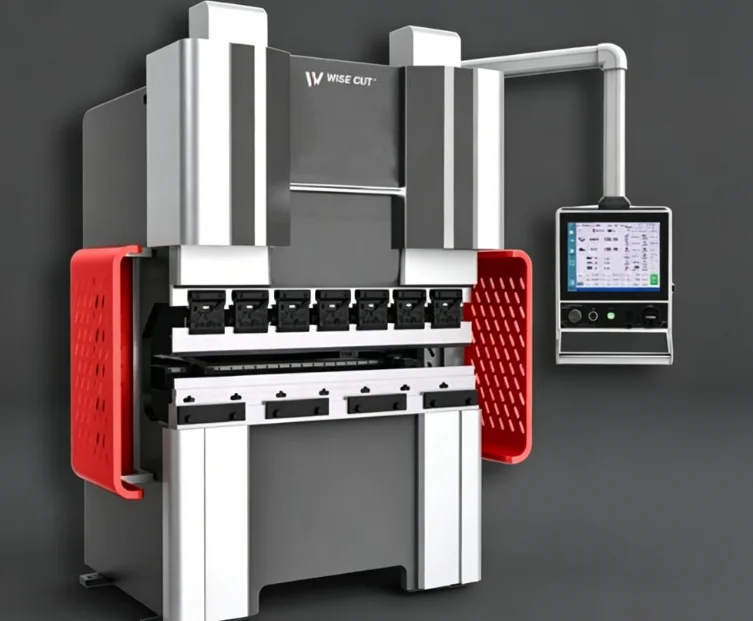
La precisión en el doblado suele ser un factor determinante para el éxito o el fracaso de una pieza de chapa metálica. Un doblez de 90° que resulta en 89,3° puede parecer correcto, pero puede provocar huecos durante la soldadura, un mal montaje de la caja o la necesidad de correcciones manuales adicionales. En paneles de armarios, cajas eléctricas, cubiertas de acero inoxidable y protectores de maquinaria, los pequeños errores se acumulan rápidamente. Prensas plegadoras CNC Puede ofrecer resultados estables, pero la máquina por sí sola no soluciona todos los problemas. Aún se necesita la configuración adecuada, herramientas limpias, datos precisos del material y controles constantes durante la producción.
¿Por qué es importante la precisión en el doblado?
Al doblar chapa metálica, la precisión va más allá del ángulo final. Incluye también la longitud de la brida, la posición de la línea de doblado, el tamaño de repetición y la uniformidad del ángulo de izquierda a derecha. Si estos detalles varían, el siguiente proceso se complica. La soldadura lleva más tiempo. Los operarios de montaje pueden tener que forzar las piezas para colocarlas en su sitio. A veces, hay que volver a fabricar un lote entero, algo que nadie desea un viernes por la tarde.
Curvas de ángulo, tamaño y repetición
La precisión del ángulo de la plegadora afecta la forma en que dos piezas se unen después del doblado. La precisión dimensional depende en gran medida de la precisión del posicionamiento del tope trasero. Para el doblado de chapa metálica larga, también es necesario que el centro y ambos extremos se doblen de la misma manera. Si el centro queda abierto mientras que los extremos están cerrados, la deflexión del pistón y la mesa puede ser la causa. Esto es común en piezas largas, especialmente cuando la longitud de doblado supera los 2 metros.
¿Qué causa los errores de doblado?
La mayoría de los errores de doblado provienen de unas pocas causas claras. La máquina puede flexionarse bajo la fuerza. El material puede recuperar su forma original después de que el pistón se levante. El punzón y la matriz pueden estar desgastados. El tope trasero puede desplazarse ligeramente después de varios golpes. Ninguno de estos problemas es grave al principio. Pero después de 50 o 100 piezas, el error se hace evidente.
Desviación y coronación
Durante el doblado, el ariete y la mesa pueden doblarse ligeramente bajo presión. Esto hace que el ángulo central sea diferente al de los extremos. La compensación de la curvatura ayuda a corregir esto elevando el centro de la mesa para equilibrar la fuerza. En un Freno de prensa CNC hidráulicoLa comprobación periódica de la sincronización de Y1 e Y2, la profundidad del pistón y la respuesta hidráulica es importante para lograr una precisión estable en la prensa plegadora hidráulica.
Recuperación elástica y cambio de material
La recuperación elástica del material se produce cuando el metal intenta volver a su posición original después de doblarlo. El acero al carbono, el acero inoxidable y el aluminio no se recuperan de la misma manera. Incluso dos láminas del mismo grado pueden comportarse de forma diferente si provienen de lotes distintos. Para un mejor control de la recuperación elástica en la plegadora, registre el grado del material, el espesor, el número de lote, la dirección de la fibra y el ángulo resultante después de la primera prueba de doblado.
Desviación de herramientas y tope trasero
El desgaste de las herramientas es fácil de pasar por alto. Una punta de punzón con una pequeña superficie plana puede alterar el ángulo de plegado. Un asiento de matriz sucio también puede modificar la línea de plegado. Limpie el punzón, la matriz y los soportes antes de la configuración. Luego, verifique la alineación del punzón y la matriz. La desviación del tope trasero es otro problema oculto. Si el dedo del tope trasero se mueve, el ángulo puede parecer correcto, pero el tamaño de la brida será incorrecto.
¿Cómo se puede mejorar la precisión en la configuración de la máquina?
Una buena configuración ahorra tiempo después. Antes de doblar en serie, el operario debe revisar la máquina, las herramientas, el programa y el material en conjunto. No modifique solo el eje Y cuando el ángulo sea incorrecto. Eso podría solucionar un problema en una zona y generar otro en los extremos.
Calibrar el pistón y el tope trasero.
Primero, verifique la sincronización de Y1 e Y2. Luego, compruebe los ejes del tope trasero X, R y Z, si su máquina los tiene. Una pieza de prueba sencilla puede revelar muchos problemas. Doble una pieza de desecho de longitud completa y mida los ángulos izquierdo, central y derecho. Si los valores difieren, ajuste la compensación de abombamiento antes de modificar cualquier parámetro de doblado.
Verificar el utillaje y el asentamiento de la matriz.
Si el ángulo se desvía, vuelva a colocar la matriz. Afloje la abrazadera, limpie el soporte, coloque la matriz de nuevo y apriétela uniformemente. Si la pieza requiere alta precisión, utilice un calibrador de espesores. Para piezas cortas, evite doblarlas solo en el centro de la máquina durante todo el día, ya que esto desgasta más rápido una zona. Cambie la posición de la herramienta siempre que sea posible. Es un pequeño hábito, pero los operarios saben que ayuda.
¿Cómo pueden ayudar los sistemas CNC?
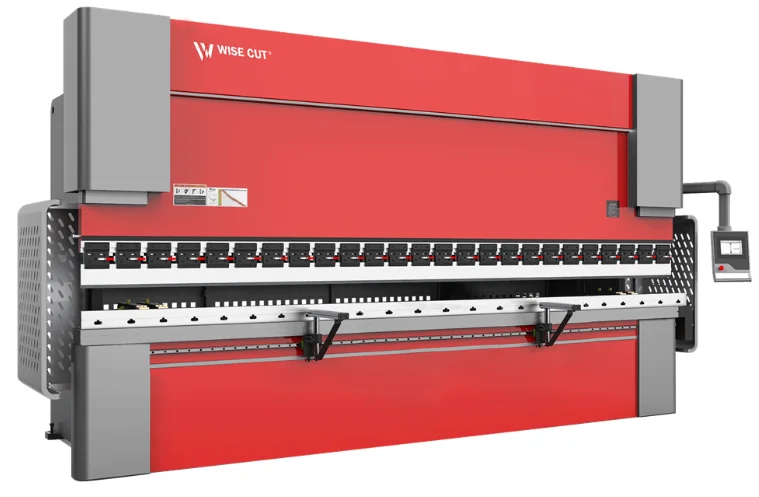
Sistemas CNC Mejore la precisión del doblado CNC utilizando parámetros almacenados y movimientos repetibles. Sin embargo, los datos deben ser correctos. Unos datos de herramientas erróneos o un espesor de material incorrecto darán malos resultados, incluso en una buena máquina.
Utilice datos correctos y corrección de ángulo.
Introduzca la abertura de la matriz en V, el radio del punzón, el espesor del material y el método de doblado correctos. Tras el primer doblado, mida el ángulo real e introduzca la corrección del ángulo de doblado en el controlador. Guarde la configuración útil para pedidos posteriores. Si fabrica cajas eléctricas todos los meses, guardar un programa probado le ahorrará muchos doblados de prueba.
Elige el equipo que mejor se adapte a tu trabajo.
WiseCut ofrece equipos para la fabricación de metales, incluyendo máquinas de corte por láser de fibra, prensas plegadoras CNC, máquinas de soldadura láser, máquinas de limpieza láser, dobladoras eléctricas y soluciones de líneas de producción automatizadas. Su categoría de prensas plegadoras/dobladoras CNC incluye prensas plegadoras CNC hidráulicas, centros de doblado CNC y cizallas CNC. Para el doblado diario de chapa metálica, una prensa plegadora CNC hidráulica se adapta a muchos talleres que necesitan fuerza, doblado repetitivo y operación sencilla. Para paneles de alto volumen, piezas de gabinetes o formas de caja repetidas, una Centro de máquina de flexión CNC Puede reducir la manipulación manual y mantener más estable la producción de doblado por lotes.
¿Qué debes comprobar antes de cada lote?
La precisión no es una tarea que se realiza una sola vez, sino una rutina diaria. Una máquina limpia, un juego de herramientas revisado y una primera pieza medida pueden evitar mucho desperdicio. Si el tamaño de la lámina es inadecuado antes del doblado, la pieza final también se verá afectada. En algunas líneas de producción, una cizalla CNC puede ayudar a preparar láminas más limpias antes del doblado.
Lista de verificación diaria de flexión
Antes de la producción, limpie la mesa de trabajo, el punzón, la matriz y los dedos del tope trasero. Verifique el programa, el espesor del material, el número de herramienta y la secuencia de doblado. Durante la producción, mida la primera pieza y luego verifique cada pocas piezas, especialmente en los doblados largos. Después de la producción, registre los valores de recuperación elástica, los problemas con las herramientas y cualquier desviación angular. Estas notas agilizan y reducen el estrés del siguiente lote.
WiseCut también ofrece servicio personalizado, capacitación, asistencia técnica remota, repuestos y un sistema de servicio global en su sitio web oficial. Para los compradores, esto es importante porque la precisión del doblado depende de la configuración, la capacitación y el mantenimiento a largo plazo de la máquina, no solo de la marca.
Preguntas frecuentes
P1: ¿Por qué una prensa plegadora CNC sigue produciendo errores de ángulo?
A: Los errores angulares pueden deberse a la recuperación elástica, herramientas desgastadas, ajustes incorrectos del eje Y, compensación deficiente de la coronación o deriva del tope trasero.
P2: ¿Cómo se puede reducir el efecto de recuperación elástica durante el doblado?
A: Pruebe cada nuevo lote de material, registre el ángulo real y utilice la configuración de control de recuperación elástica de la prensa plegadora en el sistema CNC.
P3: ¿Cuál es el papel de la compensación por coronación?
A: La compensación de la curvatura reduce la deflexión del carro y de la mesa, por lo que las piezas largas se doblan de manera más uniforme de izquierda a derecha.
P4: ¿Cuándo conviene elegir una plegadora CNC hidráulica?
A: Elija una prensa plegadora CNC hidráulica cuando necesite una fuerza de plegado potente, un control repetible y un plegado diario fiable de chapa metálica.
P5: ¿Es un centro de mecanizado CNC adecuado para la producción en grandes volúmenes?
R: Sí. Un centro de máquinas dobladoras CNC es ideal para la producción repetitiva de paneles, piezas de cajas y doblado en serie con menos manipulación manual.


