

Laser Welding vs TIG Welding: Which Is Better for Sheet Metal?
Time : Sep 11, 2026 Görüntülenme: 138
For sheet metal welding, choosing between laser and TIG depends on the gap between the parts, heat control, the final appearance, and what the production needs.. Laser welding works best for precise repeat seams, while TIG offers better control for repairs, corners, and small batches.MIG belongs in the same review when the joint needs filler deposition or the parts have a wider gap.
A part drawing sets the decision. A straight cabinet seam, a short return flange, and a thick mounting tab create different access and heat conditions.
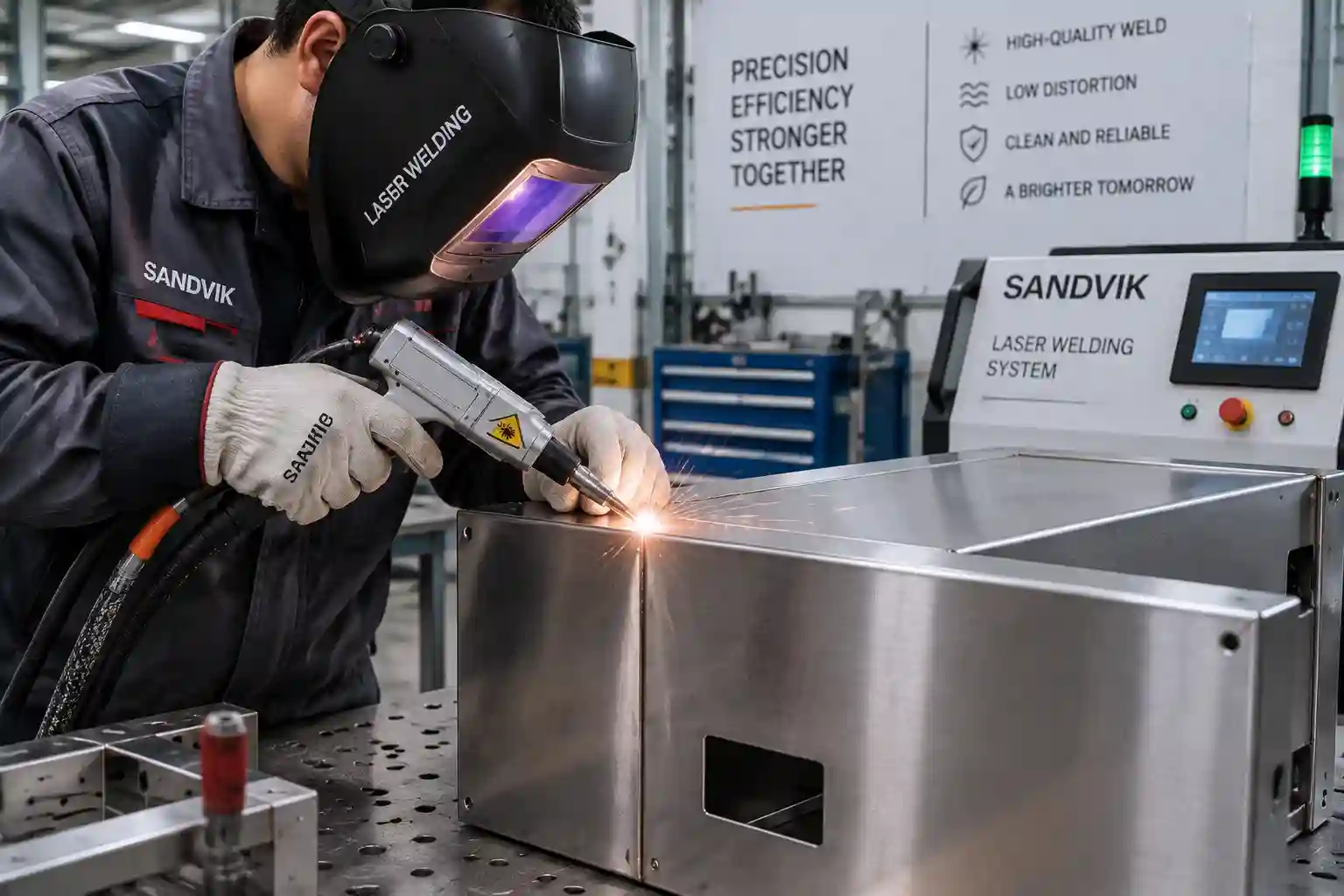
Laser Welding vs TIG Welding: Quick Sheet Metal Answer
Choose by part family. Two stainless steel parts may require different processes because their joints, fixtures, and visible surfaces differ.
|
Faktör |
Laser welding |
TIG welding |
MIG welding |
|
Heat and distortion |
Concentrated heat source and a narrow heated zone |
Manual arc control with broader heat spread |
Arc heat with continuous wire deposition |
|
Fit-up |
Controlled joint gap and stable fixture |
Welder can respond to local variation |
Filler metal supports wider gaps |
|
Appearance |
Narrow seam potential on visible sheet parts |
Controlled bead in skilled hands |
Bead and spatter may add finishing work |
|
Thickness planning |
Power, material, joint, wire, gas, and test result |
Welder access, heat control, and filler choice |
Deposition rate, joint volume, and power source |
|
Main buying check |
Cooling, wire feed, safety setup, and sample result |
Welder skill, filler, torch access, and gas |
Wire feeder, spatter control, power source, and gas |
Use the table as a filter. Final approval should come from a sample made with the specified material, thickness, joint, and expected gap range.
How Do Laser, TIG, and MIG Welding Work?
Each process melts metal and allows the molten zone to solidify into a joint. Heat delivery and filler addition shape the working method.
Laser welding directs a concentrated beam into the joint. With a handheld system, the operator moves the head while the machine controls laser output, shielding gas, beam settings, and optional wire feeding. A stable fixture and consistent gap create a repeatable path. Upstream cutting and bending accuracy become part of the weld result.
TIG uses a non-consumable tungsten electrode to create an arc. The welder manages torch angle, travel speed, heat, and filler rod by hand. This control suits short seams, repairs, and geometry that changes along the joint.
MIG feeds a wire electrode continuously through the torch. The wire carries the arc and supplies filler metal, so the process can build a larger bead and fill joint volume. On a visible sheet-metal surface, the production plan should include spatter control, bead dressing, and any grinding needed before paint or finishing.
Which Process Controls Distortion, Strength, and Thickness?
Thin sheet reacts quickly to heat. A concentrated laser heat source limits the heated area and can help a flat panel retain its shape when the joint and fixture are stable. TIG gives the operator fine control at the puddle, while a long manual seam keeps heat in the panel for more time. For doors, covers, cabinets, and enclosures, that time often matters as much as the nominal material thickness.
Weld strength comes from the complete procedure: joint design, penetration, base material, filler, shielding gas, parameters, and inspection. A lap joint and a butt joint require separate parameter windows. Record wire type and diameter, gas, sample geometry, and inspection method on the sample-weld report. The record gives acceptance teams more evidence than a seam photograph alone.
Published thickness figures need the same discipline. WISECUT lists the WISECUT Handheld Laser Welding Machine as a WT-W series with a 1000-6000W power range and a listed maximum welding thickness of 14 mm. Use 14 mm as an initial planning figure. The applicable material, joint type, wire, shielding gas, cooling arrangement, and acceptance test still need supplier confirmation.
Laser Welding vs MIG Welding: When Does MIG Fit Better?
The laser welding vs MIG welding question usually appears when a shop handles both visible sheet parts and structural assemblies. MIG supplies filler metal continuously, which suits brackets, frames, and joints that need bead build-up. Painted or enclosed assemblies may also leave room for grinding and finishing in the route.
Laser welding works best when cutting, bending, and fixturing produce a repeatable seam. In a mixed shop, the routing sheet can assign stable cosmetic joints to laser welding and filler-heavy joints to MIG. The part and approved procedure set the boundary.
What Safety and Setup Requirements Should Buyers Check?
Safety belongs in the quotation package. A laser welding cell has beam and reflected-light hazards alongside welding fumes, shielding gas, hot material, and fire risk.
Ask the supplier for the laser class, protective eyewear specification, screen or enclosure plan, interlocks, warning labels, and safe work procedure. The facility review should cover fume extraction, access control, torch storage, gas handling, and operator training. Reflective materials require a layout that accounts for stray reflections and possible eye or skin exposure.
Şu OSHA welding, cutting, and brazing overview collects US welding standards, hazard information, and control resources. Global buyers can use it as a planning reference, then apply the destination country’s rules, the machine manual, and the site’s own risk assessment.
How Should You Choose a Laser Welding Machine for Sheet Metal?
Prepare the RFQ around real parts. Send drawings, formed samples, material grades, thickness, joint, expected gap, weld length, finish target, volume, and inspection requirement. Bend variation changes where the joint lands.
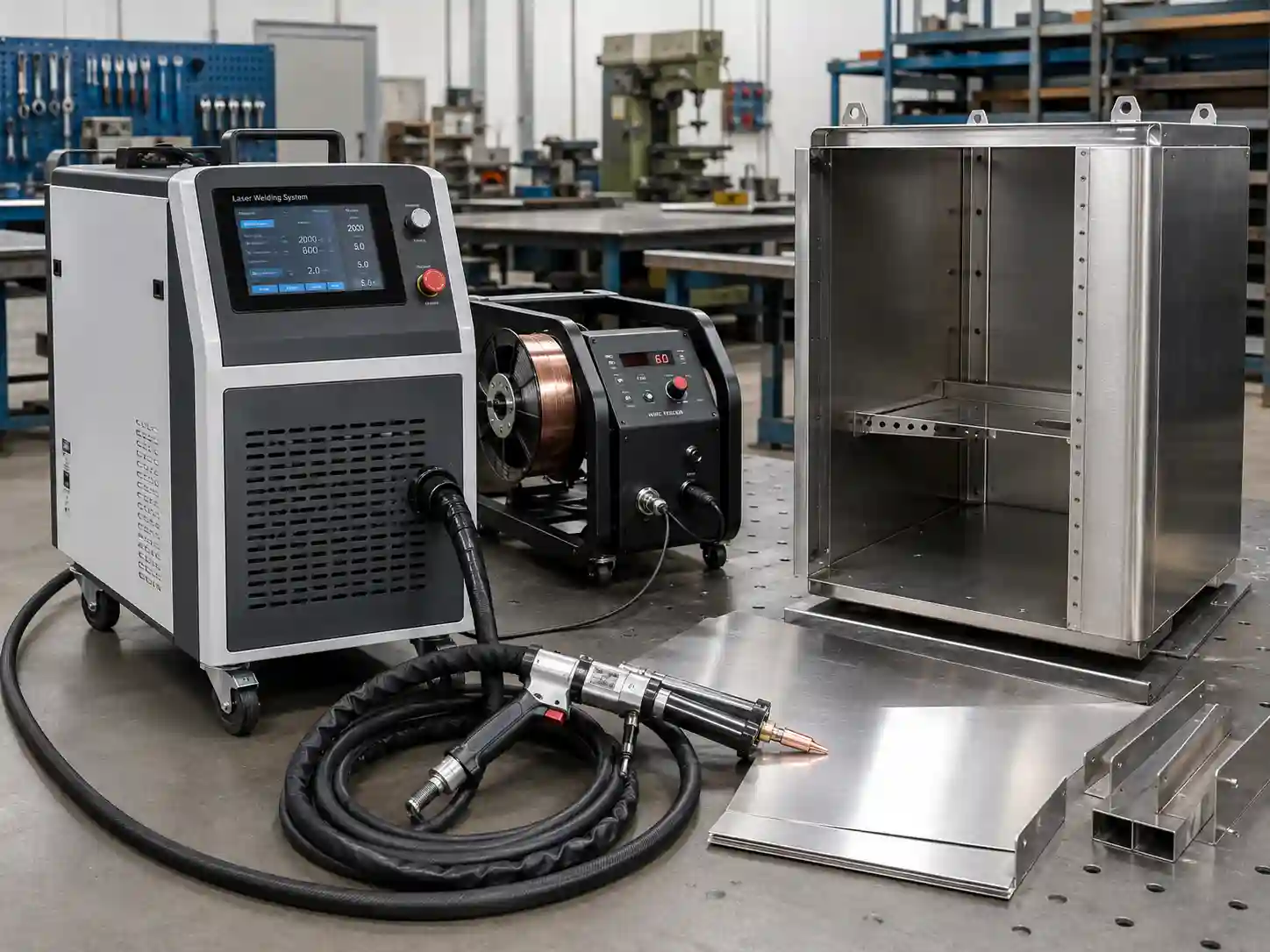
Then match the machine configuration to that work. WISECUT offers handheld laser welding machines with water-cooling and air-cooling routes. Its WT-W1500 and WT-W2000 specification table lists 1500W and 2000W rated output, a 1080 +/- 3 nm central wavelength, a QBH optical fiber output interface, a 10 m welding torch cable, coaxial gas protection, and an adjustable weld seam width of 0-6 mm. Listed wire-feed sizes are 0.8, 1.0, 1.2, and 1.6 mm for aluminum, carbon steel, and stainless steel wire.
Cooling affects the machine layout and the quotation scope. Buyers working with a compact floor plan can review an air cooling laser welding machine along with water-cooled models. Ask the supplier to state the cooling method, duty assumptions, electrical requirements, and included equipment for the proposed model.
A complete RFQ should also cover the wire feeder, shielding gas, torch cable, PPE, screens, fume extraction, consumables, training, spares, warranty, service, and destination-country electrical requirements. Request a sample-weld report with parameters and inspection results. It gives purchasing, production, and quality teams a common acceptance record.
Conclusion: Make the Decision With the Part in Hand
Laser welding vs TIG welding is a part-level decision. Laser welding serves controlled sheet assemblies with tight fit-up, a narrow heated zone, and repeated seams. TIG serves repair work, changing geometry, and jobs where manual puddle control is central. MIG covers joints that call for continuous filler deposition and bead build-up.
WISECUT’s relevant option is the WT-W handheld laser welding range, with published power, wire-feed, torch-cable, seam-width, and cooling configuration details. Send the drawing, material grade, thickness, joint, gap tolerance, weld length, finish target, inspection method, volume, power supply, and safety layout. WISECUT can use those inputs to discuss a machine configuration and define the sample-weld scope before purchase.
Sık Sorulan Sorular
Q1: Is laser welding better than TIG welding for sheet metal?
A: Laser welding suits repeatable sheet seams with controlled fit-up and a defined finish requirement. TIG gives a skilled welder direct puddle control for repairs, short complex seams, and varied small batches. Judge the two processes on the actual joint and an accepted sample.
Q2: Is laser welding as strong as TIG welding?
A: Laser welding can produce a strong sheet-metal joint when the procedure delivers the required penetration and soundness. Strength depends on joint design, material, filler use, shielding gas, parameters, and inspection criteria. Put those items on the sample-weld report before approving the process.
Q3: How thick can a laser welder weld?
A: The applicable thickness depends on laser power, material, joint design, wire feeding, shielding gas, cooling, and the acceptance test. WISECUT publishes a maximum welding thickness of 14 mm for the WT-W handheld laser welding machine range. Confirm that figure against the exact material and joint in your project.
Q4: When is MIG welding a better choice than laser welding?
A: MIG is a practical route for joints that need continuous filler deposition, bead build-up, or accommodation of a wider gap. Include spatter control and finishing steps in the production plan when the welded surface will remain visible.
Q5: What should buyers test before purchasing a laser welding machine?
A: Use the real material, thickness, joint, gap range, fixture, shielding gas, wire, and weld length. Record appearance, penetration, distortion, rework, parameters, and inspection results. The approved sample then becomes a concrete reference for the quotation and acceptance process.


